Evaluation of the First-Year Performance of the Cardiovascular and Cerebrovascular Disease Network Pilot Project
80% of Patients Requiring Transfer Matched with Medical Staff Through Specialist Platform
As a result of establishing a network among hospitals and doctors to respond to cardiovascular and cerebrovascular diseases such as myocardial infarction and stroke, the probability that emergency patients can receive treatment within the "golden hour" has increased. Through the pilot project, 97.8% of emergency patients requiring transfer were able to find a specialist capable of treatment in an average of 4 minutes and 36 seconds.
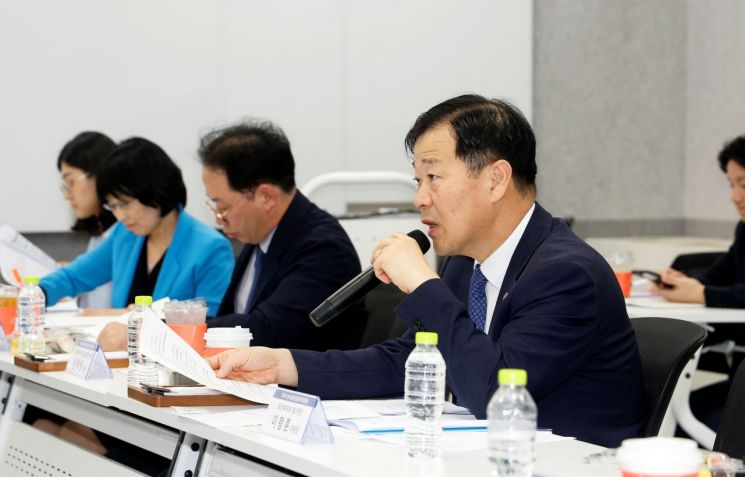 On the afternoon of the 2nd, Lee Hyun, the 2nd Vice Minister of the Ministry of Health and Welfare, is speaking at the "3rd Cardiovascular and Cerebrovascular Disease Management Committee Meeting of 2025." Ministry of Health and Welfare
On September 2, the Ministry of Health and Welfare announced that it held the "3rd Cardiovascular and Cerebrovascular Disease Management Committee Meeting of 2025" and deliberated and approved the first-year performance evaluation results of the cardiovascular and cerebrovascular disease network pilot project, as well as the plan for post-support payments.
The cardiovascular and cerebrovascular disease network pilot project, which began in February last year, is a project that builds and supports a network to facilitate communication among medical institutions and specialists. The goal is to quickly transport patients, determine a hospital capable of treatment, and reduce the time required for final treatment. Centered around regional cardiovascular and cerebrovascular disease centers, the project includes an institutional network to quickly determine the final treatment hospital for emergency patients by connecting medical institutions and 119 emergency medical services, as well as a human network to secure transfer hospitals for emergency patients who require transfer through communication among specialists. Currently, the institutional network consists of 10 networks and 62 institutions, while the human network includes 56 networks and 1,374 specialists.
Looking at last year’s performance of the institutional network, for hemorrhagic stroke, the average time from the arrival of the emergency team on site to the start of final treatment was 10 hours and 36 minutes, and 100% of cases began final treatment within the targeted appropriate time of 24 hours. For ischemic stroke, final treatment began within an average of 2 hours and 48 minutes after arrival on site, and for acute myocardial infarction, within an average of 2 hours and 6 minutes.
Considering that in 2022, the rate of patients arriving at the hospital within the golden hour was 52% for ischemic stroke (3 hours) and 48% for acute myocardial infarction (2 hours), the Ministry of Health and Welfare evaluated that patient triage, transfer, and hospital determination were conducted rapidly.
The average on-site duty rate for specialists at the 10 regional cardiovascular and cerebrovascular disease centers was 84.4%, and the average on-call duty rate for specialists at participating institutions was 95.9%. In addition, as of the first half of this year, a total of 13,319 cardiovascular and cerebrovascular patients received treatment through the institutional network.
The human network operates by having specialists upload patient information to the "Rapid Decision-Making Platform" and request transfers, after which a specialist capable of treatment accepts the request in real time, and the final treatment medical staff is matched among the accepting specialists. Of the 1,266 patients referred to the platform last year, 1,006 (79.5%) were matched with the final treatment medical staff, and among them, 781 (77.6%) were connected within 15 minutes.
Regardless of final matching, there was an acceptance response in 97.8% of all cases. The time taken from request to acceptance ranged from a minimum of 24 seconds to a maximum of 19 minutes and 42 seconds across networks, with an average of 4 minutes and 36 seconds.
Based on this evaluation, the Ministry of Health and Welfare plans to provide post-support payments, totaling 6.18 billion won for institutions and 2.63 billion won for personnel, with differential allocation. The support funds can be used for personnel expenses for those participating in the pilot project.
Lee Hyun, the 2nd Vice Minister of Health and Welfare, stated, "Cardiovascular and cerebrovascular diseases are among the essential medical fields for critical and emergency care, and it is extremely important to receive appropriate treatment within the golden hour." He added, "We will continue to faithfully implement the pilot project and actively improve areas that need supplementation."
© The Asia Business Daily(www.asiae.co.kr). All rights reserved.

















