US and China Take the Lead with Massive Investments,
South Korea Faces Regulatory Hurdles Even for Testing
Structural Reform Needed: Easing Entry Regulations and Minimizing Worker Impact
Compensation Plans Required: Social Fund for License Buybac

In the artificial intelligence (AI)-based autonomous taxi market, which is projected to grow rapidly at an average annual rate of 50%, South Korea is already a latecomer. The United States and China are accelerating ahead by securing the market through massive investments, while South Korea is struggling even to conduct proper tests due to legal barriers. The Bank of Korea has recognized this situation as a crisis, emphasizing the need to ease entry regulations for autonomous taxis in order to foster the development of new industries. At the same time, it diagnosed that structural reforms are necessary to minimize the impact on existing taxi industry workers.
The Bank of Korea stressed these points in its structural reform report published on September 2, titled "The Era of Autonomous Driving: Crisis and Innovation Strategies for South Korea's Taxi Services" (Noh Jin-Young, Kim Jwa-Gyeom, Eom Tae-Gyun, Lim Chun-Sung).
The U.S. and China Take the Lead...IT Companies Invest Trillions in Development
The global autonomous taxi market, based on AI technology, is expected to grow from approximately $3 billion last year to $190 billion by 2034, representing an average annual growth rate of 51.4%. In countries with advanced technologies such as the United States and China, large-scale investments are being made in light of this growth potential and the significant ripple effects across related industries. Major IT companies in the United States and China have each invested more than 14 trillion won in the development of autonomous taxis. They have also secured more than 100 million kilometers of real-world driving data to train their autonomous driving AI.
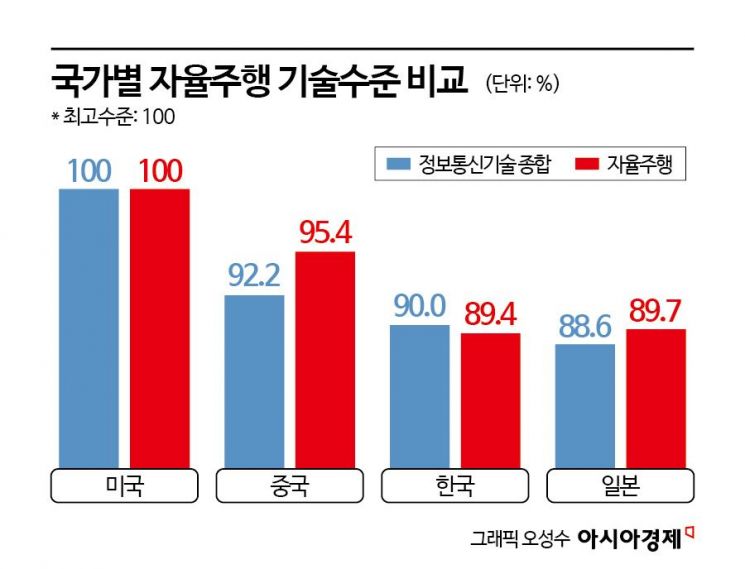
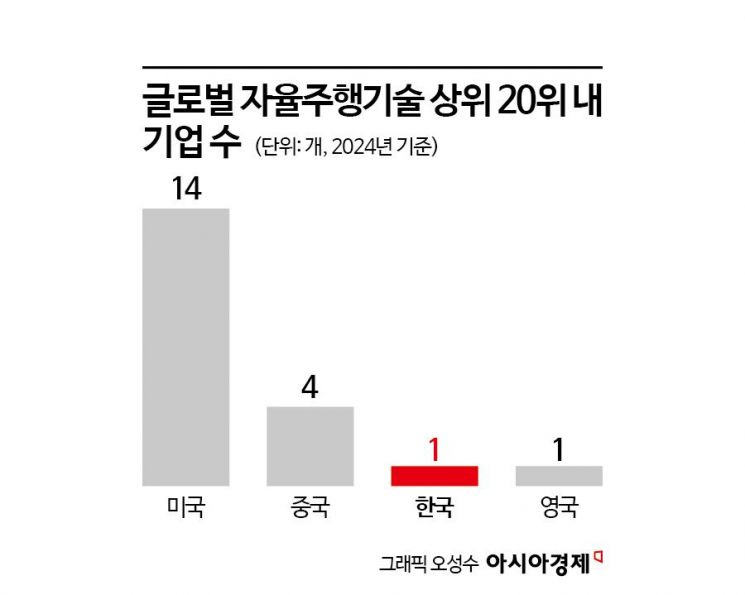
This is more than ten times the scale of South Korea's efforts. According to the Institute for Information & Communications Technology Planning & Evaluation, as of 2022, South Korea's autonomous vehicle technology was at 89.4% of the U.S. level, lower than China's 95.4%. As of last year, only one South Korean company was among the global top 20 autonomous driving technology firms. In contrast, the United States and China each have one leading company (Waymo ranked first, Baidu ranked second), with the U.S. having 14 and China 4 among the top 20. In terms of safety, autonomous taxis have been found to outperform human-driven taxis. A study using driving data from Waymo in the United States showed that Waymo's autonomous taxis had 85% fewer injury accidents, 79% fewer airbag deployments, and 96% fewer intersection accidents compared to human-driven taxis.
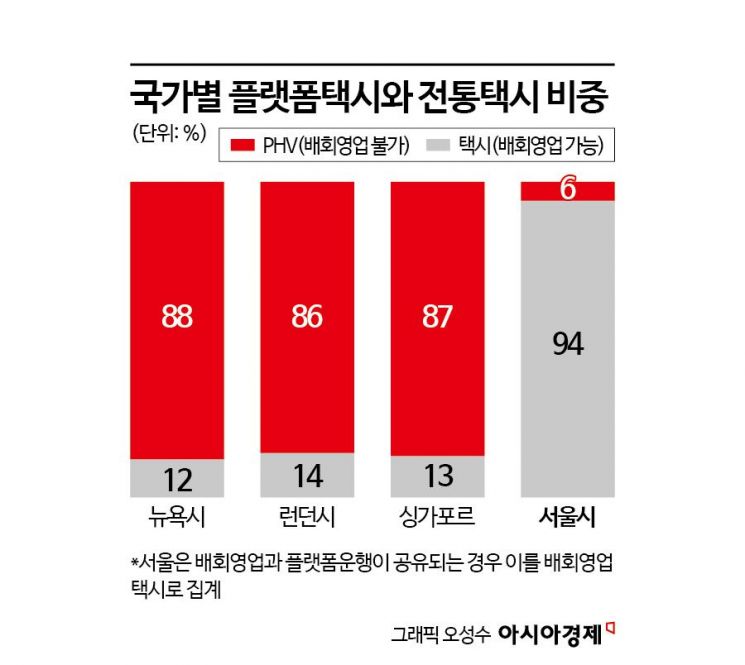
South Korea's taxi market is still operated mainly with traditional taxis, restricting the entry of new services. Autonomous taxis have not even begun full-scale testing in South Korea. Regulations focused on protecting the traditional taxi industry have prevented the market from responding flexibly to technological advancements and changes in demand. As a result, the launch of new taxi services has been delayed, ultimately limiting consumer choice. The Bank of Korea estimated that if 7,000 autonomous taxis (10% of taxis) were introduced in Seoul, the additional annual welfare benefit for consumers would be about 160 billion won. Noh Jin-Young, head of the Policy and Institutional Team at the Bank of Korea's Monetary Policy Bureau, warned, "As time passes, South Korea's chances of developing its own autonomous driving software are steadily diminishing. Without efforts to improve, we are likely to end up as followers, customizing our vehicles to foreign software."
Need to Secure Entry Channels for Autonomous Taxis...Taxi License Quota Restrictions Should Be Eased
However, if the era of autonomous taxis arrives without preparation, existing taxi workers could suffer significant losses. Noh emphasized, "We need to relax regulations to allow autonomous taxis to enter the market, while simultaneously preparing structural reforms that minimize the impact on workers by reducing the share of individually owned taxis through compensation measures."
Specifically, he argued that the quota on taxi licenses should be relaxed to secure an entry channel for autonomous taxis. In South Korea, the Passenger Transport Service Act enforces a quota system for taxi licenses. Any form of commercial license that exceeds the set quota is difficult to add without legal grounds. Therefore, easing this restriction is necessary for the entry of autonomous taxis. Noh pointed out, "The current Passenger Transport Service Act allows platform operators (Type 1) to operate vehicles for paid transportation without a taxi license, but the strict conditions make it ineffective in practice. We should consider deleting the clause that requires reductions in the number of taxis when determining the supply of platform transportation services, or at least reducing its weighting in the review process."
He also suggested that defining autonomous taxis as a separate business under the Passenger Transport Service Act could be considered. He emphasized, "For actual operations to begin, detailed regulations such as those governing testing must also be revised."
Need to Establish a Social Fund for License Buybacks and Cancellations, Plus Profit-Sharing Compensation Plans
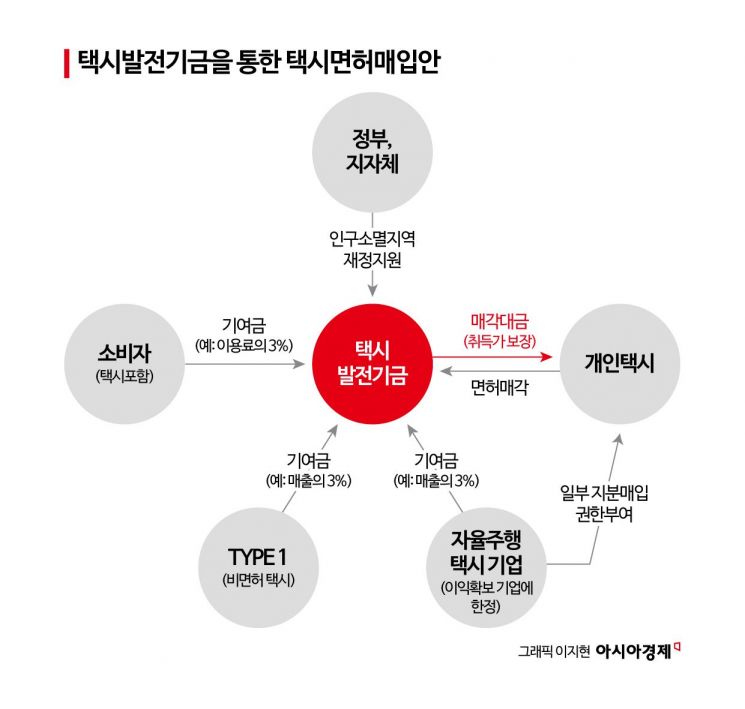
At the same time, it was diagnosed that an "exit plan" acceptable to current taxi workers should be prepared. This means establishing a social fund to buy back and cancel licenses at reasonable prices, while also preparing additional compensation measures such as profit-sharing schemes.
He stated, "Policymakers should offer taxi workers an acceptable price and buy back their licenses. For the new autonomous taxi service to enter the market, we must first create room to reduce the share of individually owned taxis by purchasing their exclusive operating rights." To this end, he said, it is necessary to establish a Taxi Development Fund as the main body for license buybacks and to secure a stable source of funding. Noh explained, "Although South Korea has introduced a taxi license reduction program and a system for buying back licenses through contributions from platform operators, actual buybacks have been limited due to a lack of funding. However, as autonomous taxis enter the market and the share of platform operators increases, the overall size of the taxi market is expected to grow, which should help secure more funding for the fund."
He also pointed out that, as an additional compensation measure, allowing taxi workers to purchase a stake in autonomous taxi companies at a low price could be considered. He emphasized, "If the government supports the development of domestic autonomous taxi companies, these companies should play a role in sharing profits to help offset the social costs (losses to taxi workers) incurred during industry restructuring." However, he noted that fostering domestic autonomous taxi companies will require significant effort, and it may take time for these companies to become profitable after commercialization. Therefore, he suggested that the profit-sharing system should be deferred until profitability is secured.
The structural reform plan concluded that, given the existing public transportation infrastructure, autonomous driving test conditions, and the scale of the compensation fund, it would be most effective to create successful cases starting in small and medium-sized cities and then gradually expand nationwide.
© The Asia Business Daily(www.asiae.co.kr). All rights reserved.



















