Governor's Pledge to "Save Small Schools" Stalls
"The Conflict and Distrust at Bukil Elementary Is Not Someone Else's Problem"
Haenam County in South Jeolla Province has declared itself a "child-friendly city" by announcing a variety of birth and child-rearing support policies since the beginning of this year. However, critics point out that one of the core goals of these policies, "Saving Small Schools," remains at a standstill.
According to Haenam County on September 2, the county is currently implementing a comprehensive birth and child-rearing support policy that provides up to 91.56 million won for each child born in 2024, from birth until adulthood. The county explained that this step-by-step cash and in-kind support, provided from birth to age 18, is a strategy designed to address the low birth rate crisis, attract young people, and lay the foundation for the continued existence of rural schools.
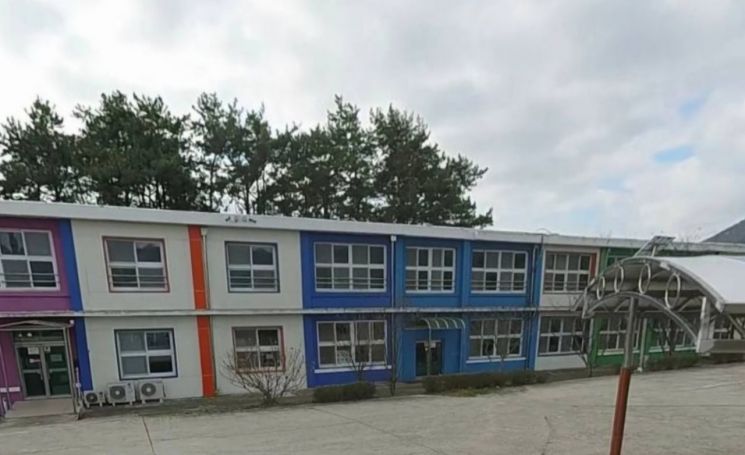 In 2022, Haenam Bukil Elementary School, promoted as part of the "Saving Small Schools" project, became a case that clearly demonstrates the complexity of rural agricultural and fishing village study-abroad policies, as conflicts arose between local residents and urban transfer students. Photo by Lee Jungyeong
For newborn care expenses, 3.2 million won is provided for the first child, 3.7 million won for the second, 6.2 million won for the third, and 7.4 million won for the fourth and subsequent children. Additionally, 2.16 million won is paid for diaper purchases over 24 months at 90,000 won per month. Despite these measures, the actual average support per child in Haenam County is 5.36 million won, which lags behind the South Jeolla Province city and county average of 6.13 million won.
An even more serious issue is the reality facing small schools within Haenam County. The South Jeolla Provincial Office of Education is promoting the "South Jeolla Small School Specialization Model School" in response to the declining school-age population in the region, but school closures continue due to the decrease in students. Although population decline is a nationwide trend, Haenam faces even greater challenges due to accessibility issues.
According to the local education community, some elementary schools in the county are struggling to attract new students and cannot even organize classes. Even Seojeong Elementary School and Okcheon Elementary School, once cited as successful cases of saving small schools, have recently seen a sharp decline in student numbers.
In fact, during the process of attracting students to Bukil Elementary School as part of the "Saving Small Schools" project promoted by County Governor Myeong Hyeonkwan in 2022, conflicts arose between local residents and urban transfer students, clearly demonstrating the complexities of rural-urban student exchange policies.
In contrast, Jungdong Elementary School in Gurye, South Jeolla Province, has only 32 students but is regarded as an exemplary case of rural-urban student exchange, highlighting the stark difference with Haenam County.
A teacher at a rural elementary school said, "Haenam County is actively promoting itself, but in reality, the number of students decreases every year. Especially due to poor accessibility to cities, the situation here is very different from Gurye County, which has succeeded in rural-urban student exchange."
Experts point out that policies focused solely on birth incentives have limitations in saving small schools. They explain that unless residential conditions are improved, a reverse phenomenon occurs where families move to cities after childbirth.
An education expert from South Jeolla Province commented, "For young people to settle in the area after having children, overall infrastructure such as childcare facilities, private academies, middle and high school advancement, and cultural amenities is crucial. Currently, Haenam severely lacks the factors that contribute to quality of life."
A parent living in Haenam said, "The financial support is definitely helpful, but as children grow, we have no other choice but to move to the city for a better educational environment. Access to extracurricular activities, English, and academic tutoring is limited."
Currently, the youth inflow rate in Haenam County remains low, and combined with a lack of trust in the educational environment, the virtuous cycle of "encouraging childbirth → settlement of new residents → increase in student numbers → school maintenance" is not functioning. While the nationwide trend of declining school-age population and population outflow from rural areas is leading to more school closures, there have recently been cases of overcoming the risk of closure through differentiated education.
In this regard, a county official stated, "Reviving small schools is less about short-term results and more about long-term changes in population structure and improvements in living conditions. We plan to expand policies linking educational environment enhancements with job creation in the future."
The government is also increasing financial support as part of its strategy to counter regional extinction, but there is a growing consensus that, for these policies to lead to real population settlement and community sustainability, the environment for raising children itself must be attractive.
© The Asia Business Daily(www.asiae.co.kr). All rights reserved.
![Clutching a Stolen Dior Bag, Saying "I Hate Being Poor but Real"... The Grotesque Con of a "Human Knockoff" [Slate]](https://cwcontent.asiae.co.kr/asiaresize/183/2026021902243444107_1771435474.jpg)















