Committee Formed with 30 Members from Gwangju and Jeonnam
Establishing the Super-Region Plan for the 5th National Comprehensive Territorial Plan
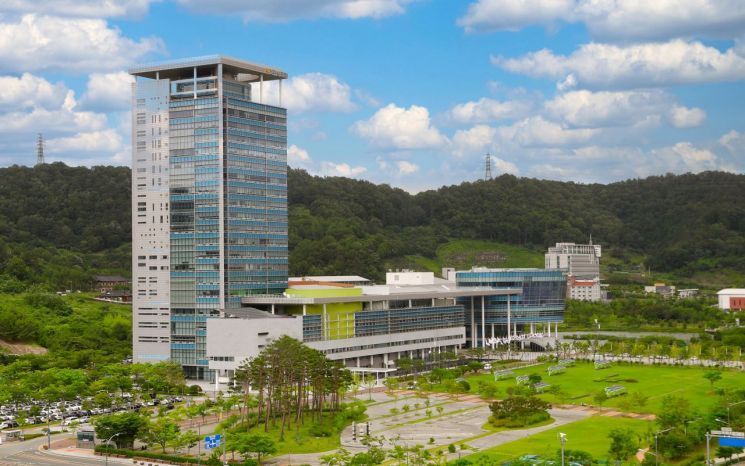
Gwangju Metropolitan City and Jeollanam-do jointly held the "Gwangju-Jeonnam Super-Region Plan Committee (hereinafter referred to as the Committee) Appointment Ceremony and the 1st Meeting" at the Gwangju City Hall main conference room on September 1.
The meeting was organized to establish the "Super-Region Plan," a legally mandated plan for Gwangju and Jeonnam to collaboratively develop mid- to long-term regional development strategies in response to the "5 Poles 3 Special Zones" balanced growth strategy of the Lee Jaemyung administration.
Based on Article 12-2 of the National Land Basic Act, the two local governments formed the Committee with 30 members in total-15 from each city and province-comprising experts from academia, industry, policy, and local government officials. Prior to the meeting, appointment letters were presented to 20 appointed committee members.
The chairmanship will rotate between the deputy mayors of the two local governments; this year, the Gwangju Vice Mayor for Administrative Affairs will serve as chair, and next year, the Jeonnam Vice Governor for Administrative Affairs will take over. Heo Moonkoo, Senior Research Fellow at the Korea Institute for Industrial Economics and Trade, was elected vice chair by committee members.
During the 1st meeting, which followed the appointments, the Gwangju Research Institute and Jeonnam Research Institute delivered a joint interim report on the "Super-Region Plan Study," which was followed by in-depth questions and policy suggestions from committee members.
The Gwangju-Jeonnam Super-Region Plan is a long-term initiative covering the period from 2026 to 2040 and will serve as a core component of the super-region section in the revised 5th National Comprehensive Territorial Plan.
The two local governments plan to develop effective, region-specific strategies focused on: restructuring the super-region spatial framework; expanding integrated transportation and logistics infrastructure; advancing the convergence of industry, tourism, and culture; and nurturing innovative talent to support strategic industries.
Once established, the plan will be reflected in the revised 5th National Comprehensive Territorial Plan, enabling policy coordination at the central government level. In particular, joint initiatives between the two regions-such as expanding inter-hub metropolitan transportation networks to build a unified economic and living zone, and fostering an industrial belt connecting future high-tech industry hubs-are expected to gain further momentum.
Ko Gwangwan, Vice Mayor for Administrative Affairs of Gwangju and chair of the Gwangju-Jeonnam Super-Region Plan Committee, stated, "The launch of the Committee will serve as a catalyst for Gwangju-Jeonnam cooperation and the implementation of the 5 Poles 3 Special Zones strategy. Based on the Committee's diverse expertise and wisdom, we will lead balanced national growth and complete a mid- to long-term master plan for the joint development of Gwangju and Jeonnam, overcoming the current Seoul-centric system."
Myung Changhwan, Vice Governor for Administrative Affairs of Jeonnam, said, "We will actively work together with Gwangju to ensure that the Gwangju-Jeonnam Super-Region Plan aligns with the 5 Poles 3 Special Zones policy."
© The Asia Business Daily(www.asiae.co.kr). All rights reserved.
![Clutching a Stolen Dior Bag, Saying "I Hate Being Poor but Real"... The Grotesque Con of a "Human Knockoff" [Slate]](https://cwcontent.asiae.co.kr/asiaresize/183/2026021902243444107_1771435474.jpg)















