Strong Criticism of Daegu's Road Management and Ground Subsidence Risks
Calls for Immediate Countermeasures and Proactive Infrastructure Replacement
Budget Shortfalls and Delayed Repairs Leave Citizens at Risk
"Roads Are the Lifeblood of the City" - Urgent Action Demanded
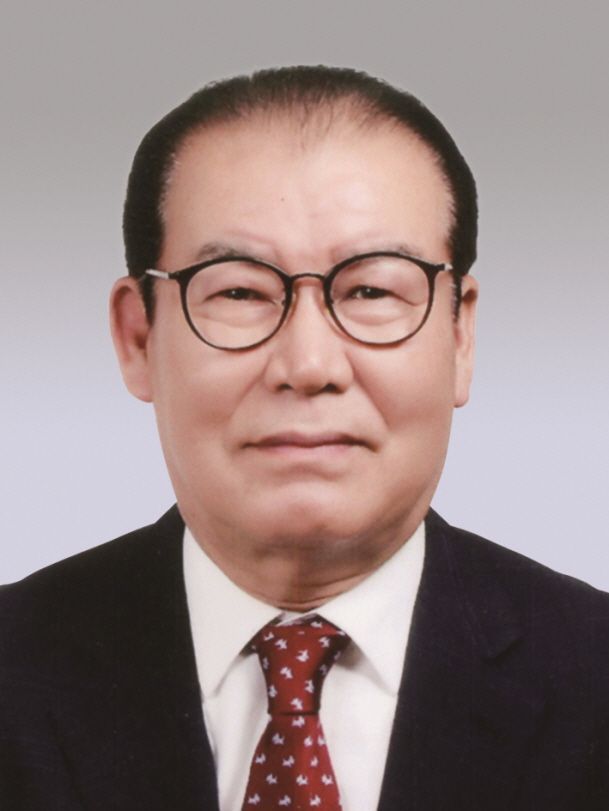
Daegu City Council member Kyunggu Jo (People Power Party, Suseong District 2) will deliver a five-minute free speech at the 2nd plenary session of the 319th extraordinary session on September 3, strongly criticizing Daegu City's poor road management and the risks of ground subsidence, and urging the immediate implementation of countermeasures.
Assemblyman Jo points out, "Over the past five years, Daegu has received 31,000 complaints about potholes, meaning citizens have reported an average of 17 road hazards per day. However, 147,000 square meters of poorly paved roads reported in 2022 remain neglected due to budget shortages."
He will also state, "During the same period, there have been 137 safety accidents caused by poor road paving, but only 33 victims have received compensation, forcing citizens to deal with both accident damages and legal disputes."
In particular, Assemblyman Jo emphasizes the seriousness of the issue based on the results of Daegu City's road condition survey.
He reveals, "As of 2024, 19% of Daegu's roads are rated as poor (D grade), and 5.6% are rated as very poor (E grade), meaning a total of 24.6% of roads are classified as dangerous. This indicates that about a quarter of Daegu's roads can be considered 'dangerous roads.'"
He also highlights underground safety issues, pointing out that there have been 12 cases of ground subsidence in the past five years in areas such as Paho-dong in Dalseo District, Bangchon-dong in Dong District, and Guam-dong in Buk District. Assemblyman Jo identifies the main causes as aging water and sewage pipelines over 20 years old and insufficient maintenance, noting, "Of the 15,713 kilometers of water and sewage pipelines managed by Daegu City, 63% are over 20 years old, yet the replacement plans are grossly inadequate."
In fact, for water supply pipelines, 695 kilometers are in urgent need of replacement, but only 196 kilometers (28%) are scheduled to be replaced over the next three years. For sewage pipelines, 4,564 kilometers are over 20 years old, but only 183 kilometers, or 4% of the total, are planned for replacement by 2029.
Assemblyman Jo warns, "At this pace, Daegu citizens will continue to be exposed to the risk of ground subsidence for decades to come," and calls for the city to establish far more proactive replacement plans.
He also points out, "Daegu's annual average budget for road maintenance remains at 15 billion won, with only 4.9 billion won actually allocated for pavement repairs. When comparing the budget per square kilometer for pavement repairs, Daegu's 300 million won falls far short of Busan's 400 million won and Gwangju's 800 million won."
Kyunggu Jo proposes four key improvement measures: a phased increase in the road maintenance budget, prioritizing repairs in poor and accident-prone areas, a significant expansion of the replacement rate for aging pipelines, and the establishment of deadlines and strengthened follow-up management for complaint processing.
Assemblyman Jo concludes, "Roads are the lifeblood of a city. Just as blocked arteries make the body sick, damaged roads sicken a city. Neglecting potholes leads to accidents, and ignoring sinkholes leads to disasters. Daegu City cannot afford any more delays and must take immediate action."
© The Asia Business Daily(www.asiae.co.kr). All rights reserved.
![Clutching a Stolen Dior Bag, Saying "I Hate Being Poor but Real"... The Grotesque Con of a "Human Knockoff" [Slate]](https://cwcontent.asiae.co.kr/asiaresize/183/2026021902243444107_1771435474.jpg)















