Greer, USTR Representative, in Fox News Interview
"Reciprocal Tariffs Based on IEEPA Are Lawful"
"Negotiations Continue... Multiple Tools Available"
The Donald Trump administration stated that tariffs are legal and that there are various legal means to justify them beyond the International Emergency Economic Powers Act (IEEPA), in response to a ruling by the U.S. Federal Circuit Court of Appeals that found reciprocal tariffs based on the IEEPA to be unlawful. The administration also emphasized that countries are continuing negotiations with the United States regardless of the ruling, revealing its intention to block attempts by trading partners to delay negotiations by taking advantage of legal uncertainty.
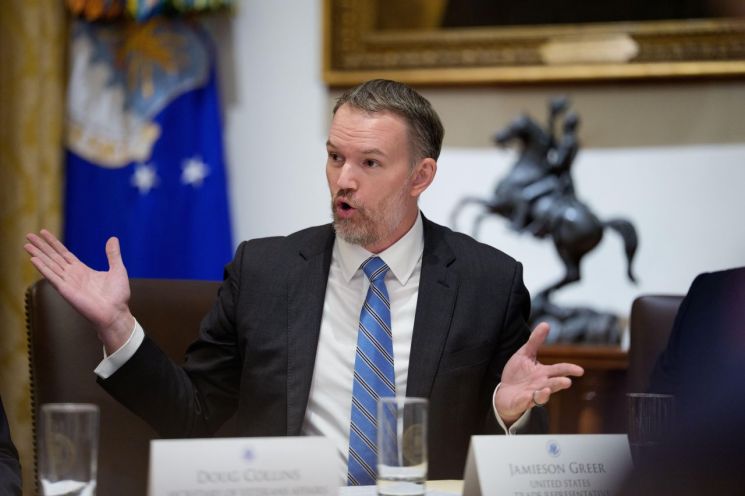
Jamieson Greer, a representative of the United States Trade Representative (USTR), said in a Fox News interview on August 31 (local time), "The core of the emergency we are facing is the enormous trade deficit in goods with the rest of the world, amounting to 1.2 trillion dollars," adding, "The legal authority used this time (IEEPA) is the best tool available to address this issue." He continued, "Four of the court's judges also agreed with much of President Trump's approach," and added, "This is not over yet, and all tariffs remain in effect. The IEEPA is the best and most flexible tool for imposing reciprocal tariffs."
Previously, on August 29, the appeals court ruled by a 7-to-4 vote that President Trump's reciprocal tariff measures based on the IEEPA were unlawful. However, considering the possibility of an appeal, the court suspended the effect of the ruling until October 14. Since President Trump immediately announced his intention to appeal, the final decision is expected to be made by the Supreme Court.
Representative Greer emphasized that there are sufficient means to impose tariffs beyond the IEEPA. He explained, "There are still a number of tariffs maintained on the grounds of national security," and "There are also various other tools." This means that item-specific tariffs imposed on automobiles, auto parts, steel, and aluminum are based on Section 232 of the Trade Expansion Act and are therefore not affected by this ruling. Furthermore, his remarks suggest that the Trump administration has a 'Plan B' to continue imposing tariffs using several legal grounds beyond the IEEPA.
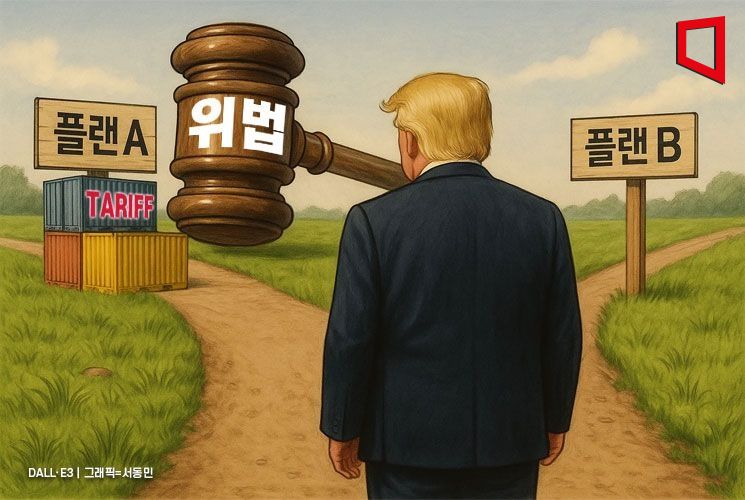
In fact, under Section 122 of the Trade Act, the United States can impose tariffs of up to 15% for up to 150 days on counterparties in the event of a trade deficit. Section 232 of the Trade Expansion Act, which is based on national security, Section 301 of the Trade Act for responding to unfair trade, and Section 338 of the Tariff Act can also be utilized. Accordingly, even if the Supreme Court ultimately rules the measures unlawful, the Trump administration is expected to continue its high-tariff policy through expanded item-specific tariffs or other legal workarounds.
When asked whether the ruling would undermine U.S. negotiating power, Representative Greer replied, "Not at all," stating, "Our trade partners are still negotiating very closely with us, and tariffs have already become part of the negotiation framework." He mentioned that he had conducted negotiations with a trade minister from a partner country the previous day and said, "I see this ruling as a temporary hiccup," reiterating, "I am very confident in the legality and necessity of the tariffs."
Experts also reported that the Trump administration had already been reviewing various alternatives in preparation for the court's decision. Josh Lipsky, director of international economics at the Atlantic Council, a U.S. think tank, said, "If other countries think this will lead to tariff relief, they are in for an unpleasant surprise," and analyzed, "Even if the Supreme Court upholds the appellate decision, there are plenty of alternative measures such as Section 338 of the Tariff Act."
The fact that the United States can utilize various levers in the diplomatic and security spheres beyond tariffs suggests that, regardless of the court's ruling, the Trump administration will be able to maintain a certain degree of negotiating power in trade talks.
Meanwhile, President Trump, who had criticized the court as "politically biased" on the day of the ruling, continued his offensive. Through his own social networking service, Truth Social, he claimed, "If it were not for the trillions of dollars we have already earned through tariffs, our country would have been completely destroyed and our military would have collapsed immediately," and criticized, "The radical leftist panel of judges in the 7-to-4 opinion did not care about this at all."
Peter Navarro, White House advisor on trade and manufacturing, also described the court's ruling as a "bad decision" in a Fox News interview, and said he was "very optimistic" about the upcoming Supreme Court ruling.
© The Asia Business Daily(www.asiae.co.kr). All rights reserved.
![Clutching a Stolen Dior Bag, Saying "I Hate Being Poor but Real"... The Grotesque Con of a "Human Knockoff" [Slate]](https://cwcontent.asiae.co.kr/asiaresize/183/2026021902243444107_1771435474.jpg)
















