Bill to Be Introduced This Fall
Civic Groups, Including Muslim Organizations, Voice Opposition
As the Quebec provincial government in Canada is pushing to ban prayers in public places, civic groups are protesting, arguing that this measure targets Muslims and infringes on fundamental freedoms.
According to the Guardian (UK) on the 29th (local time), Jean-Francois Roberge, Quebec's Minister of Immigration, recently announced that the provincial government plans to introduce a bill this fall to ban prayers in public places. Minister Roberge emphasized that this measure is a practical response, not an insult. He stated that the phenomenon of "street prayers," which has been spreading mainly in Montreal, Quebec's largest city, is a "serious and sensitive issue" and that the government has been closely monitoring the situation.
Last year, Quebec Premier Francois Legault also publicly stated that complaints about prayers in public places were increasing in Montreal. Premier Legault emphasized, "We do not want to see people praying on streets or in parks," adding, "If you want to pray, you should go to a church or mosque, not a public place."
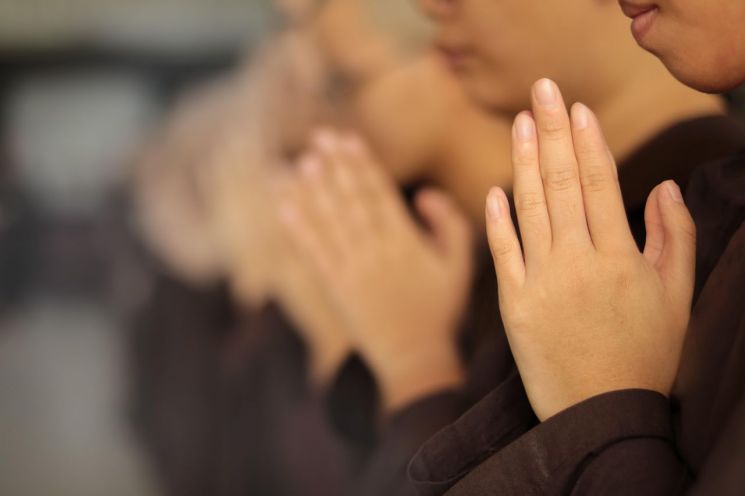
The provincial government's plan to ban prayers in public places appears to be related to the activities of a group called "Montreal4Palestine," which has held protests, including prayers, in front of Notre-Dame Basilica in Montreal over the past six months.
Some civic groups have pointed out that the Quebec government's bill could undermine fundamental rights such as freedom of religion, freedom of expression, freedom of assembly, and freedom of solidarity. The Canadian Muslim Forum, a Muslim organization, strongly asserted that the provincial government "should focus on real issues instead of implementing policies that stigmatize and exclude communities and weaken social cohesion in Quebec." The Canadian Civil Liberties Association criticized the bill, stating that it "targets specific religious communities and fosters exclusion and division."
There have also been claims that the ban on prayers in public places specifically targets Muslims among religious groups.
Andre Pratte, a former journalist and former Canadian senator, stated, "Catholics have prayed in public places for a long time without any resistance, but claiming that Muslim prayers are uncomfortable is essentially targeting only Muslim prayers."
The Guardian noted that this controversy reveals ongoing tensions in Quebec politics between secularism and religious inclusion, and that legal and social disputes are likely to intensify as the bill moves forward.
The Quebec coalition government, led by the Coalition Avenir Quebec (CAQ), has long made secularism a core legislative goal. In 2019, it enacted a law prohibiting public officials such as judges, teachers, and police officers from wearing religious symbols like hijabs and crosses while on duty. In addition, in 2023, the Quebec Ministry of Education issued guidelines banning the installation of prayer rooms in public schools and prohibiting public prayers in classrooms. In response, Muslim organizations filed lawsuits, claiming their rights were being violated.
© The Asia Business Daily(www.asiae.co.kr). All rights reserved.
![Clutching a Stolen Dior Bag, Saying "I Hate Being Poor but Real"... The Grotesque Con of a "Human Knockoff" [Slate]](https://cwcontent.asiae.co.kr/asiaresize/183/2026021902243444107_1771435474.jpg)
















