Park, Who Led Opposition to Medical School Expansion,
Applies to Severance Again After a Year and a Half
As the second half of the year’s resident recruitment at training hospitals nationwide has concluded, it has been reported that Park Dan, the former emergency response committee chairman of the Korean Intern Resident Association (KIRA) who led the collective resignation of residents in protest against the expansion of medical school admissions, was ultimately rejected in the resident recruitment at Yonsei University Severance Hospital.
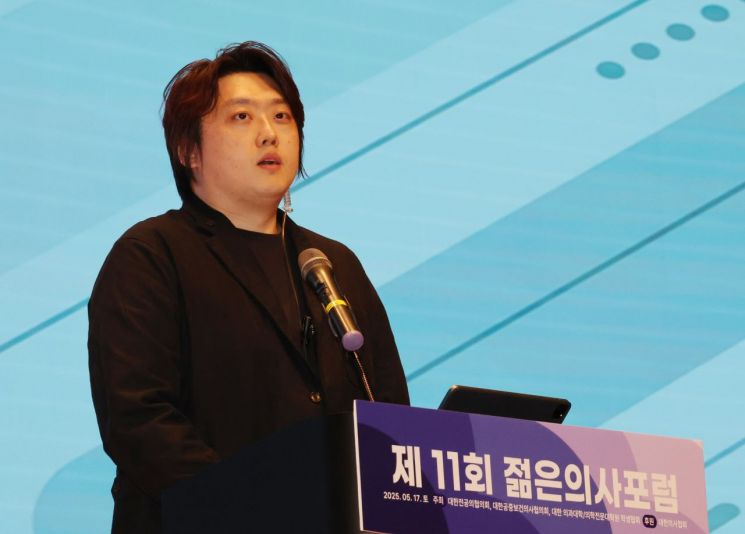 Park Dan, the former emergency response committee chairman of the Korean Intern Resident Association (KIRA), who led the collective resignation of residents, is reported to have been finally rejected in the resident recruitment at Yonsei University Severance Hospital. Yonhap News
On the 29th, Park posted on his personal social media account, saying, "Today, I received a notice of rejection. While it is a bit disappointing not to be able to work alongside the colleagues I shared joys and hardships with in the emergency room, there’s nothing I can do about it," adding, "This, too, is because of my own shortcomings."
He continued, "A few days ago, I submitted an application for the emergency medicine residency at Severance Hospital, hoping to train again in the emergency room," and added, "I plan to take some time to cool down and reflect on how I should move forward. I want to express my gratitude to everyone who sent their concern and encouragement."
Park was serving as a second-year emergency medicine resident at Severance Hospital when he was elected president of KIRA in August 2023. After the government officially announced the expansion of medical school admissions in February last year, the collective resignation of residents began in earnest, and he took the lead in responding to the situation as the emergency response committee chairman of KIRA.
In particular, after meeting with the president, he drew attention by strongly criticizing government policy and even stating, "There is no future for healthcare in Korea." At the time, he publicly declared on social media, "I have no intention of returning to the hospital," but this fall, he attempted to reapply for emergency medicine training. However, the result was rejection, which he disclosed himself.
Previously, Park joined the executive board of the Korean Medical Association as a vice president and maintained a hardline stance within the medical community. However, as the prolonged conflict between doctors and the government continued, there was growing internal criticism, and some resident representatives at hospitals publicly voiced their objections to Park.
In fact, at the time, representatives of residents at Seoul National University Hospital and others criticized Park’s attitude, stating, "The parties involved in the discussions have made communication with residents difficult." In response, Park announced in June, "I intend to step down from all positions. Although I did my best over the past year and a half, I only brought disappointment," and resigned from the emergency response committee.
Meanwhile, according to Yonhap News, for the second half of this year, only about 70 to 80 percent of the total quota applied for resident positions at the so-called 'Big 5' hospitals, but the application rates for essential specialties such as emergency medicine, pediatrics, and obstetrics and gynecology reportedly remained low.
© The Asia Business Daily(www.asiae.co.kr). All rights reserved.
![Clutching a Stolen Dior Bag, Saying "I Hate Being Poor but Real"... The Grotesque Con of a "Human Knockoff" [Slate]](https://cwcontent.asiae.co.kr/asiaresize/183/2026021902243444107_1771435474.jpg)















