More Prescriptions Among Women and Those Aged 70 and Older
The Most Prescribed Sleep Medication Was "Zolpidem"
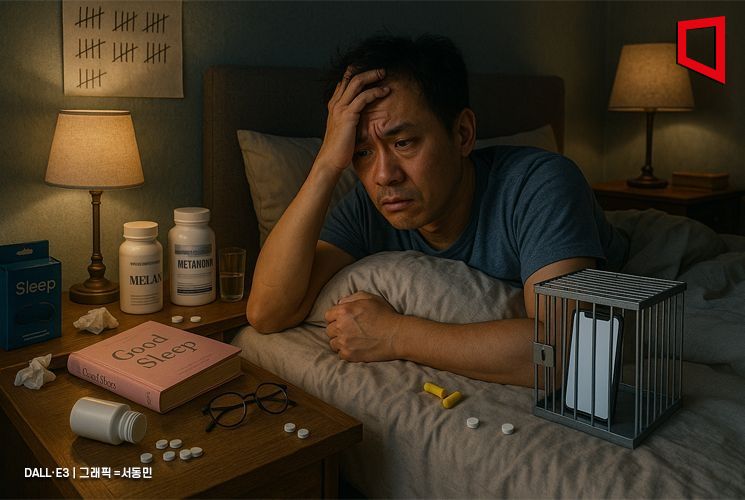
The number of insomnia patients in South Korea has increased significantly, resulting in the number of sleep medication prescriptions quadrupling over the past 12 years. The increase in sleep medication prescriptions was particularly notable during the COVID-19 pandemic.
On August 29, a joint research team led by Professor Lee Yujin from the Department of Psychiatry at Seoul National University Hospital and Professor Shin Aeseon from the Department of Preventive Medicine at Seoul National University College of Medicine announced that they had analyzed prescription trends for sleep medications among 8,136,437 South Korean insomnia patients aged 18 or older from 2010 to 2022, using National Health Insurance data.
The research team focused on four types of medications used to treat insomnia: benzodiazepines, non-benzodiazepines, low-dose antidepressants, and low-dose antipsychotics. They constructed a predictive model based on prescription data from before the COVID-19 pandemic (2010-2019) and then compared the actual prescription volumes during the pandemic period (2020-2021) with the predicted values.
More Prescriptions for Women and Those Aged 70 and Above
The analysis found that the number of sleep medication prescriptions and the number of patients receiving prescriptions steadily increased from 2010 to 2022. The total number of prescriptions rose from about 10.5 million in 2010 to approximately 38.5 million in 2020, 41.2 million in 2021, and 42.4 million in 2022-an increase of more than fourfold over 12 years. By gender, women received more prescriptions, and by age group, those aged 70 and older had the highest prescription rates.
Insomnia refers to a group of sleep disorders characterized by difficulty falling asleep, frequent awakenings, or waking up early in the morning. It is a common condition, affecting three to five out of every ten people at some point in their lives. However, when insomnia becomes chronic, it can lead not only to mental health issues such as depression and anxiety but also to the worsening of physical illnesses and a decline in quality of life. While international studies have reported increased use of sleep medications during the COVID-19 pandemic, this is the first large-scale domestic analysis comparing predicted and actual prescription volumes based on pre-pandemic trends in South Korea.
When comparing the pre-pandemic predictive model with the actual prescription volumes during the COVID-19 pandemic, the study found that sleep medication prescriptions exceeded predictions across all age groups during the pandemic. In particular, in 2021-when the pandemic was at its peak-young adults aged 18 to 29 exceeded the predicted prescription volumes for all four types of medications by the largest margin. The research team explained, "This demonstrates the significant impact of the COVID-19 pandemic on sleep medication use among young adults."
'Zolpidem' Was the Most Prescribed Sleep Medication
From 2010 to 2022, the most prescribed sleep medication in South Korea was zolpidem, followed by alprazolam and trazodone. By drug class, non-benzodiazepines such as zolpidem were prescribed the most, followed by intermediate-acting benzodiazepines, low-dose antidepressants, and long-acting benzodiazepines.
Professor Lee Yujin stated, "Sleep medication prescriptions have steadily increased from 2010 to 2022, with higher rates among women and the elderly. During the pandemic, prescription volumes greatly exceeded predictions, with the increase especially pronounced among younger people. This highlights the importance of monitoring safe medication use and potential side effects, particularly in this age group."
The results of this study were published in the international journal 'JKMS (Journal of Korean Medical Science)' of the Korean Academy of Medical Sciences.
© The Asia Business Daily(www.asiae.co.kr). All rights reserved.
![Clutching a Stolen Dior Bag, Saying "I Hate Being Poor but Real"... The Grotesque Con of a "Human Knockoff" [Slate]](https://cwcontent.asiae.co.kr/asiaresize/183/2026021902243444107_1771435474.jpg)















