Focusing on Addressing Key Issues
with Citizen-Centered Support
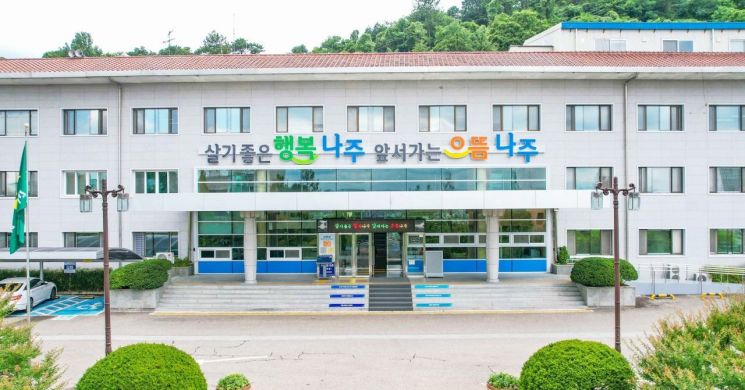
Naju City in South Jeolla Province announced on August 28 that it has drawn up the third supplementary budget proposal for 2025, totaling 1.2149 trillion won, and submitted it to the city council.
This supplementary budget is characterized by reducing less urgent projects and focusing investments on issues directly related to citizens' daily lives.
The budget amounts to 1.2149 trillion won, an increase of 95.6 billion won (8.5%) compared to the second supplementary budget. Despite fiscal tightening, the city has concentrated resources on stabilizing citizens' lives and addressing urgent issues.
In particular, in line with the policy direction of the Lee Jaemyung administration, the city has prioritized revitalizing the local economy by allocating 33.3 billion won for livelihood recovery consumption coupons to support citizens, and 500 million won to expand the issuance of local gift certificates to protect traditional markets and small business owners and boost local commercial districts.
Additionally, as part of the second phase of the Southern Region Wide-Area Tourism Development Project, 4.9 billion won has been allocated for the creation of the Jukseolheon Cultural Ecological Garden, and 900 million won for the development of a themed park at the Nampyeong small train station, which is currently unused due to facility aging.
Notably, the city plans to accelerate the construction of tourism infrastructure in the original downtown by investing 500 million won to promote local branding that leverages unique, differentiated local assets to enhance competitiveness.
In the agricultural and energy sectors, the city has allocated 2.3 billion won for the Saeji-myeon Daesan District Rural Space Improvement Project, which was recently selected in a public contest organized by the Ministry of Agriculture, Food and Rural Affairs, in addition to ongoing projects in the Noan and Geuman Districts. Furthermore, 2 billion won has been allocated for the creation of villages for returning farmers and urban-to-rural migrants, and 600 million won for revitalizing the future local energy ecosystem by establishing an ESS-based system to efficiently manage solar power at the sports park.
To ease the housing cost burden for young people, an additional 300 million won has been allocated to the special temporary youth monthly rent support program. The city has also earmarked 2.9 billion won to prepare for the operation of the Complex Innovation Center and the Living SOC Complex Center, both set to open next year, thereby reflecting its commitment to improving the residential environment.
In the areas of safety and welfare, the city has allocated 900 million won for disaster risk area improvements, 500 million won to enhance cooling shelters at senior centers, and 150 million won for holiday consolation payments to national merit recipients.
Mayor Yoon Byungtae of Naju stated, "This supplementary budget focuses on stabilizing livelihoods and securing future growth engines," and added, "We have boldly invested in projects directly related to citizens' lives, such as safety and welfare, youth housing support, tourism, agriculture, and energy. We will push forward swiftly to ensure prompt results."
Meanwhile, the supplementary budget proposal will undergo review at the 272nd session of the Naju City Council, which begins on September 1, and is scheduled to be finalized on September 15.
© The Asia Business Daily(www.asiae.co.kr). All rights reserved.

















