"It Is Difficult to Explain Every Variable, and the Scope of Explanation Is Ambiguous"
"Patient Protection Systems Are Driving Avoidance of Essential Medical Fields"
There is growing backlash in the medical community over a court ruling that held medical staff liable for damages for allegedly violating their duty to explain surgical procedures. The controversy centers on a case in which an emergency occurred during surgery, prompting a different specialist-not the primary surgeon-to take over the procedure. Despite this, the patient suffered harm, and the court ordered the medical staff to pay monetary compensation to the patient. The medical community argues that this could significantly limit doctors’ discretion to make the best possible decisions, regardless of surgical outcomes. There are also concerns that if such “judicial risks” continue to escalate, the already vulnerable essential medical sectors may face even more severe staffing shortages.
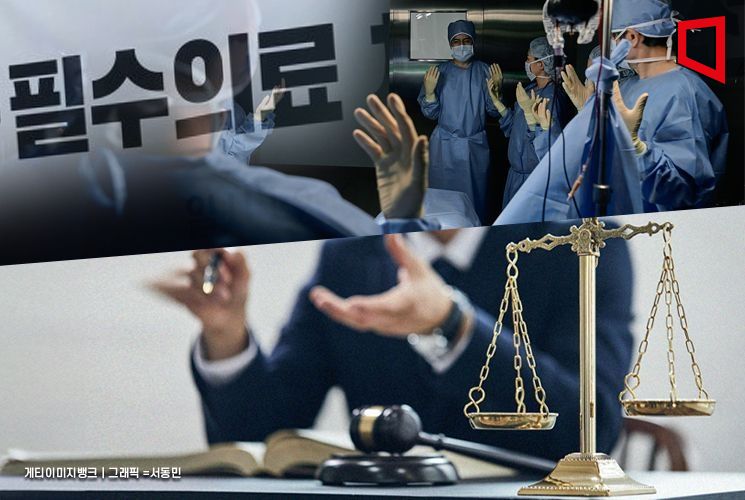
According to the medical community on August 29, the recent court ruling ordering medical staff to pay 10 million won in damages to a patient whose vision was permanently impaired due to complications during surgery has sparked renewed opposition and concern from physician groups, including the Korean Medical Association.
The issue in this case was that the medical staff failed to fulfill their "duty to explain" to the patient. During surgery, the patient exhibited abnormal symptoms, and based on the primary surgeon's judgment, a relevant specialist was urgently brought in to continue the operation. Nevertheless, the patient ultimately suffered permanent vision loss. The court found the medical staff liable for compensation because they did not properly explain to the patient or guardian that another doctor would be taking over the surgery for specific reasons, and that certain complications could arise as a result. The court did not recognize any negligence in the medical act itself.
Under Article 24 of the current Medical Service Act, medical professionals must explain to the patient or guardian the necessity, method, content, and anticipated side effects of medical procedures that could cause significant harm-such as surgery, blood transfusion, or general anesthesia-and obtain their consent. However, if the explanation and consent process would delay the procedure and put the patient’s life or health at serious risk, this requirement can be waived. In this case, the medical staff argued that they were able to respond immediately to the abnormal symptoms through consultation with a specialist, but the court did not accept this argument.
The medical community contends that it is practically impossible to explain every variable under the duty-to-explain regulations, and that the scope of explanations is ambiguous, allowing for arbitrary judgments by patients or courts. A previous ruling, in which doctors explained the risk of cerebral infarction but did not mention the specific risk of hypoxic brain injury and were found to have violated the law, is cited as a representative example of such ambiguity and room for subjective interpretation.
Jeon Seonghun, Director of Legal Affairs at the Korean Medical Association (Hanbyul Law Firm), said, "Violations of the duty to explain are often applied in cases where no medical malpractice is evident but compensation for the patient seems necessary," and added, "As strict standards are increasingly applied based solely on the judge’s impression, confusion at the clinical site is growing."
There are ongoing claims that this situation is closely linked to the avoidance of essential medical fields. Kim Jaeyeon, President of the Korean Society of Obstetricians and Gynecologists, stated, "Professionals in essential medical fields directly related to life-such as obstetrics, surgery, and thoracic surgery-are under significant psychological and economic pressure due to the broad application of the duty to explain," adding, "This is leading to a reluctance to practice in these fields, thereby undermining the foundation of public health."
He further noted, "Systems intended to protect patient rights are becoming a major cause of avoidance in essential medical fields, as they encourage a tendency to refuse even slightly high-risk patients."
In response to this situation, the medical community has for years considered documenting a common "standard treatment guideline," similar to standard terms and conditions for financial products, but has concluded that it is not feasible. The wide variety of medical procedures and the diverse backgrounds of patients-including underlying conditions, medical history, physical strength, and age-make it practically impossible to establish universal treatment guidelines.
There have also been calls for discussions within the legal community to find a fundamental solution. Jeon emphasized, "The social consensus that expert physicians should be trusted to judge the uncertainty and specific diversity of medical acts is breaking down," and added, "Recently, there has been a trend toward undermining this consensus. I hope the legal community will engage in more discussions that listen to the voices of field experts."
© The Asia Business Daily(www.asiae.co.kr). All rights reserved.

















