"We will lower entry barriers for small businesses so that 'K-Reverse Direct Purchase' can become a new driving force in the domestic export market." Myunggu Lee, Commissioner of the Korea Customs Service, made this statement during a meeting with e-commerce export companies on the 28th.
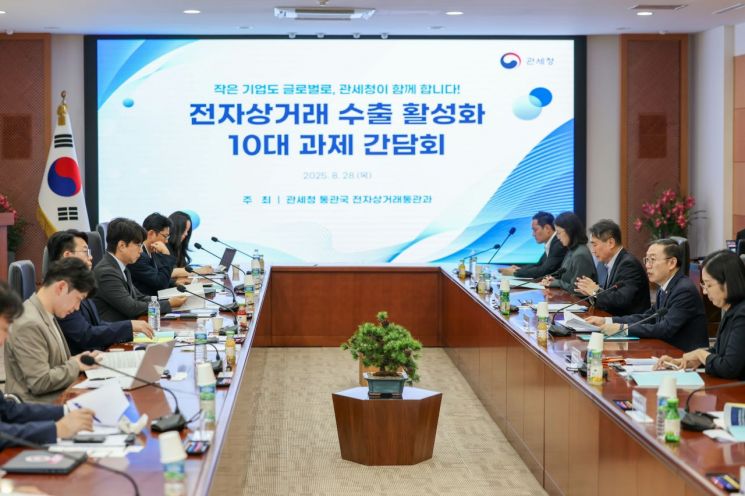 Customs Commissioner Myunggu Lee (second from the right in the line) is holding a meeting with e-commerce export companies at Seoul Customs on the 28th. Photo by Korea Customs Service
The Korea Customs Service has established the foundation for e-commerce exports (reverse direct purchase) by reflecting field opinions in its customs clearance and tax support policies, such as raising the simplified export declaration amount and permitting consolidated packaging and shipping.
As a result, the scale of e-commerce exports increased by about 20%, from 28,891,000 cases in June last year to 34,557,000 cases in June this year. In terms of export value, this represents an increase of 1.604 billion dollars (22%).
Building on this momentum, the Korea Customs Service plans to provide comprehensive support to small-scale companies so that domestic small and medium-sized enterprises can expand their presence in the export market using e-commerce exports as a stepping stone.
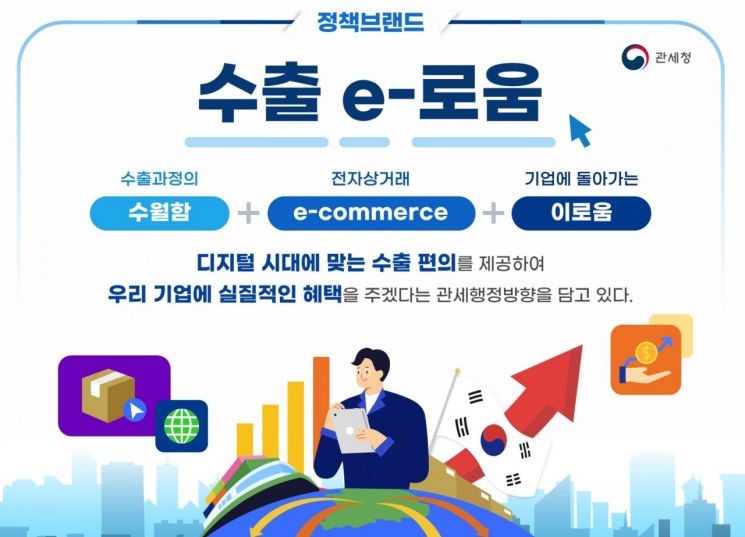
The agency also unveiled a new policy brand, "Export e-Roum," which embodies this intention. "Export e-Roum" is a compound word that combines "ease" in the export process, "benefit" to companies, and the letter "e" symbolizing e-commerce. It signifies the commitment to providing customized export convenience in the digital era and rolling out policies that domestic companies can tangibly experience.
In particular, the Korea Customs Service will promote the "Top 10 Tasks for Activating E-commerce Exports" under the "Export e-Roum" policy brand. These include improving the export declaration system, supporting overseas expansion for small business owners and beginner exporters, and expanding support for responding to overseas customs environments and post-export assistance.
Improvements to the e-commerce export declaration system include raising the limit for simplified export declarations from 4 million won to 5 million won to reduce the reporting burden on companies. In consideration of the characteristics of small businesses, which mainly engage in small-quantity, multi-item sales, the deadline for final price declaration will be extended from 60 days to 90 days after the confirmation and payment date.
To help small business owners and beginner exporters enter overseas markets, the agency will provide customs clearance benefits such as exempting certain platform-based companies from submitting documents and lowering inspection rates. New standards will also be introduced to reduce penalties (by 50%) imposed when shipments are not made within 30 days after export declaration.
In addition, the Korea Customs Service plans to provide customs information and listen to and resolve difficulties so that companies do not face challenges when utilizing Free Trade Agreements (FTAs). The agency will also improve guidelines for re-importing returned goods due to order cancellations, expanding the scope of duty-free re-imports, thereby enhancing support for companies in responding to overseas customs environments and post-export needs.
Commissioner Myunggu Lee stated, "The Korea Customs Service has selected and will promote the 'Top 10 Tasks for Export e-Roum' to implement policies that export companies can feel in the field. We will focus our customs administration capabilities on helping even relatively small companies enter and expand in the export market more easily through e-commerce."
© The Asia Business Daily(www.asiae.co.kr). All rights reserved.


















