Neglecting Creators in Pursuit of Short-Term Gains
Relying on Webtoon IPs and Riding on Past Hits
OTT Platforms and the Government Must Reflect on Their Focus on Short-Term Stability
The global streaming festival that concluded in Busan on August 25. Ryu Jemyoung, the 2nd Vice Minister of Science and ICT, Kim Junghan, Vice President of CJ ENM, and Choi Juhee, CEO of Tving, all expressed their regrets regarding "K-Pop Demon Hunters." "Was it really impossible for us to make this?" "I wonder how things would have turned out if it had been launched on our platform and introduced to the global market."
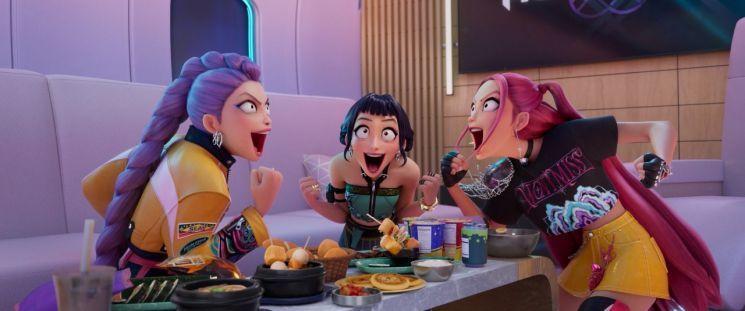
The reality behind these laments is harsh. While Netflix has invested 3.4 trillion won in Korea over four years since 2023, domestic OTT platforms are discussing mergers just to survive. They have been struggling with deficits for years and have yet to find a clear breakthrough. Ironically, Netflix, which dominates the market, is showing more signs of change. It is adjusting its revenue structure by introducing ad-supported plans and charging for account sharing, while also focusing on discovering fresh stories. This is why creators are turning to Netflix before considering local OTT platforms.
The Korean content industry has long neglected its creators. Demands for rights protection have been repeatedly ignored, and plagiarism and unfair contracts have become rampant. The entire system revolves around directors and actors, resulting in the decline of the original screenplay market. The industry relies on recycling webtoon and web novel IPs, essentially piggybacking on existing hits. There is no room for adventurous choices.
Even in North America, the production of K-Pop Demon Hunters did not go smoothly from the start. Sony rejected the project, citing "no box office potential." It was only when Netflix boldly decided to take it on that the work was able to secure a global fanbase. This was not just luck, but the outcome of a creator's vision aligning with a platform's bold decision. When capital interferes with creative decision-making, such results are impossible. It is only when smart capital, aware that a single success can more than make up for hundreds of failures, entrusts creators with authority that this becomes possible. Domestic OTT platforms, which missed opportunities by pursuing only short-term safety, and a government that was passive in supporting connections between creators and platforms, need to reflect on this.
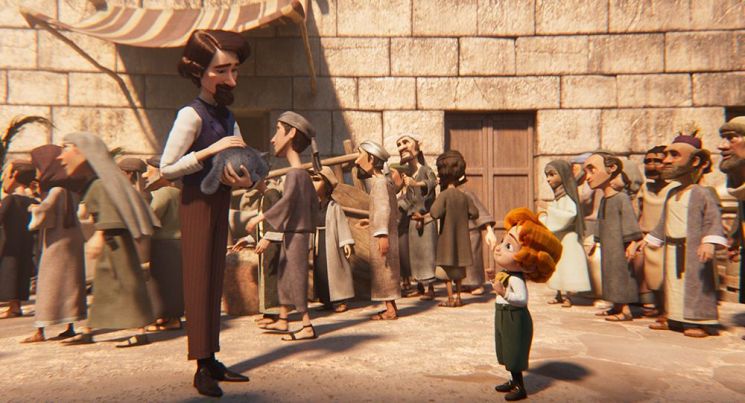
Despite unstable conditions, Director Jang Sung-ho's "King of Kings" achieved great success in North America. This was the result of steadfastly sticking with the project for ten years. Throughout production, attracting investment was difficult, and those around him scoffed, calling it a "ridiculous fantasy." However, Director Jang was confident that even if profits were not high in North America, he could balance the books through secondary rights and follow-up projects.
Even with such examples, the government and domestic OTT platforms remain fixated on short-term results and stable profits. They seem to lack both the ability and the will to design a creator-centered ecosystem. Even acknowledging practical constraints, there were things that could have been done. The establishment of a "drama production support fund," the enactment of a "screenplay copyright protection enhancement law," and the requirement for "minimum three-year long-term contracts" are prime examples.
Ultimately, the reason we could not create K-Pop Demon Hunters was not incompetence, but a lack of long-term structures and vision to support creators. What is needed now is not self-consolation, but the establishment of a system that respects and protects creators' challenges. Instead of simply envying overseas successes, we must first build an environment in Korea that can produce global hits. Only then can we create the next K-Pop Demon Hunters ourselves.
© The Asia Business Daily(www.asiae.co.kr). All rights reserved.


















