Despite Producing 7,859 Talents, Settlement Rate Remains Below 5%
Need for Talent Database and Dedicated Post-Management Organization
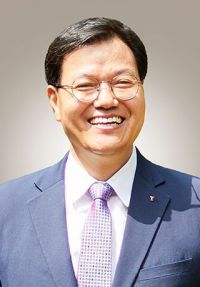 An Pyunghwan, Gwangju City Council Member.
An Pyunghwan, a member of the Gwangju City Council (Democratic Party of Korea, Buk-gu District 1, Chair of the Administrative Autonomy Committee), stated in his “5-Minute Free Speech” during the first plenary session of the 336th extraordinary meeting on August 28, 2025, that “post-management of talent is an urgent task for the success of the second phase of the AI-centered city project.”
Assemblyman An said, “With the exemption from the preliminary feasibility study, the second phase of the AI project has achieved a significant milestone, marking a new turning point for Gwangju in AI innovation. From now on, the focus should shift from quantitative achievements to building a people-centered AI ecosystem.”
Since 2019, the first phase of the AI-centered city project in Gwangju has produced 7,859 talents, but only 377 of them found employment within the region (a settlement rate of less than 5%). While 449 were confirmed to have found jobs in the Seoul metropolitan area and other regions, the whereabouts of 7,033 graduates remain unknown.
Assemblyman An pointed out, “Although we have trained talent through education, there is a lack of quality jobs and startup infrastructure that would allow them to stay in the region. Gwangju is facing a contradictory situation where it serves as a supplier of talent but fails to become a city where talent settles.”
He emphasized the need to establish a dedicated organization for post-management so that AI talent can settle in the region and grow together with Gwangju’s industrial ecosystem, stating, “It is not enough to simply foster talent; we must create a system that enables them to continue their careers in Gwangju.”
He argued that a dedicated organization should conduct tracking surveys of graduates every one to three years to identify employment, startup, and attrition status, and based on this, develop policies to resolve the mismatch between industry demand and workforce supply.
He also called for the establishment of an AI talent database platform to manage graduate information in real time and serve as a hub to support connections with companies and institutions.
Assemblyman An stressed, “Over the past five years, Gwangju has experienced a net outflow of more than 38,000 people, with more than half of them being young people under the age of 40. In a reality where the region’s growth engine is leaving, nurturing and managing talent is not a choice but a necessity.”
Meanwhile, Assemblyman An added, “An AI-centered city cannot be completed simply by equipping hardware. Only when trained talent grows in the region and develops companies and industries can Gwangju truly emerge as a central city of AI innovation.”
© The Asia Business Daily(www.asiae.co.kr). All rights reserved.
















