Calls for Concentrating AI Infrastructure in Gwangju
Strategic Policies Needed for a Competitive AI Cluster
Hong Giwol Stresses Retaining Local AI Talent and Business
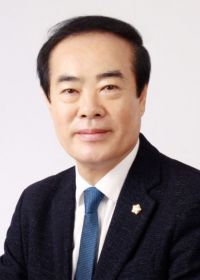 Hong Giwol, Gwangju City Council Member.
There has been a call for Gwangju to take a proactive and strategic approach to policies in order to establish itself as a leading city in artificial intelligence (AI).
On August 28, Hong Giwol, a member of the Gwangju City Council (Democratic Party of Korea, Dong-gu District 1), urged during the 336th first plenary session's "five-minute speech" that "AI-related infrastructure should be concentrated in Gwangju to build a competitive AI cluster."
Over the past five years, Gwangju City has invested 426.9 billion won in the first phase of its AI project, establishing key infrastructure such as the National AI Data Center and demonstration equipment. Notably, 299 companies have signed memorandums of understanding (MOUs) with the city, and more than half of these-158 companies-have established a presence in Gwangju. Through the AI Academy, the city has also produced 1,221 AI specialists over the past five years, up to last year.
However, as competition among local governments to secure budgets for AI projects intensifies, there is a growing need for Gwangju to develop its own detailed countermeasures. There is a rising consensus that major infrastructure, such as the National AI Computing Center and AI Mobility Pilot City, should be concentrated in Gwangju in order to build a competitive AI cluster.
Hong Giwol stated, "Given the nature of the AI industry, concentrating infrastructure is an essential strategy to win in global competition," and argued, "Rather than distributing projects broadly, we should implement regionally specialized policies."
He added, "Only 46.4% of AI Academy graduates found employment in our region, while the remaining 53.6% left for other areas. We need more detailed policies to create a business-friendly environment so that AI talent can find jobs and start businesses locally."
Meanwhile, Hong Giwol proposed practical measures to achieve these goals, including: conducting corporate surveys to develop customized support plans; optimizing AI curricula to reflect industry demand; and establishing policies to connect local employment and entrepreneurship opportunities.
© The Asia Business Daily(www.asiae.co.kr). All rights reserved.
![Clutching a Stolen Dior Bag, Saying "I Hate Being Poor but Real"... The Grotesque Con of a "Human Knockoff" [Slate]](https://cwcontent.asiae.co.kr/asiaresize/183/2026021902243444107_1771435474.jpg)














