Closed Schools Limited to Educational Uses Only
Seoul City Council Seeks to Reframe Them as 'Public Assets' for Local Residents
Welfare Facilities, Rental Housing, and Corporate Leasing Under Consideration
Government Also in Talks with Local Auth
The Seoul Metropolitan Council is making efforts to utilize closed schools in a variety of ways. Although the number of school closures is increasing in Seoul, most of these sites are currently being used only as educational facilities. The logic is that closed schools are considered a "public asset," and there are also discussions about using them as welfare facilities or sites for rental housing.
According to the Seoul Metropolitan Government and other sources on August 28, the council recently received an interim report on the "Study on Public Utilization Plans for Closed Schools," which began in May. In the second half of the year, the council plans to hold discussions with the city government to improve related systems. A council official explained, "There are many stakeholders involved in the utilization of closed schools, so the priority is to identify each party's position," adding, "We plan to fully reflect the results of the Focus Group Interviews (FGI)."
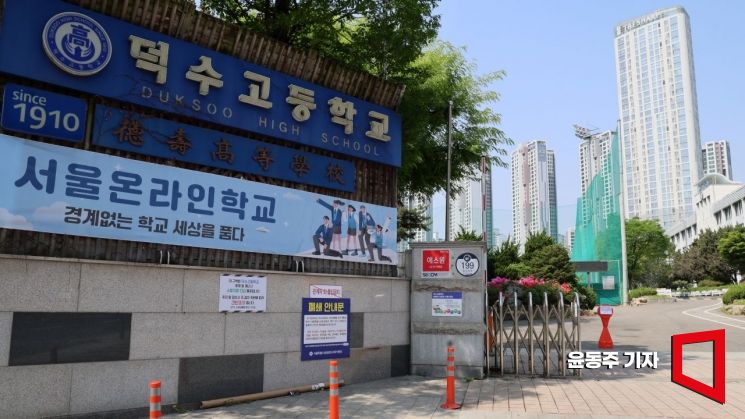 The Deoksu High School, which was closed last year, is currently being used as the Seoul Integrated Online School. 2025.04.26 Photo by Yoon Dongju
Currently in Seoul, in addition to Gongjin Middle School and Yeomgang Elementary School, schools such as Hwayang Elementary School in Gwangjin District, Dobong High School in Dobong District, and Deoksu High School and Seongsu Technical High School in Seongdong District have been closed. These facilities have either already been converted into educational facilities such as eco-schools, the main campus of the Early Childhood Education Promotion Center, and the Hwayang Future Education and Culture Center, or are scheduled for such use.
However, there have been ongoing criticisms that these utilization plans were established unilaterally by the Office of Education without reflecting the opinions of local residents, based solely on the Office's policy considerations. Closed schools are typically managed by the local education support office, and utilization plans are developed to meet the needs of the Office of Education. As a result, with such limited scope for use, there are many cases where utilization plans for closed schools are not properly implemented due to overreliance on the Office of Education.
This is why the city council is seeking to approach closed schools as "public assets." The current study reportedly covers options such as using closed schools as community spaces or welfare facilities for local residents, as well as sites for public rental housing.
There are also discussions about generating revenue through partnerships with the private sector. Since schools are usually built in accessible locations, a key proposal is to provide closed schools to companies or other external sources of funding, then use the income from such arrangements or in-kind donations to fund educational resources.
The city council plans to support the Seoul Metropolitan Government in refining related policies once the study is completed in the second half of the year. There is also a possibility of detailed discussions on business models, including administrative and financial support through ordinance amendments and the implementation of a project contest system.
Efforts to expand the utilization of closed schools are also underway at the national level. According to the Local Education Finance Information statistics, as of last year, there were a total of 103 closed school sites nationwide. The Ministry of Education and the Ministry of the Interior and Safety are currently coordinating detailed plans with local government officials, and as early as next month, the "Support Plan for Promoting the Utilization of Closed Schools" will be announced.
Recent discussions have reviewed ways to use closed schools as facilities needed by the local community, such as childcare centers, nursing homes for the elderly, rental housing, and public libraries, as well as directions for institutional improvements to address obstacles to their utilization. Specific alternatives were also presented, such as linking the Ministry of Education's school complex facility contest projects and the Ministry of the Interior and Safety's Local Extinction Response Fund to ease the financial burden on local governments. Jeon Jinseok, Director of Education Autonomy and Safety Policy at the Ministry of Education, stated, "Closed schools are shared assets of the metropolitan and provincial offices of education, and at the same time, they are important assets for the local community," adding, "We will work to revitalize the use of closed schools through close cooperation between the central and local governments so that these schools can be reborn as spaces that serve as the center of the local community."
© The Asia Business Daily(www.asiae.co.kr). All rights reserved.
![Clutching a Stolen Dior Bag, Saying "I Hate Being Poor but Real"... The Grotesque Con of a "Human Knockoff" [Slate]](https://cwcontent.asiae.co.kr/asiaresize/183/2026021902243444107_1771435474.jpg)















