Korea Investment & Securities highlighted nuclear power as the most attention-grabbing area among the various industrial collaborations discussed at the Korea-U.S. summit. The company analyzed that, with discussions on revising the Korea-U.S. Nuclear Cooperation Agreement (the 123 Agreement) on the negotiation table, there are still opportunities for value investing.
On August 28, Park Kihoon, a researcher at Korea Investment & Securities, explained in a report that, among the scenarios for revising the 123 Agreement, the most realistic one is not a full revision but rather a model involving participation in uranium enrichment within the United States.
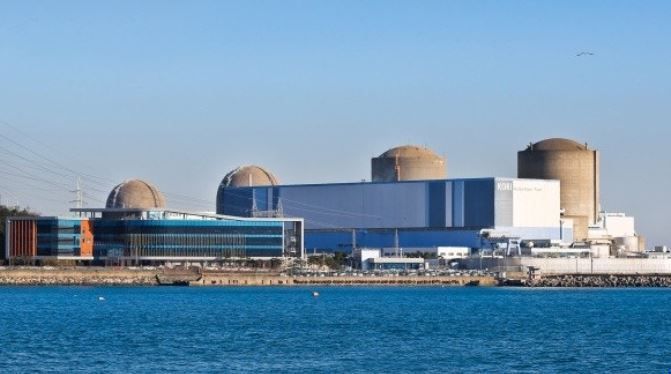
The "123 Agreement" applies to countries using U.S. nuclear technology when they enrich uranium or reprocess spent nuclear fuel. This means they must comply with the standards set by the U.S. government and Congress. The agreement is based on Section 123 of the U.S. Atomic Energy Act, which is why it is called the "123 Agreement." As a result, although Korea has world-class capabilities in construction and operation, it lacks autonomy in the fuel cycle stage, making it difficult to demonstrate full-package (construction and operation + fuel supply + spent fuel management) competitiveness in overseas nuclear power plant exports.
Park stated, "Korean companies could invest in enrichment facilities in the United States or participate through joint ventures with local firms. In this case, they could secure ownership of the output without directly importing the technology." He added, "This would also benefit the United States by reducing its dependence on Russian-enriched uranium and strengthening its supply chain."
Park predicted that if the model of participating in enrichment within the United States is allowed, it would have a positive impact across the entire nuclear power value chain. He especially identified equipment suppliers as the most direct beneficiaries.
He explained, "Doosan Enerbility, for example, holds a dominant position in core facilities such as reactor pressure vessels, steam generators, and turbines. Thanks to its already established large-scale infrastructure, an increase in orders would result in significant performance leverage."
He continued, "Next is the operation and maintenance (O&M) sector, where Korea Electric Power Corporation KPS is the leading player. If fuel cycle stability is secured, not only will overseas nuclear power plant orders increase, but long-term maintenance demand will also expand. This is highly likely to lead to stable mid- to long-term performance improvement."
Park added, "Although it is currently unclear whether the agreement will be revised, the structural growth momentum of the nuclear power industry remains valid. We recommend value investing during the market adjustment phase."
The best-case scenario for the nuclear power sector would be a full revision of the agreement, allowing Korea to secure rights for uranium enrichment and spent nuclear fuel reprocessing. There is precedent for the United States granting such exceptions to Japan, but due to the North Korea factor, the possibility of a similar exception for Korea is limited.
However, Park believes that the model of participating in enrichment within the United States could align the interests of both countries. He said, "Korea is already at a world-class level in construction and operation capabilities, but lacks competitiveness in the fuel cycle, making its full-package offering less attractive compared to competitors. The United States wants to maintain influence in the enrichment sector, but its nuclear power infrastructure has weakened due to decades of underinvestment."
He continued, "Even if a full revision of the agreement is not permitted, a compromise in the form of joint ventures or investment participation in the United States could provide tangible benefits to both countries. Korea could reinforce its export competitiveness, while the United States could achieve both industrial revitalization and stronger alliance ties."
© The Asia Business Daily(www.asiae.co.kr). All rights reserved.

















