No Progress Despite Successive Meetings Between Putin and Zelensky
Ceasefire Talks Remain at a Standstill
On August 26 (local time), U.S. President Donald Trump warned that he would impose strong economic sanctions on Russia if Russia and Ukraine fail to reach a ceasefire agreement.
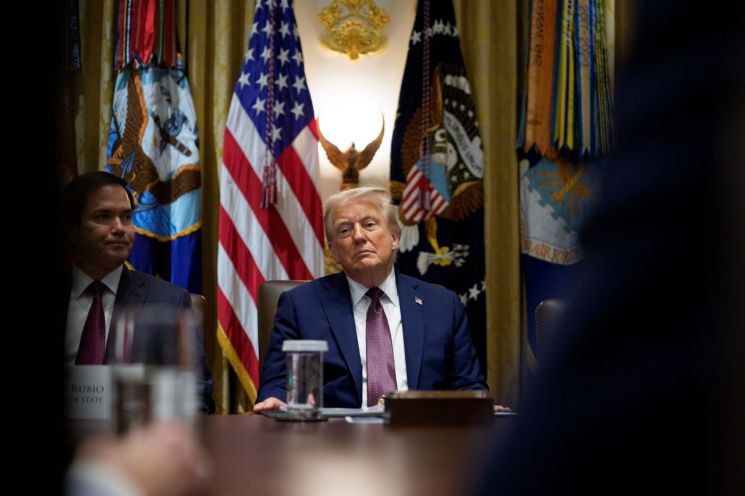
During a Cabinet meeting held at the White House that day, President Trump responded to related questions from reporters by saying, "We want to see an end to the war," and added, "We have economic sanctions. I am talking about economic sanctions because we do not want this to escalate into a world war."
He stated, "I want to see a ceasefire agreement. If I have to take action, what I have in mind is very, very serious. But I want the war to end."
He further emphasized, "Let's not turn this into a world war. Let's make it an economic war," adding, "An economic war would be bad, and it would be bad for Russia."
This message signals an intention to use economic sanctions instead of military escalation, appearing to pressure Russia to come to the negotiating table.
President Trump has positioned himself as a mediator for a ceasefire agreement by meeting successively with Russian President Vladimir Putin, Ukrainian President Volodymyr Zelensky, and European Union leaders. However, negotiations with Russia ended without any significant results, and ceasefire talks remain at a standstill.
On August 23, President Trump also said, "I am not happy about anything related to this war," and stated that he would make an important decision regarding the war in Ukraine in two weeks.
Speaking to reporters that day, President Trump remarked, "Zelensky is not entirely innocent either. It takes two to tango." This is interpreted as pointing out that Ukraine also bears some responsibility for the stalled ceasefire negotiations, not just Russia.
© The Asia Business Daily(www.asiae.co.kr). All rights reserved.

















