Wetland Loss Means Species Extinction
Supplying Nutrients and Food to Ecosystems
Wetland Center Discovers 30 New Sites
Wetlands in South Korea are disappearing at a rapid pace. This is not merely a change in natural scenery; it poses a simultaneous threat to key ecosystem services at the national level, including water resource management, carbon sequestration, and biodiversity conservation. In this context, the Wetland Center at the National Institute of Ecology is emerging as a central pillar of the national wetland conservation policy, serving as a specialized institution that encompasses domestic wetland surveys, conservation, restoration, and even international cooperation.
According to the Ministry of Environment and the National Institute of Ecology, the Fourth National Inland Wetland Monitoring (2016-2020) revealed that, as of 2017, 176 out of 2,499 wetlands registered in the wetland inventory had already disappeared. This represents about 7% of all wetlands. The causes of wetland loss are complex. Droughts and floods caused by climate change, as well as consecutive abnormal weather events, have acted as direct factors, while human activities such as land reclamation, development, and the expansion of farmland have accelerated the rate of destruction. The seriousness of the issue is heightened by the fact that this is not just a reduction in area, but a structural change that threatens the very foundation of human survival.
The disappearance of wetlands leads directly to the extinction of species. Species that depend on wetland ecosystems are not limited to isolated populations but are interconnected throughout the entire food chain, meaning that the destruction of a single habitat can trigger a cascade of extinctions. Experts point to this as a "warning sign of ecosystem collapse."
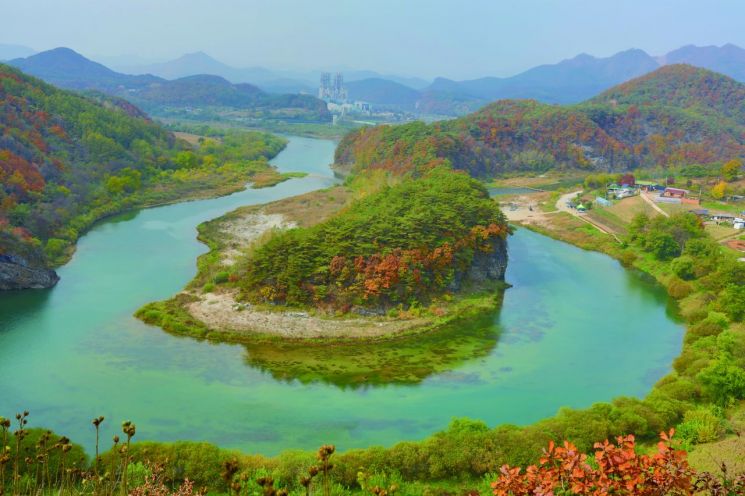
Wetlands: A Repository of National Ecosystem Services and Their Multifaceted Functions
Wetlands are core ecosystems that perform multidimensional functions such as flood control, shoreline stabilization, water purification, and carbon sequestration. Acting as natural reservoirs, they absorb and store rainwater during precipitation, regulating downstream flow and reducing flood damage. Coastal wetlands serve as natural breakwaters, absorbing and dispersing the energy of waves during typhoons or storm surges to protect the land.
Wetlands supply nutrients and food to ecosystems. Estuarine and floodplain wetlands enhance productivity through accumulated nutrients, supporting food chains for a wide variety of species including microorganisms, insects, fish, and birds. They also serve as carbon sinks. Although wetlands cover only 6% of the Earth's surface, they store more than 40% of terrestrial carbon. In particular, peatlands and mountain wetlands play a decisive role in absorbing atmospheric carbon dioxide, making them key ecosystems for responding to the climate crisis.
Wetland plants and soils also function as natural water purifiers, removing excess nutrients and harmful substances. For example, Florida's cypress swamps in the United States have been reported to filter out 98% of incoming nitrogen and 97% of phosphorus. Above all, wetlands are a treasure trove of biodiversity. More than 40% of the world's species and over 12% of mammals depend on wetlands. Approximately 1 billion people rely on fish protein sourced from wetlands.
The total area of wetlands in South Korea is 3,635.6 square kilometers, accounting for 3.6% of the national territory. During the 2016-2020 inland wetland survey, a total of 6,786 species of wild organisms were identified in 1,061 locations. This includes 2,368 plant species, 199 fish species, 288 bird species, 37 mammal species, and 3,623 insect species. Notably, of the 282 species designated as endangered wildlife by the Ministry of Environment, 116 species (41%) depend on wetlands.
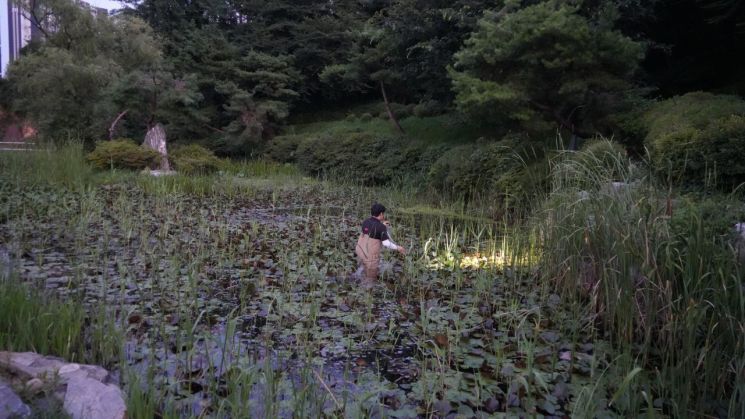 The Wetland Center at the National Institute of Ecology is conducting a wetland survey. (Photo by National Institute of Ecology)
Wetland Center at the National Institute of Ecology: At the Forefront of Conservation
Located in Changnyeong County, South Gyeongsang Province, the Wetland Center at the National Institute of Ecology serves as the key institution for wetland conservation in South Korea. Established by the Ministry of Environment in 2012 and transferred to the National Institute of Ecology in 2019, the center operates on a site of approximately 10,000 square meters, with 23 specialists conducting nationwide wetland surveys, research, and conservation activities. Its main work includes comprehensive and detailed inland wetland surveys, building the wetland inventory, and establishing restoration and management plans. However, its role goes beyond simple surveys, as it also operates the Wetland Information System, providing a foundation for national policy and academic research. Notably, since 2016, the center has produced the "Basic Wetland Map," discovering 30 new wetlands, which stands out as a major achievement.
The Wetland Center has also achieved results on the international stage. It has played a pivotal role in registering wetlands, operating the Wetland City Accreditation System, and responding to conference agendas to implement the Ramsar Convention, an international treaty for wetland conservation. At the 12th Meeting of the Conference of the Contracting Parties in 2015, South Korea and Tunisia jointly proposed the resolution for the "Ramsar Wetland City Accreditation System," establishing a leading position in the international community.
The center is also committed to restoration projects, with the restoration of the Yeongyang Janggumaegi Wetland being a representative example. To conserve biodiversity, the center collaborated with KT&G, and the area was designated as a wetland protected area in September last year. After a large-scale wildfire in March this year severely damaged the vegetation and habitat, the center has been working with the Daegu Regional Environmental Office and Yeongyang County to establish a mid- to long-term restoration plan and continues to monitor the site.
Furthermore, the center aims to serve as a hub for wetland conservation in Asia. Building on a decade of accumulated data, research achievements, and international cooperation experience, the Wetland Center at the National Institute of Ecology plans to become a key institution for wetland conservation in the Asian region. A representative from the National Institute of Ecology stated, "Wetlands are a strategic asset in the era of climate change and a shared foundation of life for humanity," adding, "We will continue to develop sustainable conservation models through scientific surveys and restoration, expanded citizen participation, and strengthened international networks."
© The Asia Business Daily(www.asiae.co.kr). All rights reserved.


















