Short Runway Worsens Situation... 20 Passengers Voluntarily Disembark
Rising Global Temperatures Mean Longer Runways Needed
A passenger plane bound for the United Kingdom from Italy was unable to take off due to a heatwave, resulting in 20 passengers having to disembark from the aircraft.
According to British media outlet The Sun on the 25th (local time), a British Airways passenger plane scheduled to fly from Florence, Italy to London, United Kingdom on the 11th was delayed due to the heatwave.
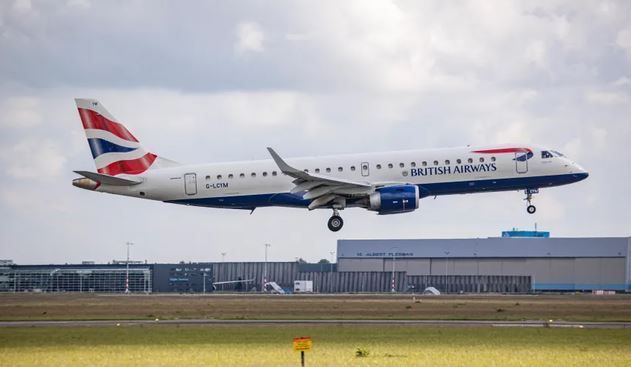
The aircraft in question is an ERJ-190 manufactured by Brazilian aircraft maker Embraer. The plane was set to depart from Florence Amerigo Vespucci Airport, but at the time of takeoff, the outdoor temperature reached 35 degrees Celsius, lowering the air density. In such conditions, the aircraft requires more fuel to reach cruising altitude. Ultimately, to reduce the weight of the aircraft, 20 passengers voluntarily disembarked.
The unique structure of Florence Airport also contributed to the problem. The runway at this airport is 5,118 feet long, which is only about half the length of the runway at London Gatwick Airport (10,879 feet). In response, British Airways stated, "The short runway, combined with the extreme heat at the time, made the situation worse," and apologized for the inconvenience caused to passengers.
A British female passenger told the media, "The airline staff originally wanted 36 passengers to disembark," but "in the end, only about 20 agreed to do so." The passengers who voluntarily got off were rebooked on the next available flight, and British Airways provided them with hotel accommodation and transportation.
Meanwhile, there are growing concerns that if the global average temperature continues to rise due to climate change, the runway length required for aircraft to take off may become even longer.
According to an analysis by Professor Johnny Williams and his research team from the Department of Meteorology at the University of Reading in the United Kingdom, as temperatures rise, air density decreases, making it more difficult for aircraft to generate sufficient lift. As a result, planes have to accelerate to higher speeds on the runway, which in turn requires longer runways. If the runway is not long enough, the aircraft's weight must be reduced, leading to measures such as limiting the number of passengers or the amount of cargo.
© The Asia Business Daily(www.asiae.co.kr). All rights reserved.
![Clutching a Stolen Dior Bag, Saying "I Hate Being Poor but Real"... The Grotesque Con of a "Human Knockoff" [Slate]](https://cwcontent.asiae.co.kr/asiaresize/183/2026021902243444107_1771435474.jpg)















