Bang Sehwan Emphasizes Close Cooperation with KDI
Gwangju Welcomes Feasibility Study Request for Jamsil-Gwangju-Cheongju Airport Express Railway
Laying the Foundation for Full-Scale Project Implementation
Enhanced Rail Access to Seoul Expected to Benefit Citizens
On August 22, Gwangju City in Gyeonggi Province expressed strong support for the Ministry of Land, Infrastructure and Transport's official request to the Korea Development Institute (KDI) to conduct a private investment feasibility study for the 'Jamsil-Gwangju-Cheongju Airport Metropolitan Express Railway' project.
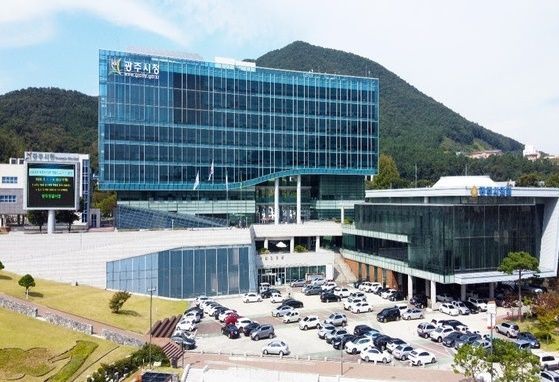
This decision has laid the groundwork for the full-scale implementation of the proposed route.
Until now, the city has made every effort to devise alternatives in response to rapid urban growth and worsening traffic conditions.
In particular, as the population in the Taejeon and Gosan districts continues to rise rapidly due to ongoing residential development, the road-based transportation system has already reached its capacity, further increasing inconvenience for residents. Additionally, the absence of a direct rail connection to downtown Seoul has long been a major concern for citizens.
In response, the city, together with Yongin, proposed the extension of the Gyeonggang Line in the 5th National Rail Network Construction Plan, and with Seongnam, advanced the Wirye-Samdong Line project to the preliminary feasibility study stage. Furthermore, in March, Mayor Bang Sehwan personally visited the Ministry of Land, Infrastructure and Transport and the Korea Transport Institute to propose the review of the Wirye-Samdong Line, the Gyeonggang Line extension, and the establishment of alternative routes, demonstrating swift action.
If this metropolitan express railway route becomes a reality, it is expected that Gwangju citizens will have greatly improved access to Seoul, significantly reducing commuting times. In addition, it is anticipated to bring various benefits such as diversifying Gwangju’s transportation infrastructure, promoting balanced regional development, and revitalizing the local economy, thereby further enhancing Gwangju’s status within the national rail network.
Mayor Bang Sehwan stated, "This request for a private investment feasibility study is a long-held wish of our local residents and marks an important turning point in expanding the national rail network," adding, "Gwangju City will actively support the process and work closely with KDI to ensure the study proceeds smoothly."
He continued, "We will prioritize the transportation convenience of our citizens and continue to consult with relevant agencies to ensure that all necessary stations are established."
If this project passes the private investment feasibility study, it will proceed through steps such as the strategic environmental impact assessment, public announcement for third parties, and the selection of a preferred bidder before construction begins. Notably, compared to individually promoted routes such as the Gyeonggang Line extension, Wirye-Samdong Line, and the Inland Line in the Seoul metropolitan area, the administrative procedures are expected to be shortened, allowing the project to move forward more quickly.
© The Asia Business Daily(www.asiae.co.kr). All rights reserved.
![Clutching a Stolen Dior Bag, Saying "I Hate Being Poor but Real"... The Grotesque Con of a "Human Knockoff" [Slate]](https://cwcontent.asiae.co.kr/asiaresize/183/2026021902243444107_1771435474.jpg)















