GLP-1 Obesity Drugs Like Wegovy and Zepbound
Expanding Indications to Diabetes, MASH, and Cardiovascular Diseases
Glucagon-like peptide-1 (GLP-1) drugs, which began as obesity treatments, are now establishing themselves as "game changers" targeting a broad spectrum of metabolic diseases. With the accelerated approval of Novo Nordisk's obesity drug Wegovy as a treatment for metabolic dysfunction-associated steatohepatitis (MASH) by the U.S. Food and Drug Administration (FDA), the expansion of obesity drug indications to cardiovascular, diabetes, and liver diseases is gaining significant momentum.
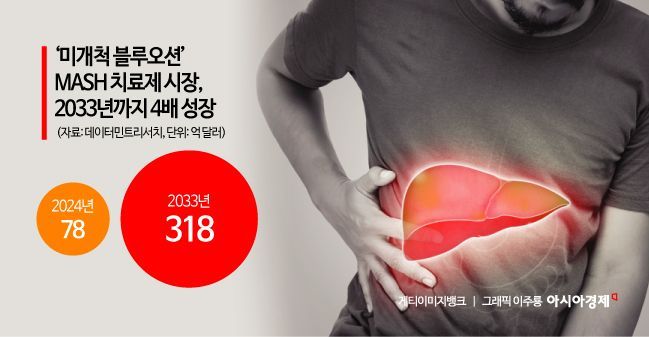
According to industry sources on August 22, the FDA recently approved Wegovy for the treatment of non-cirrhotic MASH patients. With this additional approval, Wegovy can now be used to treat adult patients with moderate to severe liver fibrosis (stages F2 to F3). In the phase 3 clinical trial that formed the basis for approval, 62.9% of patients in the Wegovy group experienced resolution of steatohepatitis, and 36.8% saw improvements in liver fibrosis. In contrast, the placebo group showed rates of 34.3% and 22.4%, respectively, highlighting a clear difference in efficacy.
MASH is a condition in which triglycerides accumulate in liver cells even without alcohol consumption. It is a serious progressive metabolic disease that can be fatal if not properly managed. In the United States, approximately 15 million people are estimated to have MASH, while in Korea, the number is around 400,000. However, due to the lack of effective treatments, the field has been referred to as an "untapped blue ocean." According to market research firm DataM Intelligence, the MASH treatment market, which was valued at about $7.8 billion (10 trillion KRW) last year, is expected to grow to $31.8 billion (about 41 trillion KRW) by 2033. With the recent approval of Wegovy, the market is likely to develop even more rapidly.
GLP-1 drugs like Wegovy were originally developed as treatments for type 2 diabetes. The GLP-1 hormone is secreted in the gut and acts on the appetite center in the brain to reduce food intake. As intake decreases, weight is reduced, which in turn lowers the amount of fat accumulated in the liver (fatty liver). This is a key mechanism in alleviating steatohepatitis and fibrosis. By reducing weight with obesity medication, liver function improves, which also leads to the treatment of MASH. With this latest approval for MASH, GLP-1-based obesity treatments have secured an expansion pathway from diabetes to obesity and now to liver disease.
Eli Lilly, the developer of Mounjaro, is also working to expand the indications of its GLP-1 obesity drug Zepbound to include MASH treatment. If this drug is approved, competition in the MASH treatment market is expected to intensify further.
Korean pharmaceutical companies are also moving quickly into the MASH field. Hanmi Pharmaceutical has leveraged its experience in developing new drugs for obesity and diabetes to build a MASH pipeline, while Dong-A ST's subsidiary Metavia has completed a phase 2a clinical trial for its MASH treatment candidate 'DA-1241.' Preclinical studies have already shown improvement in fatty liver and liver fibrosis. D&D Pharmatech is conducting global clinical trials by expanding its original Alzheimer's drug candidate to include MASH as an indication. Olix is also developing an RNA interference (RNAi)-based therapy targeting MASH.
© The Asia Business Daily(www.asiae.co.kr). All rights reserved.

















