Production Declines at Gwangju and Yeosu Industrial Complexes
Gwangju Records Highest Bill Default Rate in May
"Each Company Needs to Secure New Growth Engines"
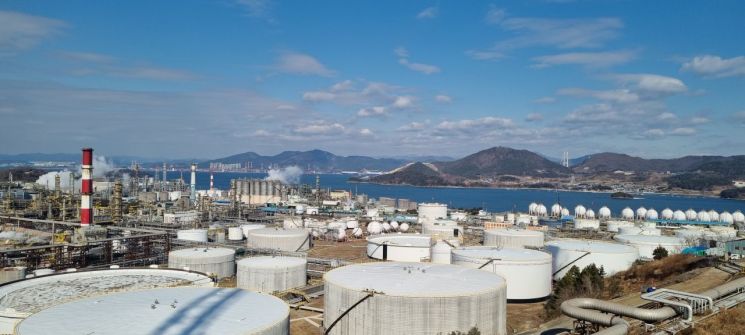
Gwangsan-gu in Gwangju and Yeosu in Jeonnam have been designated as the first "Preemptive Employment Crisis Response Areas" due to a sharp deterioration in employment caused by the downturn in local industries, providing some relief from the ongoing economic crisis.
Local business leaders emphasize that, in order to overcome the downturn in each industrial complex, it is urgent to develop new businesses through tailored, mid- to long-term support such as workforce and technology measures suited to the circumstances of each company.
According to Gwangsan-gu in Gwangju and Yeosu City on August 20, the government designated these areas as Preemptive Employment Crisis Response Areas the previous day.
The "Preemptive Employment Crisis Response Area" system allows local employment and labor offices to apply for designation after gathering input from local governments and experts. The core of the system is to provide support equivalent to that of "Employment Crisis Areas" to regions at risk of a rapid deterioration in employment conditions, in order to prevent increases in unemployment and job losses.
In fact, industrial complexes in Gwangsan-gu, Gwangju have been experiencing a steady decline in production volume.
According to statistics from the Korea Industrial Complex Corporation, production at the Hanam Industrial Complex in Gwangsan-gu, Gwangju reached approximately 3.178 trillion won in the first quarter, 3.477 trillion won in the second quarter, and 3.341 trillion won in the third quarter of last year. However, it dropped to around 3.015 trillion won in the fourth quarter of last year and the first quarter of this year.
The same trend is seen at the Pyeongdong Industrial Complex in Gwangsan-gu, where production was about 2.764 trillion won from the first to third quarters of last year, but plummeted to 126 billion won in the fourth quarter and 127 billion won in the first quarter of this year.
Comparing only the first quarter, the combined production value of 14 industrial complexes in Gwangju fell from approximately 9.391 trillion won in the first quarter of last year to about 9.008 trillion won in the first quarter of this year.
The downturn among Gwangju-based companies is also evident in the bill default rate.
According to an analysis of the Bank of Korea's Economic Statistics System, as of May this year, the bill default rate in Gwangju was 3.13%, the highest in the country. The bill default rate in Gwangju has remained among the highest nationwide since it reached 2.82% in September last year.
The bill default rate represents the proportion of bills and checks processed as defaults among all those submitted to the bill exchange.
This rate is considered an indicator of the economic health of local businesses, and in the financial sector, a rate below 0.2% is generally considered stable.
In a recent survey by the Gwangju Chamber of Commerce and Industry of 133 local manufacturers regarding the status of future new industry initiatives, 58.6% viewed the market situation for their main business (products) as being in a "mature stage"-meaning market saturation-while 24.8% saw it as being in a "decline stage," indicating market contraction. Combined, these two groups accounted for a staggering 83.4%.
Regarding market competition, 57.9% of companies responded that competition has become fierce as competitive gaps have disappeared, and 56.4% said they are not pursuing any new business initiatives.
The situation at Yeosu Industrial Complex in Jeonnam, which has been hit by a petrochemical downturn, is no different. The Yeocheon NCC Plant 3 and LG Chem's Yeosu Styrene Monomer (SM) plant are currently shut down. In December last year, Lotte Chemical's Plant 2 also ceased operations. This prolonged slump in the petrochemical sector is due to a combination of low-priced competition from China and weakened global demand. China has rapidly increased production of general-purpose products such as ethylene in recent years, but as demand has fallen due to the economic downturn, the market is now oversupplied.
According to the June 2025 report on the real economy of Gwangju and Jeonnam released by the Bank of Korea's Gwangju-Jeonnam branch, manufacturing output in Jeonnam fell by 5.0% due to declines in chemicals and other transportation equipment, while exports dropped by 7.3% due to decreases in chemical products (-26.1%) and petroleum products (-3.9%).
The value of orders placed by major corporations at Yeosu Industrial Complex fell by 44%, from 2.0145 trillion won in 2022 to 1.1195 trillion won last year. The operating rate at Yeosu Industrial Complex dropped from 96% in 2021 to 77.6% in January this year, a decrease of 18.4 percentage points.
The number of plant construction workers employed as subcontracted laborers at Yeosu Industrial Complex plummeted from 8,783 in September last year to 1,780 in January this year.
The government, which has begun restructuring the petrochemical industry, will also formulate countermeasures following the designation of these areas as Preemptive Employment Crisis Response Areas.
As a result of this designation, Gwangsan-gu will receive increased support for employment retention subsidies, employer training subsidies, vocational training living allowances for livelihood stability, and expanded loans for living stabilization.
Jeonnam Province plans to continue requesting government funding and cooperation to protect workers in key local industries such as petrochemicals and steel.
To advance the national agenda of "eco-friendly and high value-added transformation of the Yeosu Petrochemical Industrial Complex," the government plans to establish a "Carbon Capture, Utilization, and Storage (CCUS) Cluster" and a "Clean Hydrogen Industrial Belt" centered around the Yeosu National Industrial Complex and Myodo, and to lay the legal groundwork for systematic government support by enacting a "Special Act on Overcoming Crises in National Key Industries."
Regarding this, an official from a local company commented, "The bill default rate can suddenly decrease if policy financial institutions such as the Korea SMEs and Startups Agency expand liquidity supply or if public sector orders increase. It is necessary to thoroughly analyze the characteristics of each company within the industrial complexes to secure new growth engines, and, in the long term, to establish practical cooperation and structural improvements among local governments, financial institutions, and companies."
© The Asia Business Daily(www.asiae.co.kr). All rights reserved.
![Clutching a Stolen Dior Bag, Saying "I Hate Being Poor but Real"... The Grotesque Con of a "Human Knockoff" [Slate]](https://cwcontent.asiae.co.kr/asiaresize/183/2026021902243444107_1771435474.jpg)
















