Implications for TSMC, Samsung, and Other Firms
Howard Lutnick, U.S. Secretary of Commerce, stated on August 19 (local time) that the Trump administration intends to secure a stake in Intel in exchange for providing semiconductor law subsidies. This statement has been interpreted as an indication that the administration may also demand non-voting shares from other subsidy recipients, such as Taiwan's TSMC and South Korea's Samsung Electronics, just as it does with Intel.
In an interview with CNBC that day, Secretary Lutnick said, "President Donald Trump believes that the United States should benefit from these deals," explaining the administration's stance.
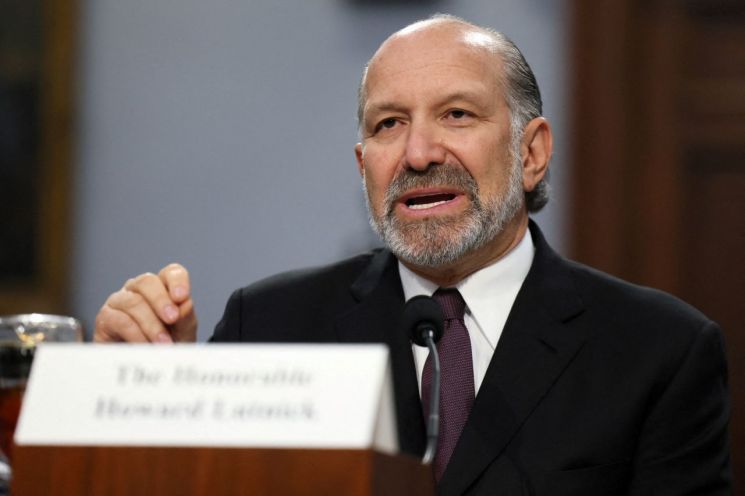
He continued, "Why should we give this money (semiconductor law subsidies) to a company valued at $100 billion? What benefit is there for American taxpayers? President Trump's answer is that we must secure a stake in return for our money," adding, "Therefore, we will provide the funds promised during the (previous) Biden administration. In exchange, we will acquire a stake and secure good returns for American taxpayers."
Secretary Lutnick also stated, "The semiconductor law was simply about giving money to wealthy companies. Why should the United States give money to a company like TSMC? TSMC is a $1 trillion company," adding, "President Trump says, 'Let's turn the money that former President Biden was just going to hand out into equity for Americans.' If you put this money in President Trump's hands, you can get a much better deal for American taxpayers."
He further criticized, "The Biden administration was literally handing out money for free to companies like Intel and TSMC," and added, "President Trump changed this approach to, 'If you want the money, give us a stake. If we provide the money, we should get something in return.'"
The previous day, Bloomberg reported that the Trump administration was considering acquiring a 10% stake in Intel. Secretary Lutnick's remarks confirmed these media reports from the day before.
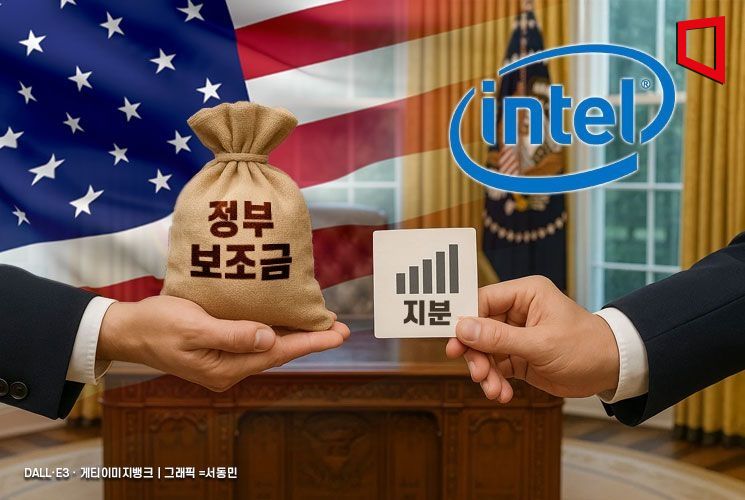
If the U.S. government acquires a 10% stake in Intel, it could become the largest shareholder. However, Secretary Lutnick dismissed the possibility of exercising management rights, stating, "This is not about management control. It is simply converting the Biden administration's subsidies into equity under the Trump administration." He reiterated, "There are no voting rights."
Secretary Lutnick's comments about receiving equity in exchange for subsidies have been interpreted as signaling that the U.S. government may also demand non-voting shares from overseas companies receiving semiconductor law subsidies, such as Taiwan's TSMC and South Korea's Samsung Electronics.
Regarding the reason for the government's investment in Intel, Secretary Lutnick said, "For national security, we must manufacture semiconductors ourselves. We cannot rely on Taiwan, which is 9,500 miles away from the U.S. and only 80 miles from China." President Trump has consistently argued for expanding reshoring (bringing manufacturing back to the U.S.) to reduce reliance on overseas semiconductor production.
He also mentioned the outcome of trade negotiations with South Korea and Japan, in which these countries agreed to invest a total of $900 billion in the United States ($350 billion from South Korea and $550 billion from Japan), stating, "This will be used to upgrade infrastructure that has been competing with China."
Regarding the timing of the public release of the trade agreement documents with South Korea and Japan, he said, "It will be a matter of a few weeks."
© The Asia Business Daily(www.asiae.co.kr). All rights reserved.


















