Naju City Urges Vigilance Against Mosquito-Borne Diseases
Increase in Overseas Travel Raises Risk of Dengue, Chikungunya, and Zika
Japanese Encephalitis Alert Issued Nationwide
Early Symptoms Can Be Confusing?Track Your Travel History
Prevention and Prompt Medical Attention Are Crucial
On August 19, Naju City in South Jeolla Province urged citizens to exercise special caution to prevent mosquito-borne infectious diseases, as overseas travel and outdoor activities increase during the summer vacation season.
Mosquito-borne infectious diseases are transmitted when a person is bitten by a mosquito carrying a virus. Overseas, dengue fever, chikungunya fever, and Zika virus infection are the most common.
In Korea, on July 30 (week 31), it was confirmed that Culex tritaeniorhynchus mosquitoes, which transmit Japanese encephalitis, accounted for 60.1% (633 out of 1,053) of all mosquitoes collected in Wando County, South Jeolla Province. As a result, a nationwide Japanese encephalitis alert was issued as of August 1.
Common symptoms of mosquito-borne infectious diseases include fever, headache, muscle pain, and joint pain. Dengue fever and chikungunya fever are also accompanied by a rash.
Because the initial symptoms are similar to those of other diseases, it is important to remember the timing and region of travel, as accurate distinction can be difficult.
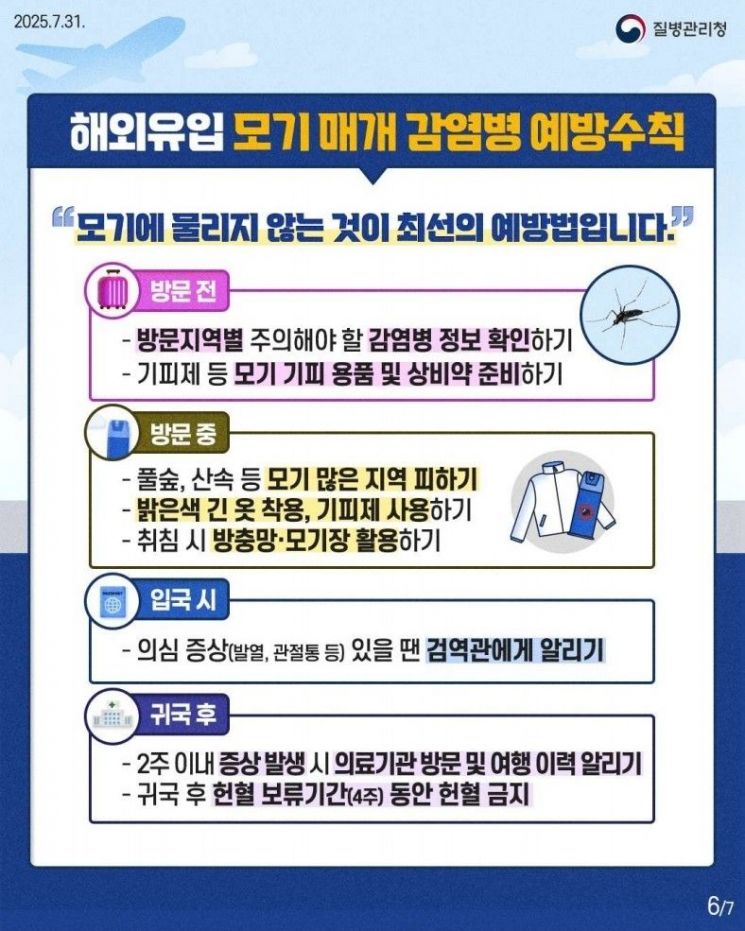
If you are planning an overseas trip, you should check the status of infectious diseases and precautions for your destination on the Korea Disease Control and Prevention Agency website before departure. During your trip, it is recommended to wear long, light-colored clothing and to apply mosquito repellent every 3 to 4 hours.
If you experience suspicious symptoms after returning to Korea, report them to a quarantine officer. If symptoms appear within two weeks, visit a medical institution, inform them of your travel history, and receive treatment.
Kang Yonggon, Director of the Public Health Center, emphasized, "Prevention is the most important factor in dealing with mosquito-borne infectious diseases. It is crucial to strictly follow prevention guidelines and to promptly visit a medical institution for treatment if you experience any suspicious symptoms."
© The Asia Business Daily(www.asiae.co.kr). All rights reserved.
![Clutching a Stolen Dior Bag, Saying "I Hate Being Poor but Real"... The Grotesque Con of a "Human Knockoff" [Slate]](https://cwcontent.asiae.co.kr/asiaresize/183/2026021902243444107_1771435474.jpg)















