Bank of Korea Reports to National Assembly Strategy and Finance Committee
Considers Risks of Circumventing FX Regulations, Banking-Commerce Separation, and Coin Run Spillover
Domestic Demand-Led Recovery Expected in Second Half with Supplementary Bu
"It is desirable to initially allow the issuance of won-based stablecoins centered on the banking sector, and then gradually expand their issuance."
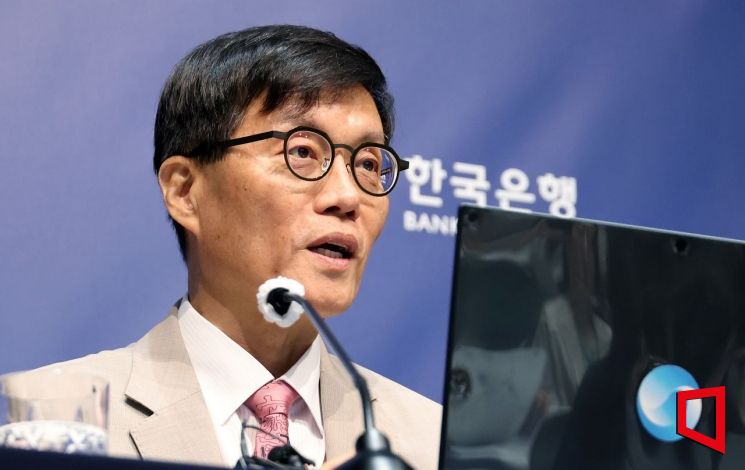
On August 19, the Bank of Korea made this statement during a work report to the National Assembly’s Strategy and Finance Committee held at the National Assembly in Yeouido, Seoul. To minimize potential issues when introducing won-based stablecoins, the Bank emphasized the importance of establishing sufficient safeguards during the legislative process. Until these issues are resolved, it is necessary to allow issuance primarily by highly regulated banks before gradually expanding to other sectors.
In his opening remarks, Governor Lee Changyong also addressed related issues, stating, "We are striving to build a more stable and efficient future digital payment ecosystem in response to the accelerating digital transformation of the economy." Governor Lee has consistently expressed this view. The Bank of Korea’s efforts to take the lead in establishing a digital payment ecosystem through initiatives such as 'Project Hangang' and the 'Agora Project' reflect its understanding of the need for digital currency and the rationale for introducing digital financial innovation. However, Governor Lee has repeatedly emphasized that, since won-based stablecoins are substitutes that are directly pegged to the value of legal tender (the won), comprehensive consideration must be given to issues such as circumventing foreign exchange regulations, loosening the separation of banking and commerce, and the risk of contagion from coin runs (large-scale coin withdrawals).
On this day, the Bank of Korea also stressed the need for a policy body based on inter-agency consensus to respond to regulations at the pan-government level. The Bank stated, "According to the recently passed U.S. 'Genius Act,' a 'Stablecoin Certification Review Committee' is established, with the participation of the U.S. Treasury, the Federal Reserve, and the Federal Deposit Insurance Corporation, taking into account the soundness and safety of the banking system. Only through unanimous consent of this committee can non-financial service listed companies be permitted to issue stablecoins." The Bank argued that similar measures are necessary in Korea. It also analyzed that legislation is needed for the introduction of tokenized assets. Currently, discussions on the introduction of stablecoins as a means of payment are taking place even though legislation on asset tokenization, such as tokenized securities, has not yet been enacted.
Domestic Demand-Led Recovery in the Second Half... Further Observation Needed for Housing Price Trends
The Korean economy showed sluggish growth until early this year, but rebounded in the second quarter due to improved economic sentiment. Governor Lee predicted, "In the second half, the recovery led by domestic demand will continue, supported by the execution of the supplementary budget." He also noted that this year’s economic growth rate, previously forecast at 0.8%, could be higher than expected; however, uncertainties regarding the growth trajectory remain high due to developments in trade negotiations between major countries such as China and the United States.
Inflation is expected to remain stable at around 2%, thanks to stable international oil prices and low demand-side pressures. However, the Bank noted that worsening weather conditions could lead to some instability in prices for agricultural, livestock, and fisheries products.
He emphasized that it is still necessary to closely monitor whether the trend of stability in housing prices in the Seoul metropolitan area will continue. Although there has been some stabilization following the June 27 measures, some areas in Seoul are still experiencing a strong upward trend.
Governor Lee reiterated that the Bank of Korea’s continued vocal stance on structural reforms-creating what some call a "noisy central bank"-is aimed at promoting economic growth. He stated, "To support sustainable economic growth, we are conducting in-depth research on structural issues such as low birth rates and aging, population concentration in the Seoul metropolitan area, and climate change. We are also striving to propose policy alternatives from a neutral and long-term perspective."
© The Asia Business Daily(www.asiae.co.kr). All rights reserved.

















