Wide-Ranging Tariffs Covering Tableware, Auto Parts, and Electronics
Government to Significantly Expand Support Programs for Import Regulation Response
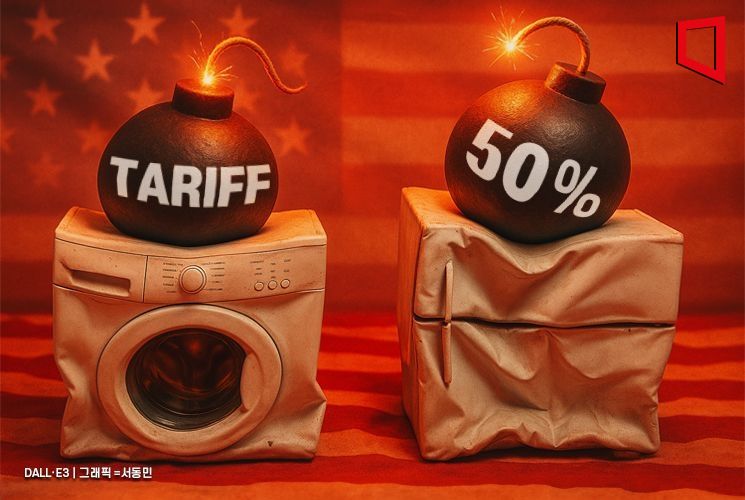
As the United States imposes new high tariffs of up to 50% on more than 400 derivative products containing steel and aluminum, it is expected that domestic companies will inevitably suffer losses. The export industry is on edge, as a wide range of items-from knives and tableware to tools, auto parts, and electronic devices-are included, spanning both daily life and industrial sectors.
Wide Application from Household Goods to Machinery and Auto Parts
According to the Ministry of Trade, Industry and Energy on August 18, the U.S. Department of Commerce, based on Section 232 of the Trade Expansion Act, newly designated 407 steel and aluminum derivative products on August 15 (local time). These items are subject to the new tariffs for shipments imported or released from bonded warehouses after August 18 (Eastern Time), meaning the measure has effectively taken immediate effect.
The designated items include not only household knives, forks, and tableware, but also tools, machinery and parts, auto parts, and electronic devices. The tariffs go beyond raw materials, covering consumer goods, intermediate goods, and finished products, which will directly burden Korea's export structure.
An industry official expressed concern, saying, "The U.S. market accounts for a large share of exports for auto parts and machinery. If a product contains even a small amount of steel, the high 50% tariff will be applied, causing a sharp decline in price competitiveness."
Korean Industry's Opinions Ignored... Export Companies in Dilemma
The tariff imposition method is also complicated. When exporting products containing steel or aluminum, a high tariff of 50% is first applied to the portion corresponding to those raw materials. The remaining non-steel and non-aluminum portions are then subject to separate country-specific reciprocal tariff rates.
For example, if a $100 product contains 60% steel, a $30 tariff (50% of the steel portion) is imposed, and the remaining $40 is subject to a 15% reciprocal tariff, adding $6. The total tariff would amount to $36. This is not just an additional burden; for companies, it is significant enough to shake their profitability structure.
In particular, Korea not only exports a large proportion of steel directly to the U.S., but also has a high share of exports to the U.S. for products such as automobiles, home appliances, and machinery that contain steel, even partially. This could result in complex and compounded damages.
This measure was taken at the request of domestic industries within the U.S. Previously, the Department of Commerce reviewed applications submitted by domestic industries for additional designation of derivative products and conducted a stakeholder opinion-gathering process. However, the objections raised by Korean associations and companies were largely ignored. A Ministry of Trade, Industry and Energy official stated, "It appears that the Department of Commerce accepted most of the requests from domestic industries, except for the 60 items already covered by existing Section 232 measures or investigations."
Derivative Product Tariffs Expected to Expand Further in September
The problem is that this measure is not the end. According to the new guidelines, the U.S. Department of Commerce plans to further expand the list of derivative products in September at the request of domestic industries. In effect, there is a high likelihood that a 'salami tactic' will be used, gradually subjecting most steel and aluminum-related items to high tariffs.
Another industry official warned, "If the spread of tariffs accelerates, the export base of Korean manufacturing, which is highly dependent on the U.S. market, could face structural threats. In particular, the automotive, shipbuilding, and machinery industries could face significant pressure in terms of the global value chain."
The Ministry of Trade, Industry and Energy is preparing emergency countermeasures to minimize corporate damage. First, it will significantly expand support programs to help small and medium-sized enterprises respond to import regulations. The ministry plans to broaden the scope of support for verifying steel and aluminum content and certifying country of origin, as well as increase the number of companies eligible for consulting support. In addition, the support structure will be improved to reduce the cost burden on companies and enable swift responses.
A ministry official stated, "Companies should not simply absorb the additional costs, but should respond by adjusting production processes or seeking alternatives. The government will also provide as much practical assistance as possible in areas such as customs clearance delays and certification procedures."
© The Asia Business Daily(www.asiae.co.kr). All rights reserved.
![Clutching a Stolen Dior Bag, Saying "I Hate Being Poor but Real"... The Grotesque Con of a "Human Knockoff" [Slate]](https://cwcontent.asiae.co.kr/asiaresize/183/2026021902243444107_1771435474.jpg)












