Discussions on a Korean Peninsula-Style Buffer Zone
Troop Deployment at the Center of Debate
Trump Opposes U.S. Troops in Ukraine
Putin Also Rejects Western Peacekeepers... Difficult Negotiations Expected
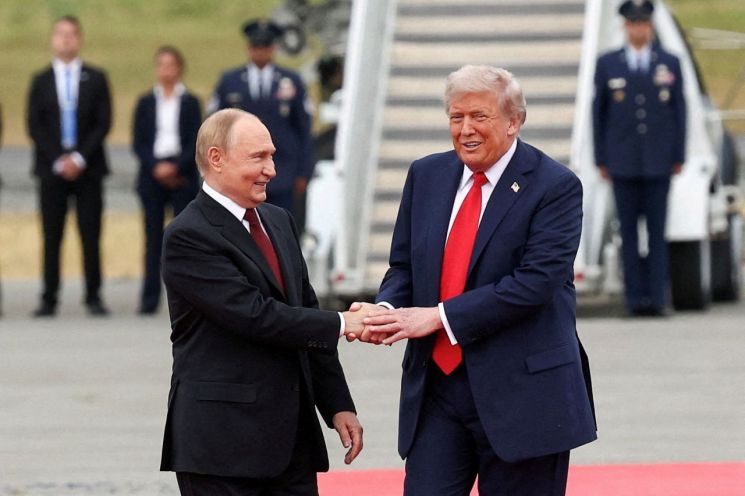
After the meeting between U.S. President Donald Trump and President Vladimir Putin at the Alaska summit, ceasefire negotiations for Ukraine have gained significant momentum. With President Trump mediating, preparations are underway for a trilateral summit between the United States, Russia, and Ukraine. Ukraine is demanding firm security guarantees from the United States and the West in exchange for ceding part of its territory, aiming to achieve a "Korean-style armistice." However, President Trump has expressed opposition to the stationing of U.S. troops in Ukraine and has stated that he will only offer minimal security guarantees. As a result, it is expected that ceasefire negotiations will face difficulties until a concrete security guarantee plan is produced.
Discussions on Establishing a Korean-Style Buffer Zone... Trump Opposes U.S. Troop Deployment
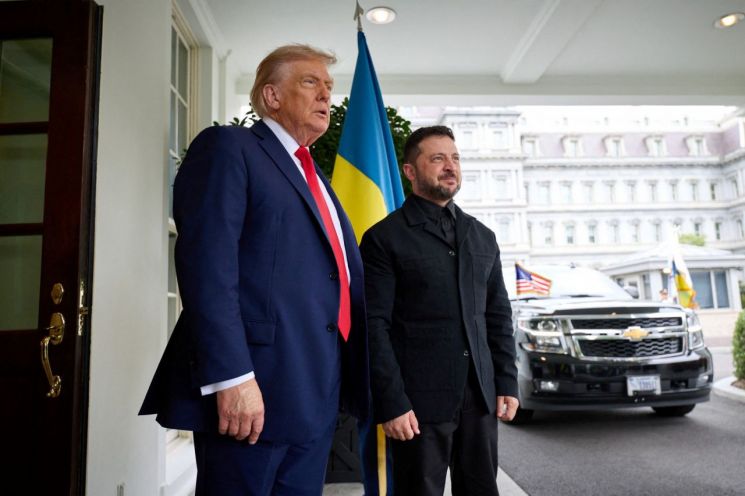
According to CNN, on the 18th (local time), President Trump held talks at the White House with Ukrainian President Volodymyr Zelensky and leaders of various European countries regarding a ceasefire in Ukraine. One of the main agenda items was the creation of a Korean-style buffer zone, protected by a multinational force along the border. The plan centers on establishing an armistice line and a demilitarized zone in Ukraine, similar to those set up after the Korean War, and deploying a coalition force formed by the United States and European countries to the front lines.
However, controversy continues as President Trump has expressed opposition to the deployment of U.S. troops, stating that he will provide only minimal security guarantees. In an interview with Fox News on the 19th, President Trump emphasized, "Under no circumstances will U.S. troops set foot on Ukrainian soil," adding, "As long as I am president, that is certain."
As a result, even if a ceasefire agreement is reached, there are concerns that European countries will effectively have to shoulder Ukraine's security. Previously, European countries announced that if a ceasefire agreement is reached in the Ukraine war, they would dispatch a "Reassurance Force," a coalition force of about 30,000 troops.
In a joint statement released on the 17th, the governments of France and the United Kingdom stated, "If hostilities in Ukraine cease, we are prepared to deploy the Reassurance Force, protect Ukraine's skies and seas, and support the country's reconstruction." They emphasized, "A multinational force will be formed to defend Ukraine, and voluntary European allies will play a crucial role." However, it is expected that the absence of U.S. troops will make it more difficult to maintain security.
Ukraine Seeks a Korean-Style Division..."Limiting Russian Expansion"
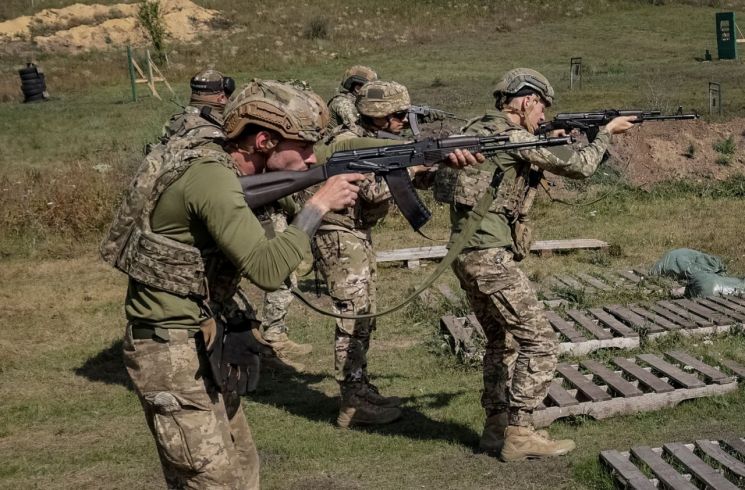
The security guarantee Ukraine seeks is a Korean-style division plan, with a peacekeeping force composed of U.S. and European troops stationed long-term. While Ukraine initially maintained a firm stance against ceding any territory, it is now reportedly willing to accept a division plan if the United States and Europe provide firm security guarantees and military support.
The BBC, citing sources who participated in the Alaska summit on the 17th (local time), reported, "President Putin is said to have proposed to President Trump a ceasefire in which Russia would receive more territory in eastern Ukraine, while other frontlines would be frozen at their current positions." The report added, "Ukraine maintains that it will not cede any territorial sovereignty, but if U.S. security guarantees are solid, it may agree to the proposal."
If the Korean-style division plan is implemented, analysts say it would allow Ukraine and European countries to focus on reconstruction while containing the risk of further Russian escalation. The Wall Street Journal (WSJ) reported, "From the perspective of Ukraine and Europe, the best scenario is to limit Russian expansion to the 20% of Ukrainian territory currently occupied by Russia." The article continued, "After the Korean War ended in 1953, South Korea received help from U.S. and other foreign troops stationed there. Similarly, once the war ends, Russia will no longer be able to threaten Ukraine, and ultimately, this war will be remembered as a failure for Russia."
Putin Opposes Western Peacekeeping Troops... Negotiations Expected to Be Difficult
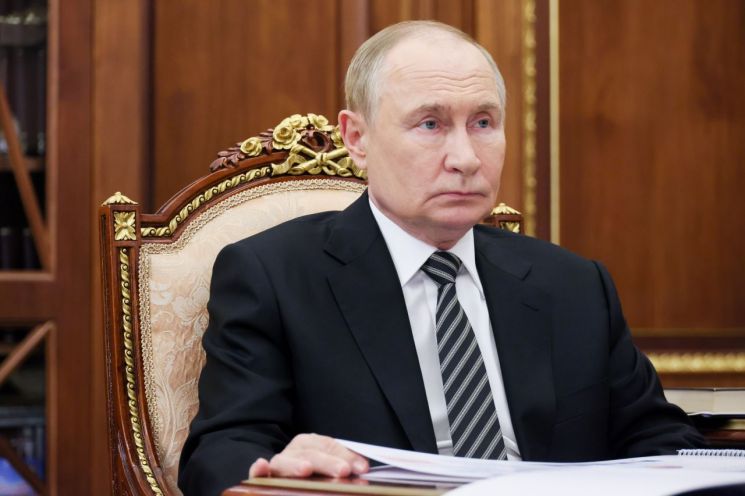
Russia continues to oppose the stationing of Western peacekeeping forces. While it has shown a slightly more flexible stance on territorial issues, it remains opposed to any U.S. or Western security guarantees for Ukraine.
According to The New York Times (NYT), at the Alaska summit, President Putin made it clear that the stationing of Western peacekeeping troops in Ukraine is a precondition for a peace agreement. He also opposed Ukraine's accession to the North Atlantic Treaty Organization (NATO) and insisted that Ukraine's military capabilities be limited, effectively requiring Ukraine to become a demilitarized neutral country.
Ukraine, on the other hand, has stated that it will not participate in the trilateral summit unless firm security guarantees from the United States and the West are provided. President Zelensky said at a press conference on the 21st, "Ukraine wants to understand the outline of the security guarantee system within the next 7 to 10 days and to know what roles each country can play and when." He added, "We must first reach an agreement with our allies on security guarantees before meeting with President Putin."
Some observers warn that if the trilateral summit and a ceasefire agreement fail, the war could become even more protracted. There are concerns that, without an end to the war, Russia would simply be given an opportunity to return to the international community. Former White House National Security Advisor Jake Sullivan said in an interview with ABC News, "Since the previous administration, we have judged that Russia has no interest in negotiations to end the war, and that remains the case today." He explained, "If a ceasefire or a consequential outcome cannot be achieved, the Alaska summit will ultimately be remembered as an event that simply rolled out the red carpet for Russia to continue the war."
© The Asia Business Daily(www.asiae.co.kr). All rights reserved.



















