Boosting Consumption and Expanding Employment Expected
Examining the Feasibility of Domestic Implementation
A new study has found that designating public holidays on Mondays could have a tangible impact on boosting domestic demand. The analysis suggests that when holidays are set according to specific days of the week rather than fixed dates, related spending on travel, dining, and accommodation increases, which can in turn have a positive effect on local economies and job creation.
According to the "Holiday System Improvement Plan" study conducted by the Korean Association for Public Administration at the request of the Ministry of Economy and Finance, it is estimated that operating public holidays by day of the week could stimulate approximately 2 trillion won in consumption per day. The research was carried out from December of last year through April of this year.
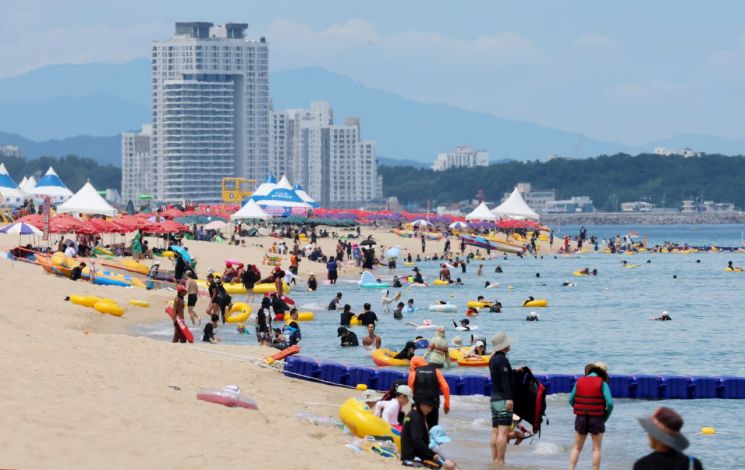 On the last day of the golden holiday, the 17th, vacationers are enjoying the final moments of summer at Gyeongpo Beach in Gangneung City, Gangwon Province. Photo by Yonhap News
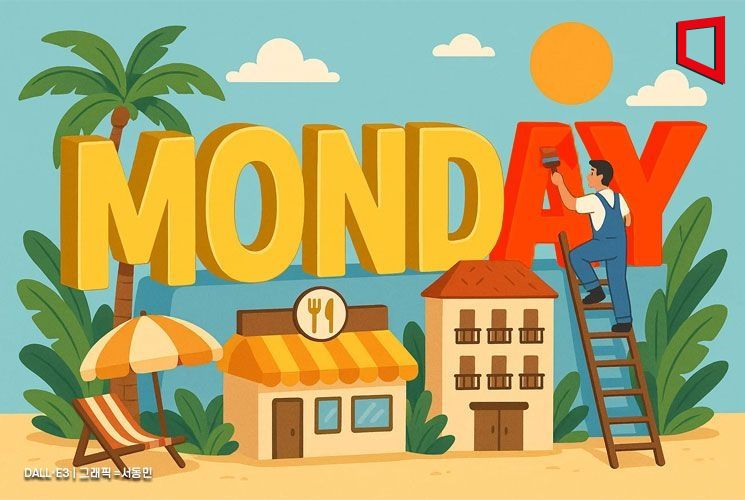
Currently, most public holidays in Korea are designated by date, such as Children's Day on May 5. However, the study, referencing cases in the United States and Japan, found that assigning holidays to a specific day of the week each year could generate greater economic benefits. The United States implements the "Monday Holiday Law," while Japan operates the "Happy Monday System," moving several holidays to Mondays.
The study found that when public holidays are set on Mondays, creating a "three-day weekend," demand for travel among the public rises, accompanied by increased spending in accommodation, transportation, dining, and cultural sectors. This is expected to create a virtuous economic cycle, leading to expanded production activities, value-added creation, and job growth.
Actual analysis showed that adding a Monday public holiday could lead to an estimated 2.1 trillion won in additional consumer spending, with an induced production effect of about 3.8 trillion won and value-added of roughly 1.7 trillion won. Notably, more than 40% of the production-inducing effect was attributed to the restaurant and lodging industries, indicating a direct impact on the tourism sector and local economies.
Public holidays being considered for this day-of-the-week system include those with relatively less historical significance by date, such as Children's Day, Memorial Day, and Hangeul Day. If these three holidays were moved to Mondays, it is projected that annual consumption would increase by about 6.3 trillion won, with production and value-added effects estimated at 11.3 trillion won and 5 trillion won, respectively.
Furthermore, analysis of credit card transaction data revealed that when public holidays fall on Mondays, individual consumption tends to increase by nearly 10% on average. Additionally, regularly recurring long weekends were found to improve workers' quality of life and offer companies the advantage of reducing costs related to annual leave usage.
The study also proposed potential names for Monday-based public holidays, suggesting alternatives such as "Monday Leave System," "Work-Life Balance Monday," "Refresh Monday," and "Family Monday."
The government announced in July of last year, as part of the "Dynamic Economy Roadmap," that it would consider implementing day-of-the-week public holidays. However, practical discussions have since stalled due to political variables such as the declaration of martial law and a change in administration. The Ministry of Economy and Finance stated that it plans to forward the study results to relevant agencies, including the Ministry of Personnel Management, to discuss whether to pursue actual policy implementation.
© The Asia Business Daily(www.asiae.co.kr). All rights reserved.


















