Corneas Lacking Oxygen Are Vulnerable to Pathogen Invasion
Disinfection and Cleaning Products Must Be Approved by the Ministry of Food and Drug Safety
With the arrival of the summer water activity season, extra caution is required when wearing contact lenses.

On August 14, the Ministry of Food and Drug Safety urged the public to exercise special caution, warning that wearing contact lenses while entering swimming pools or the sea significantly increases the risk of various bacterial infections.
The Ministry explained that contact lenses can be exposed to bacteria or fungi that cause corneal inflammation when they come into contact with tap water, seawater, or swimming pool water. If the infection worsens, it can lead to corneal clouding, vision loss, or even blindness.
According to a survey by the U.S. Centers for Disease Control and Prevention (CDC), a significant number of ophthalmic infections caused by water pollution were linked to contact with water while wearing lenses. Because contact lenses have low oxygen permeability, the cornea’s immune defenses are weakened, and the space between the lens and the cornea creates an environment conducive to the growth of pathogens. In particular, colored circle lenses have even lower oxygen transmission, making the risk of infection relatively higher.
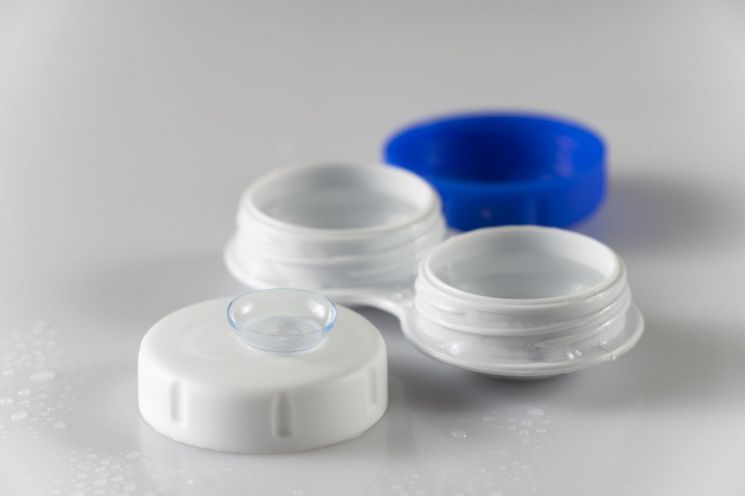 The Ministry of Food and Drug Safety warned that wearing contact lenses while entering swimming pools or the sea increases the risk of various bacterial infections. Photo by Pixabay
It is safest to avoid wearing contact lenses during water activities whenever possible. If it is unavoidable, the Ministry advises wearing tightly fitting goggles to prevent external water from entering the eyes. After water activities, used lenses should be immediately replaced with new ones, and if symptoms such as foreign body sensation, redness, or pain occur, lenses should be removed immediately and an ophthalmologist should be consulted.
Proper cleaning and storage of lenses are also crucial. The Ministry stated that contact lenses must be cleaned and disinfected only with care products that are officially approved as medical devices, and that lenses should be stored in a dedicated case with solution and sealed tightly.
Care products should never be used for other purposes, such as washing the eyes or nose. After use, any remaining solution must be discarded, and the case should be thoroughly rinsed and dried. To prevent contamination, it is best to avoid touching the cap of the storage case directly with your hands.
Because the characteristics of substances that adhere to lenses differ depending on the type, it is also important to use cleaning solutions specifically designed for either hard or soft lenses.
The Ministry emphasized, "When purchasing contact lenses or care products, always check that they are officially approved by the Ministry of Food and Drug Safety," and added, "Using unsafe lenses can lead to severe vision loss in a short period of time."
© The Asia Business Daily(www.asiae.co.kr). All rights reserved.


















