Seoul Apartment Prices Up 0.14% from Last Week
Growth Slows for Second Consecutive Week
As the 6.27 loan regulations enter their seventh week since implementation, the pace of apartment price increases in Seoul has slowed for the second consecutive week.
According to Real Estate R114 on August 16, the nationwide apartment sales price in the third week of this month rose by 0.05%, a smaller increase compared to the previous week's 0.11%. Out of the 17 cities and provinces nationwide, prices increased in 5 regions, decreased in 11, and remained flat in 1, indicating a prevailing downward trend.
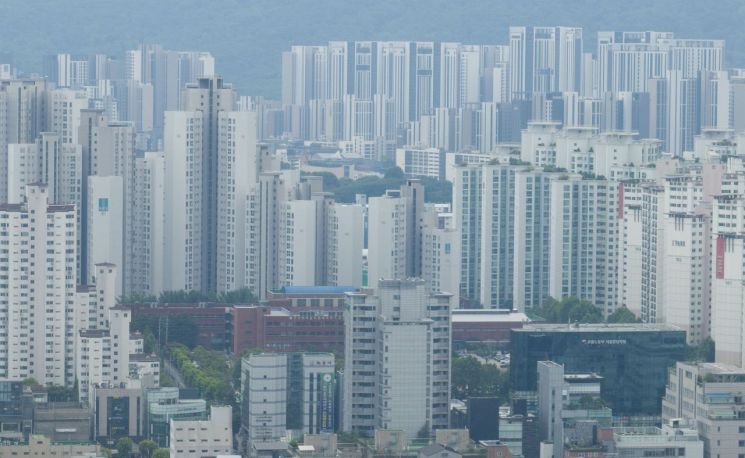
By region, Seoul saw a 0.14% increase, with the pace of growth slowing for the second week in a row. The Seoul metropolitan area and Gyeonggi-Incheon regions rose by 0.08% and 0.02%, respectively. Sejong and Jeonnam fell by 0.52% and 0.2%, while Gwangju and Gyeonggi dropped by 0.1% and 0.08%.
In the third week, nationwide apartment jeonse (long-term lease) prices remained flat. While Seoul and the metropolitan area fell by 0.02% and 0.01%, respectively, Gyeonggi-Incheon rose by 0.01%. The five major metropolitan cities saw no change (0.00%), and other provincial areas saw limited price movement at around 0.01%.
Looking at individual regions, Jeju (0.05%), Sejong (0.04%), and Gwangju (0.03%) recorded increases, while Jeonnam (-0.06%), Gangwon (-0.05%), and Seoul (-0.02%) showed declines.
Analysts note that the pace of apartment price increases in Seoul has slowed following the implementation of the 6.27 loan regulations. A Real Estate R114 official stated, "Even in the Gangnam 3 Districts, where weekly price increases had previously hovered around 1%, the growth rate has now significantly narrowed to the 0.10-0.30% range," adding, "The effects of the 6.27 measures, which are considered some of the most stringent regulations to date, appear to have been highly effective."
However, as record-high transaction prices continue to be reported in key areas of Seoul, there are calls for urgent additional measures to ensure the continued effectiveness of the loan regulations. The Real Estate R114 official emphasized, "We must remember that the impact of demand-suppression measures by previous administrations only lasted about three to four months," and stressed the need to quickly introduce comprehensive real estate policies encompassing loans, taxes, supply, and regulations before the market develops further resistance.
© The Asia Business Daily(www.asiae.co.kr). All rights reserved.

















