"Although there are many pressing issues in the education sector, the growth of the Republic of Korea has been largely driven by 'education.' Continuing this must remain the top priority going forward."
On the morning of August 14, Choi Kyojin, the nominee for Deputy Prime Minister for Social Affairs and Minister of Education, made this statement to reporters who asked what he would focus on after taking office, as he arrived for the first time at the Korea Educational Facility Safety Institute in Yeouido, where his confirmation hearing office has been set up.
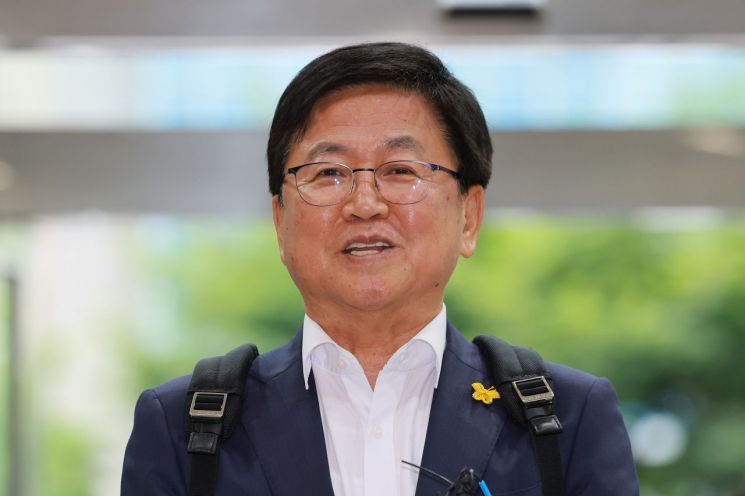
On his way to work that day, nominee Choi answered various questions about major educational issues without hesitation.
Regarding the issue of using artificial intelligence (AI) digital textbooks, which have been downgraded to 'educational materials,' he said, "We must provide maximum support to schools that wish to continue using AI textbooks as educational materials."
When AI textbooks were first introduced nationwide in the first semester of this year, the adoption rate averaged 32.4% across the country. However, in Sejong City, where nominee Choi served as superintendent of education, the adoption rate was only 8.0%, the lowest in the country. Choi, who has long argued that AI textbooks should be regarded as 'curricular materials,' said, "(The previous administration) rushed the introduction of AI textbooks, so there were calls in the field to supplement the implementation." He added, "However, there was no disagreement about the need to use AI to enhance educational effectiveness." He explained that for schools wishing to use AI textbooks as curricular materials in the future, the Ministry of Education and local education offices should collaborate to provide support.
Regarding the chronic problem of private education expenses in Korea, he pointed out, "Reducing private education through the normalization of public education has become something of a standard answer, but this alone has its limitations." Choi stated, "Policies that reduce student competition, such as creating ten Seoul National University-level institutions, are very much needed." He emphasized, however, that "this is not something the Ministry of Education can do alone; it must be accompanied by a nationwide shift in perceptions of private education, through organizations such as the National Education Commission."
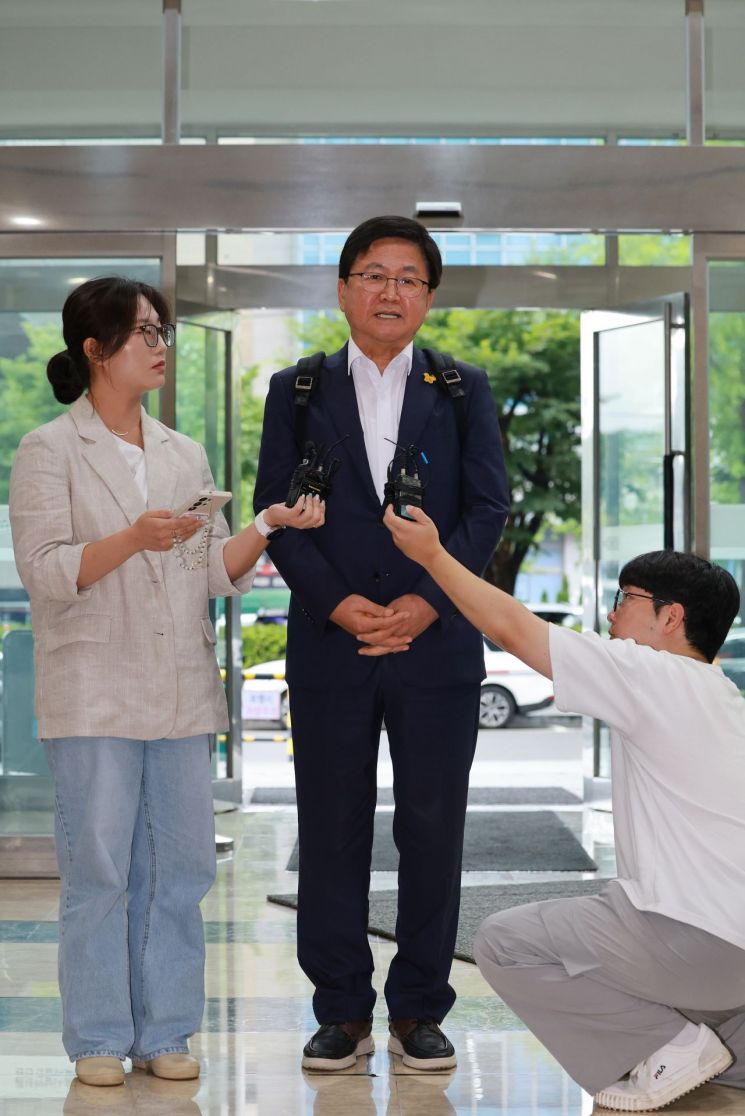
As a former teacher, Choi is recognized for his expertise in elementary and secondary education issues, but he has been criticized for his limited experience with university policy. This is particularly relevant as the new administration has put 'creating ten Seoul National University-level institutions' at the forefront of its education agenda, drawing attention to the direction Choi will take in higher education policy. Choi acknowledged, "It is true that I lack experience in higher education." However, he added, "Since early childhood, elementary, middle, high school, and higher education are all interconnected, I will make efforts to listen to the opinions of experts, including the Korean Council for University Education, and work hard in this area."
On this day, Choi identified 'protecting teachers' rights,' 'the high school credit system,' and 'integration of early childhood education and care' as key policy priorities in the education sector.
He said, "It is important to cultivate talent who will lead the rapidly changing new era through education." He continued, "Following that, issues such as teacher rights violations in schools, the integration of early childhood education and care, and the high school credit system-which has already been implemented but is facing challenges in the field-must be prioritized and addressed one by one." He added, "For areas that require further discussion, we must continue to engage with all stakeholders to seek solutions."
Born in 1953 in Boryeong, South Chungcheong Province, nominee Choi graduated from Kyungdong High School and the Department of Korean Language Education at Kongju National University, and worked as a secondary school teacher. He served as the Senior Vice Chair of the Korean Teachers and Education Workers Union (KTU). During the Roh Moo-hyun administration, he was Executive Director of the National Council for Reconciliation and Cooperation and an advisor to the Presidential Committee on Balanced National Development. After being elected Superintendent of Education for Sejong Special Self-Governing City in 2014, he won re-election in both 2018 and 2022, earning the title of 'three-term superintendent.'
During his tenure, he implemented the high school equalization policy, established 'campus-type high schools' where students could choose subjects based on their aptitude and career interests, and introduced innovative school programs. He is credited with implementing various policies that nurtured the unique characteristics of each student. He also emphasized policies to address regional academic disparities, strengthen student care, and reduce educational inequality.
Choi stated, "Rather than feeling honored to serve in the new administration, I feel a heavy sense of responsibility." He added, "I will listen humbly to the many pressing issues and work together with the educational community to find solutions."
© The Asia Business Daily(www.asiae.co.kr). All rights reserved.


















