At the Center of a Just Transition: People
Cha Jiho, Co-Head of the National Policy Planning Committee's Climate and Energy Task Force
“A Comprehensive Plan Linking Industry, Employment, and the Regional Economy Is Essential”
"We will pave the way for a uniquely Korean model of just transition."
Cha Jiho, a member of the Democratic Party of Korea and head of the Climate and Energy Task Force (TF) under the Presidential National Policy Planning Committee, said in an interview with Asia Economy on August 13, "We are looking at European cases for reference, but we are also carefully considering how to structure the energy ecosystem to fit Korea's circumstances."
At the National Policy Planning Committee's public report conference, the committee recommended expanding the Climate Response Fund and introducing transition finance. The expansion of the Climate Response Fund is being considered to ensure that it covers not only climate response but also 'climate adaptation.' Transition finance refers to financial products that support high-carbon-emitting companies in transitioning to low-carbon operations, and discussions have included providing incentives such as tax benefits and subsidies. The United Kingdom and Singapore are also reportedly pursuing transition finance. Through these measures, it is expected that the coal-fired power generation industry and its workers, who may be adversely affected by carbon emission reductions, will also be eligible for support. Cha emphasized, "It is also time to consider whether these efforts can contribute to resolving regional development imbalances." The following is a Q&A.
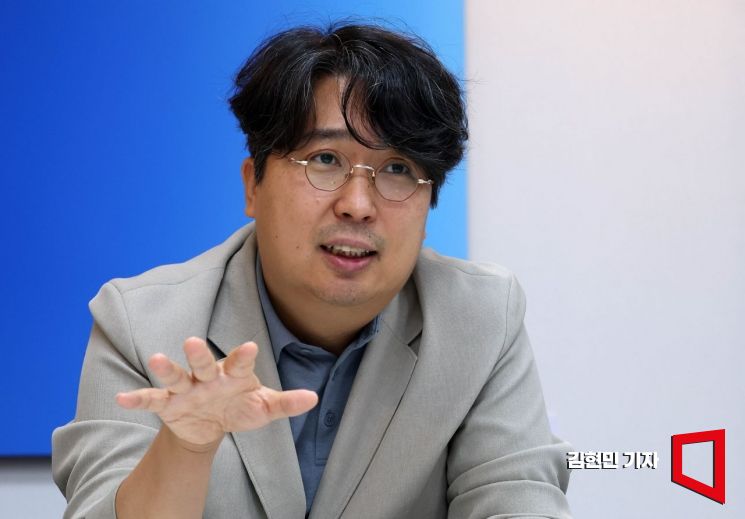 Cha Jiho, a member of the Democratic Party of Korea, is being interviewed by Asia Economy at the National Assembly Members' Office Building. 2025.8.13 Photo by Kim Hyunmin
- What is the direction of just policy as presented by the committee?
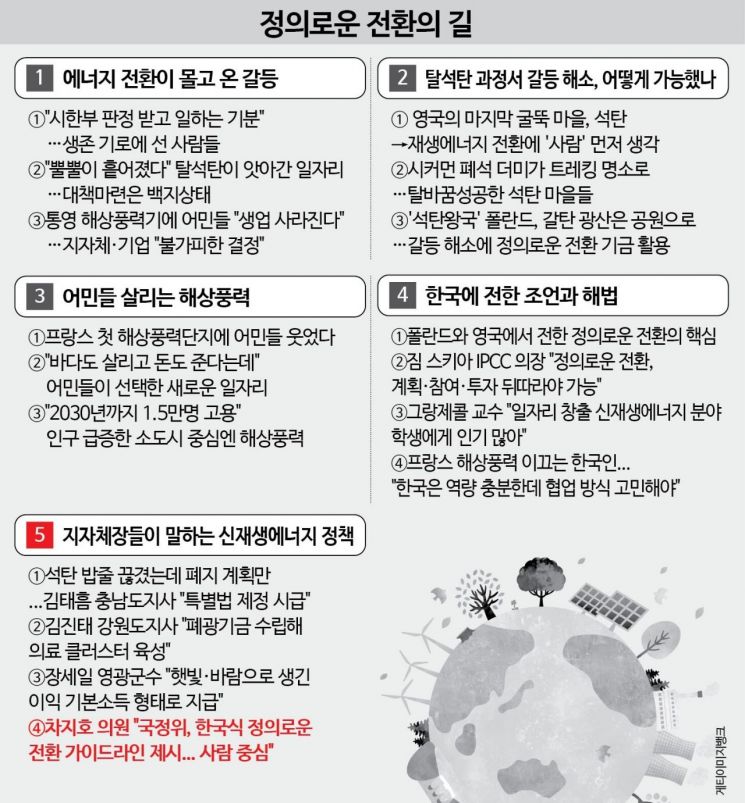
▲I believe that a just transition must be designed with people at its center, because the purpose of transition lies with people. To ensure that no one is left behind during the transition, it is important to establish guidelines on the principles we will use to respond. A people-centered just transition will serve as a key guideline for the five years of the Lee Jae Myung administration.
- You have proposed expanding the Climate Response Fund and introducing transition finance. What is the roadmap for implementation?
▲Even after the committee's activities conclude, the government plans to operate a management system to ensure the stable implementation of climate and energy-related national policy tasks, such as the Climate Response Fund and transition finance. The National Future Strategy Committee will identify long-term strategic agendas; the Presidential Office Policy Office will oversee and coordinate; and the Office for Government Policy Coordination will be responsible for reviewing, managing, and evaluating performance to improve systems and enhance policy effectiveness during the implementation of national policy tasks.
- What are the solutions for regions such as Chungnam and Gangwon, which are experiencing job losses and economic downturns due to the energy transition?
▲The solution can be described as a 'zero-risk society.' This means reducing risks that people may face throughout their life cycle to as close to zero as possible. For example, we could consider policies such as 'AI transition employment insurance.' If jobs are affected by AI, this would allow people to maintain their livelihoods through a structure similar to unemployment benefits. If similar issues arise during the energy transition, introducing transition employment insurance would be necessary. In addition, we need to diversify regional industries and attract renewable energy, hydrogen, and eco-friendly material industries to areas like Hadong, Samcheok, and Yeosu to create new employment bases. Policy support should also include establishing a transition support fund, using a portion of the profits generated during the energy transition to revitalize local economies, support startups, and expand social infrastructure.
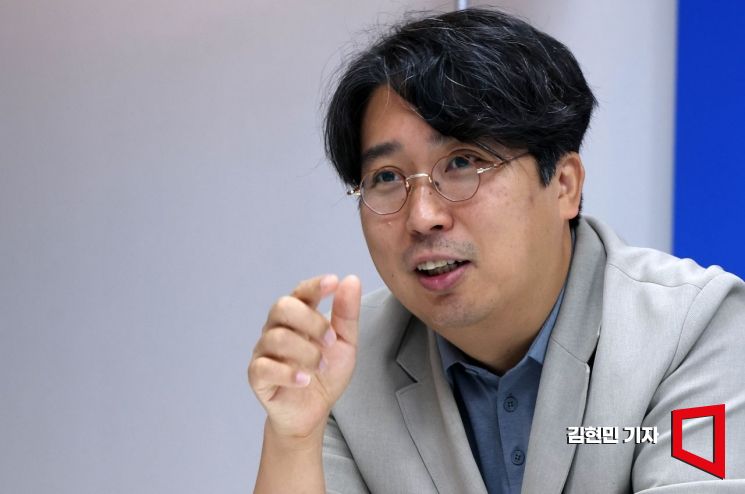 Cha Jiho, a member of the Democratic Party of Korea, is being interviewed by Asia Economy at the National Assembly Members' Office Building. 2025.8.13 Photo by Kim Hyunmin
- There has been strong opposition from fishermen to offshore wind farms. How do you plan to address this?
▲Conflict resolution should focus on three pillars: persuading residents, sharing benefits, and communication. From the early stages of the project, environmental impact assessments, predictions of changes in fishing grounds, and data on changes in catch volume should be disclosed transparently and presented in ways that are easy for residents to understand. In addition to compensating for losses in fishing operations, we need to diversify regional sources of income by institutionalizing long-term profit-sharing structures and developing areas such as offshore wind farm maintenance and management, marine tourism, and eco-friendly aquaculture. These explanations and benefit-sharing measures should be implemented in detail through a permanent consultative body, rather than as one-off briefing sessions.
- Can the energy transition help resolve regional imbalances?
▲There is a significant imbalance between regions rich in renewable energy resources, such as the southwest and Gangwon Province, and the Seoul metropolitan area, where electricity demand is concentrated. The government's ongoing 'energy highway' project aims to connect the national power grid, linking energy production regions with consumption regions. The recently passed 'Special Act on the Expansion of National Core Power Grids' and the 'Offshore Wind Power Special Act' will help expand this infrastructure. President Lee has also emphasized a 'regulation-free' policy for RE100 (100% renewable energy) industrial complexes, which is expected to lead to the development of large-scale industrial complexes in the southwest region and attract renewable energy industries and jobs.
- What are the achievements and shortcomings of the committee's Climate and Energy Task Force?
▲I believe the committee has aligned with global standards and maintained balance on climate issues. A meaningful achievement was to officially include climate adaptation as an agenda item, moving beyond the traditional dichotomy of climate and energy. We have emphasized not only policies such as the introduction of renewable energy and the closure of thermal power plants, but also the importance of preparing society and the economy for climate change and minimizing its impacts.
This feature was supported by the Press Promotion Fund, which is financed by government advertising fees.
© The Asia Business Daily(www.asiae.co.kr). All rights reserved.



















