Issues Raised by Vice Chairman Yong Bum Kim in Q1
Assumed Interest Rate to Be "Adjusted in Line with Decline in Long-Term Interest Rates"
Jung Hyun Kim, CEO of Meritz Fire & Marine Insurance, requested on August 13 during the company's second-quarter earnings conference call that financial authorities establish guidelines to enhance the comparability of loss ratio assumptions across the industry. Regarding the possibility of lowering the assumed interest rate, he explained that the company plans to consider adjustments in line with the decline in long-term interest rates.
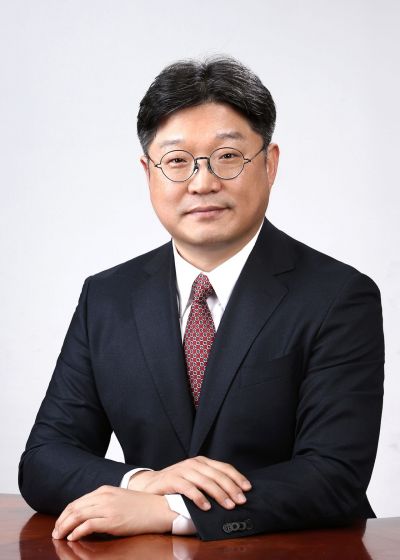
When asked how Meritz and other companies might be affected if financial authorities clarify new standards related to expected loss ratio assumptions, Kim responded, "Discussions on long-term insurance expected loss ratios are still at an early stage, making it difficult to predict the outcome. However, we hope that guidelines will be established to enhance the comparability of loss ratio assumptions across the industry."
Previously, on May 14, Yong Bum Kim, Vice Chairman of Meritz Financial Group, publicly criticized some insurers for setting expected loss ratios for long-term insurance excessively low, thereby inflating short-term results. He stated, "This is an act of shifting losses to the future." The implication was that overly optimistic loss ratio estimates could artificially boost the contractual service margin (CSM) in the financial statements.
Kim stated, "Regardless of how the authorities set the standards, we expect the financial impact on our company to be relatively positive."
Regarding the possibility of reviewing a reduction in the assumed interest rate, he said that adjustments would be considered. Samsung Fire & Marine Insurance, DB Insurance, and KB Insurance have announced that they will raise insurance premiums by about 5-10% starting this month, which is due to a 0.25 percentage point reduction in the assumed interest rate. The assumed interest rate is the expected rate of return that an insurer expects to earn through asset management until insurance claims are paid out, based on the premiums collected from policyholders. Typically, when the assumed interest rate decreases, insurance premiums rise; conversely, when it increases, premiums fall.
Kim explained, "A reduction in the assumed interest rate will be based on the level of long-term interest rates rather than changes in the business environment," adding, "Our company's assumed interest rate for long-term insurance is 2.75%, which is similar to the level of our competitors." He further stated, "We will review adjustments to the assumed interest rate in line with the decline in long-term interest rates."
Meritz Financial Group stated that it will maintain its existing shareholder return policy regardless of the government's new tax plan for major shareholders regarding capital reduction dividends.
Unlike regular dividends, which distribute retained earnings to shareholders, capital reduction dividends involve converting capital reserves into retained earnings for distribution. While regular dividends are subject to a 15.4% dividend income tax, capital reduction dividends are tax-exempt, and Meritz Financial Group has adopted this method. However, the government has announced a proposed tax law revision that would tax any amount exceeding the acquisition cost for major shareholders.
Yong Bum Kim, Vice Chairman of Meritz Financial Group, stated, "To be clear, there is no reason to change our existing (shareholder return) policy," and explained, "Meritz maintains a principle of prioritizing general shareholders when determining its shareholder return policy, so the tax law revision will not affect Meritz's policy."
He added, "The mid-term shareholder return policy announced in November 2022 marks its third year this year. In the upcoming third-quarter earnings announcement in November, we will disclose and explain the new shareholder return policy in detail."
Meritz Financial Group recorded a consolidated net profit of 1.3584 trillion won in the first half of the year, setting a new record for the highest half-year result. Total assets stand at 124.2453 trillion won. The return on equity (ROE) is 26.3%, the highest level in the industry.
© The Asia Business Daily(www.asiae.co.kr). All rights reserved.
![Clutching a Stolen Dior Bag, Saying "I Hate Being Poor but Real"... The Grotesque Con of a "Human Knockoff" [Slate]](https://cwcontent.asiae.co.kr/asiaresize/183/2026021902243444107_1771435474.jpg)















