In everyday life, people often fail to recognize the importance of the tongue, and most individuals only pay minimal attention to it by briefly brushing it while brushing their teeth.
The surface of the tongue is widely covered with taste papillae, which contain taste buds that detect a variety of flavors such as sweet, salty, sour, and bitter.
Additionally, the tongue acts as an oral sensory organ by receiving various sensory information within the mouth, including temperature, texture, pain, and the physical characteristics and condition of food.
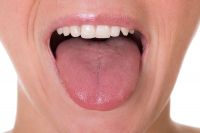 Tongue. Provided by ClipartKorea (not related to the report)
During the chewing process, the tongue moves food from the teeth, forms it into a bolus, and facilitates the swallowing reflex, helping food pass smoothly into the pharynx and esophagus. The tongue's ability to control its position and movement is essential for articulation and plays a crucial role in accurate speech production.
However, despite its importance, the tongue's moist surface and fine papillae structure create an environment where bacteria can easily thrive. If you closely examine the tongue, you can observe its papillae structure, which makes it easy for food debris and bacteria to adhere. When this combines with the moist environment of the mouth and poor oral hygiene, a white or yellowish coating called tongue coating (coating on the tongue) can form.
Anaerobic bacteria that reside in tongue coating break down proteins and produce sulfur compounds such as hydrogen sulfide and methyl mercaptan, which cause foul odors and are a major cause of bad breath. The more tongue coating there is, the more active the bacteria become, resulting in more severe halitosis.
Additionally, bacteria accumulated on the tongue's surface can irritate and penetrate the mucous membrane, triggering an inflammatory response. This can cause the tongue to swell, turn red, and become painful. In severe cases, inflammation can spread throughout the mouth, increasing the risk of secondary oral diseases such as stomatitis and periodontitis.
Furthermore, if the taste papillae on the tongue's surface are damaged or blocked due to tongue coating and inflammation, taste cells may not properly receive external stimuli, leading to a reduced or distorted sense of taste. If this condition persists for a long time, it may become difficult to recover normal taste, so caution is needed.
Therefore, for tongue health and oral hygiene, it is essential to manage the tongue regularly and systematically, rather than just briefly brushing it during toothbrushing.
Jang Ji-hyun, head of the dental department at Daedong Hospital (specialist in integrated dentistry), emphasized, "The tongue is an important indicator and functional organ for oral health, but many people do not manage it properly and visit the clinic for issues such as bad breath and inflammation. Developing a habit of thoroughly cleaning the tongue with a tongue cleaner or a soft toothbrush during brushing, along with regular dental checkups, is extremely important for maintaining oral health."
Open your mouth wide and stick your tongue out as far as possible, then use a soft toothbrush or tongue cleaner to gently sweep from the innermost part of the tongue root along the tongue body toward the tip, making short, light strokes 3 to 5 times. Be careful not to apply too much pressure, as this can cause gagging or create small wounds on the tongue's surface.
The tongue root area is the moistest part of the mouth and is most prone to bacterial growth, so it should be cleaned thoroughly. It is appropriate to clean the tongue twice a day, after brushing in the morning and before going to bed.
You may use a mouthwash if necessary, but excessive or frequent use can disrupt the balance of normal oral bacteria. Therefore, follow the product instructions or your dentist's recommendations for appropriate use.
A dry mouth allows bacteria to multiply easily, so keep your mouth moist by drinking plenty of water and avoid smoking and excessive alcohol consumption. Manage the health of your entire mouth, including the tongue, through regular dental checkups.
© The Asia Business Daily(www.asiae.co.kr). All rights reserved.
![Clutching a Stolen Dior Bag, Saying "I Hate Being Poor but Real"... The Grotesque Con of a "Human Knockoff" [Slate]](https://cwcontent.asiae.co.kr/asiaresize/183/2026021902243444107_1771435474.jpg)














