Clear Distinction Between Standard and Paid Services
Customized Health Checkups Introduced for Domestic Workers
The Seoul Metropolitan Government is set to establish guidelines to reduce disputes over the ambiguous scope of duties for domestic workers, such as cleaning, laundry, and childcare. The city also plans to improve working conditions by supporting customized health checkups for these workers.
According to Seoul's '3rd Basic Labor Policy Plan' released on August 13, the city will create guidelines outlining instructions for service contracts, aiming both to protect the rights of domestic service workers and to provide tailored services for clients.
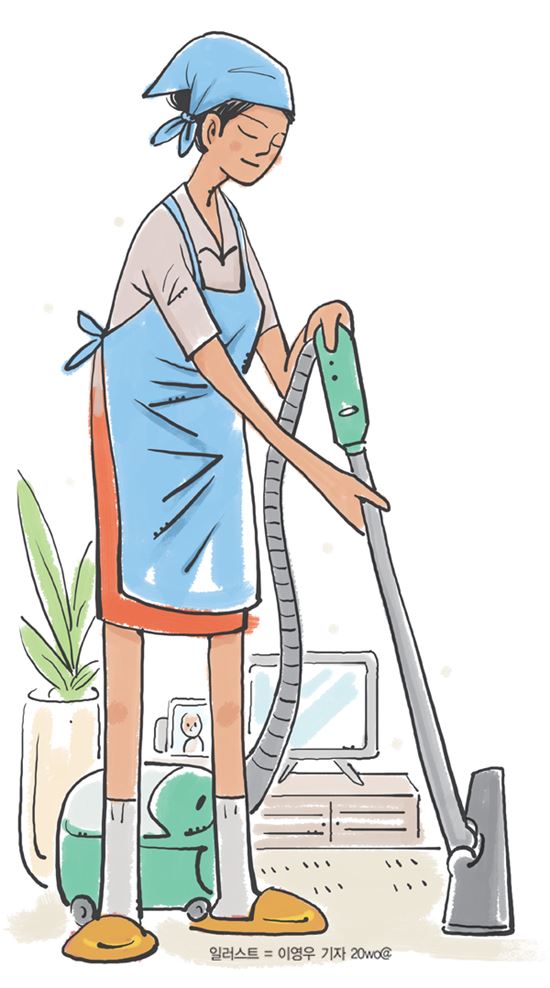
The guidelines will clearly define basic domestic services such as cleaning, dishwashing, and disposal of separated waste, and will distinguish these from paid services requiring professional qualifications, such as childcare. A city official explained, "There have been conflicts on-site, such as when a domestic worker is hired for cleaning but the client asks for additional childcare services. We plan to establish these guidelines to clarify the scope of work and ensure both parties are fully aware of it."
With the standardization of duties through these guidelines, the city expects to narrow the wide gap in service fees among different providers. Until now, domestic service fees have been calculated in a fragmented manner, based on factors like service hours or area. According to the city, the average hourly fee for domestic services ranged from a minimum of 12,500 won to a maximum of 20,000 won. In a 2023 survey on the working conditions of domestic workers in Seoul, 72% of respondents said that the quality and quantity of job-related training varied by company size, indicating a need for standardized job practices.
The guidelines developed by the city will be distributed as educational materials for small-scale domestic service companies. In addition, the city plans to produce and distribute an 'etiquette book' to encourage clients to treat domestic workers with respect.
Furthermore, recognizing that most domestic workers are women over 50 who endure physically demanding labor, the city will introduce a 'customized health checkup' program. According to a 2021 survey on the labor rights and mutual aid awareness of domestic workers, 39.4% of domestic workers reported experiencing back pain, and 69.3% reported muscle pain in the shoulders, neck, or arms. These rates are more than 20 percentage points higher than the rates for all workers, which were 19.8% and 43.8%, respectively. While the government currently provides occupation-specific health checkup subsidies for some special types of workers, such as delivery drivers and sanitation workers, domestic workers have been excluded.
In response, the city will offer a customized health program for domestic workers aged 50 to 69 who live or work in Seoul, are affiliated with government-certified providers, and have household incomes at or below 100% of the median income. The program will provide annual support for costs related to musculoskeletal disease screenings, education, and treatment. A city official stated, "We will conduct a small-scale pilot project for customized health checkups in the second half of this year, and plan to fully launch the program next year alongside the domestic worker guidelines."
© The Asia Business Daily(www.asiae.co.kr). All rights reserved.
![Clutching a Stolen Dior Bag, Saying "I Hate Being Poor but Real"... The Grotesque Con of a "Human Knockoff" [Slate]](https://cwcontent.asiae.co.kr/asiaresize/183/2026021902243444107_1771435474.jpg)















