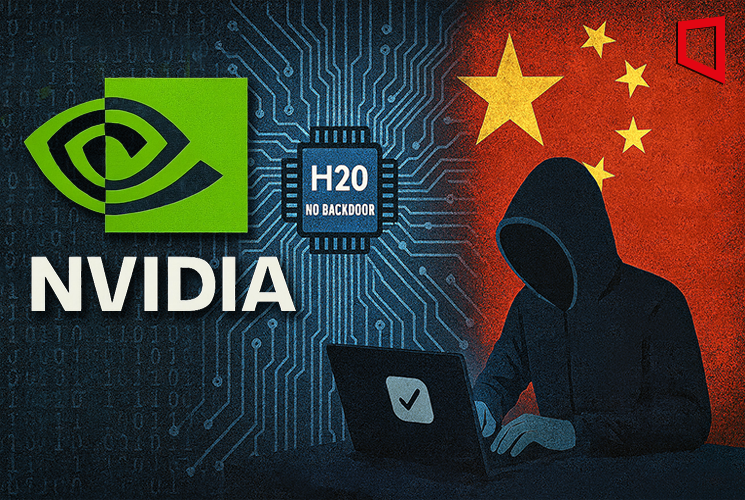
On August 12, Bloomberg News reported, citing sources, that China has issued guidance instructing domestic companies to restrict the use of Nvidia's H20 chips.
According to the report, in recent weeks, Chinese authorities have sent notices to multiple companies advising them to refrain from using H20 chips. In particular, it was reported that Chinese authorities oppose the use of these chips by state-owned enterprises and others in work related to the government or national security.
One of the sources stated that the guidance is affecting not only Nvidia, but also AMD. However, it is not known whether AMD's MI308 chip was specifically mentioned.
This guidance comes after Nvidia and AMD agreed to pay 15% of their China sales revenue to the U.S. federal government. According to Bloomberg, the chip usage restrictions are similar to previous measures by Chinese authorities that limited Apple iPhones and Tesla vehicles in certain agencies and regions. Notably, Chinese authorities are reportedly considering expanding the scope of the guidance regarding Nvidia and AMD even further.
Such guidance from Chinese authorities is fueling suspicions regarding the U.S. government's explanation for why it once again allowed the export of the H20. Senior U.S. officials have described this as part of a U.S.-China trade agreement, but Chinese authorities have publicly stated that the resumption of H20 supply is not part of any bilateral agreement.
Bloomberg interpreted this as suggesting that Chinese authorities may not have wanted the resumption of H20 exports in the first place. Chinese authorities have also given negative assessments of the H20, which was designed with lower specifications for export to China.
In particular, the Chinese side has expressed strong concerns about the security risks of Nvidia chips. On July 31, the Cyberspace Administration of China summoned Nvidia to explain the issue of backdoor security risks and to submit supporting documentation. In response, Nvidia denied the existence of a "kill switch" that could remotely disable its chips, as well as any "backdoors" that would allow governments or hackers to steal data or remotely control devices through hidden functions inside the hardware.
© The Asia Business Daily(www.asiae.co.kr). All rights reserved.
![Clutching a Stolen Dior Bag, Saying "I Hate Being Poor but Real"... The Grotesque Con of a "Human Knockoff" [Slate]](https://cwcontent.asiae.co.kr/asiaresize/183/2026021902243444107_1771435474.jpg)















