
The first school milk program in Korea began in 1926 in Gongju. Maren Bording, an American female missionary, opened a milk distribution center just three years after arriving in Korea, having witnessed infants losing their lives to starvation. According to a report she wrote in 1927, the overall infant mortality rate in Korea at that time was about 35%, whereas the mortality rate among infants in Gongju who received milk dropped sharply to 5%. Later, in 1932, when the Chungcheongnam-do Provincial Office relocated to Daejeon, the milk program also began in the Daejeon area.
This miracle of milk, once regarded as a lifeline, has been revived in Gongju. In 2022, Gongju City allocated a budget of 320 million won to provide free milk to approximately 3,260 students at 28 elementary schools in the city, receiving strong support from both parents and teachers.
One hundred years ago, a missionary started the milk program to help starving children, and today, it continues as a project that supplies essential nutrition to underprivileged children, including those from low-income families. The issue, however, is that access to this vital source of balanced nutrition for growing children varies greatly depending on the region.
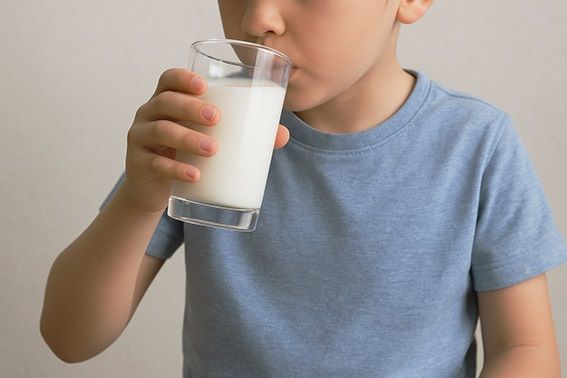
Since 2011, Seoul Metropolitan Government and Seoul Metropolitan Office of Education have implemented free meal programs that include milk, and Jeollanam-do has also provided free milk to all elementary school students using local government funds for the past five years. In 2024, the school milk program participation rate in Jeollanam-do stands at 76.6%, which is about 2.5 times higher than the national average of 30%.
In contrast, Jeollabuk-do, which is also located in the Honam region, recorded a participation rate of only 25.3% in 2024, showing a clear gap with Jeollanam-do. Delays in coordination and procedural processes among those in charge of meal operations have resulted in some schools experiencing delays or even failing to implement the milk program.
Meanwhile, the United States has sent a strong policy signal at the national level regarding school milk programs. Recently, the U.S. House of Representatives passed the "Whole Milk for Healthy Kids Act," which aims to expand children's choices and improve the quality of their nutrition by allowing whole milk to be offered in school meals. This law carries a clear message that the government will directly and systematically support nutrition education and the formation of healthy eating habits.
What about Korea? While there are various opinions about the school milk program, one fact remains clear: milk is still an essential food for growing children. Although some local governments, such as Seoul and Jeollanam-do, provide free milk programs using their own budgets, these efforts are limited to certain regions. This is why nationwide policy improvements are needed. Among school nutrition teachers, there is a growing consensus that providing milk at school is not a "choice" but a "necessity."
Lee Eunyoung, a nutrition teacher at Seongnae Elementary School, said, "Milk is essential for growing children because it is rich in nutrients necessary for growth, such as calcium, vitamin D, and protein, and it also has a high calcium absorption rate. Especially, developing the habit of drinking milk regularly at school can help children maintain long-term health."
Yoo Imseon, a nutrition teacher at Noryangjin Elementary School, explained, "Recently, the rate of skipping breakfast among elementary students has been increasing, and milk provided as a morning snack can help address this issue. The school milk program is an important policy for supporting the formation of strong bones in growing children." In fact, nutrition teachers believe that milk is not just a beverage but a "functional food that supplements children's nutrition within the school," and therefore, it should be firmly integrated into the school meal system.
The Korea Dairy Committee (Chairman Lee Seungho) also agrees on the need to expand the school milk program. "Milk is a representative food that provides balanced nutrients such as calcium, protein, and vitamin D to growing children," the committee stated, adding, "School milk programs should be seen not just as a supplement to meals, but as an investment in fostering healthy eating habits and improving the physical strength of future generations."
© The Asia Business Daily(www.asiae.co.kr). All rights reserved.
![Clutching a Stolen Dior Bag, Saying "I Hate Being Poor but Real"... The Grotesque Con of a "Human Knockoff" [Slate]](https://cwcontent.asiae.co.kr/asiaresize/183/2026021902243444107_1771435474.jpg)
















