Exports and Consumer Prices Up 2.1% Nationwide
Retail Sales Continue Downward Trend
In the second quarter, exports increased year-on-year in 10 provinces and metropolitan cities, including Jeju, Chungbuk, and Gyeongnam. Despite significant uncertainty due to U.S. tariffs, this growth was driven by increased exports of high value-added items such as semiconductors.
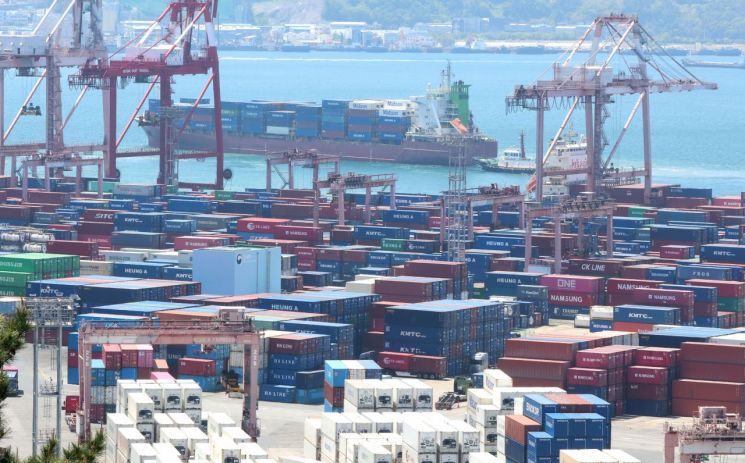
According to the "Regional Economic Trends for Q2 2025" released by Statistics Korea on August 12, national exports in the second quarter rose by 2.1% compared to the same period last year. Although uncertainty remained high due to the impact of U.S. tariffs, exports of memory semiconductors, ships, and other heavy chemical industrial products increased, resulting in export growth in 10 provinces and metropolitan cities.
By region, Sejong (-37.2%), Jeonnam (-13.7%), and Busan (-6.0%) saw declines in exports of other synthetic plastics, copper products, and ships. In contrast, Jeju (37.8%), Chungbuk (34.9%), and Gyeongnam (12.9%) experienced growth in exports of processors/controllers, memory semiconductors, and other heavy chemical industrial products.
Nationwide, manufacturing production increased by 2.1%, marking seven consecutive quarters of growth. While Seoul (-10.1%), Chungnam (-6.4%), and Busan (-4.0%) saw declines in the production of medical and precision instruments, semiconductors and electronic components, and metals, six provinces and metropolitan cities, including Chungbuk (14.1%), Gyeonggi (12.3%), and Gwangju (11.3%), recorded increases in the production of semiconductors and electronic components, as well as electrical equipment.
Service sector production nationwide also rose by 1.4%, continuing an 18-quarter upward trend. Although eight provinces and metropolitan cities, including Jeju (-9.2%), Gyeongnam (-2.8%), and Gangwon (-1.6%), saw declines in the production of information and communications, real estate, and arts, sports, and leisure, eight others, including Gyeonggi (5.4%), Incheon (3.5%), and Sejong (3.3%), recorded increases in professional, scientific, and technical production.
Retail sales, which reflect goods consumption, declined by 0.2% nationwide, marking 13 consecutive months of negative growth. Ulsan (5.4%), Incheon (4.9%), and Sejong (3.5%) saw increased sales of passenger cars and fuel retailers, but Jeju (-2.3%), Gyeongbuk (-1.8%), and Seoul (-1.8%) experienced declines in sales at duty-free shops and specialty retailers.
Construction orders nationwide fell by 8.4%. Daegu (370.9%), Gyeongnam (91.9%), and Busan (73.8%) saw increases in orders for housing, ports, and airports, but 12 provinces and metropolitan cities, including Jeju (-70.6%), Sejong (-67.5%), and Gwangju (-56.4%), experienced declines in orders for offices and stores, housing, and roads and bridges.
The national employment rate rose by 0.2 percentage points to 63.5%. While Jeonbuk (-1.0 percentage points), Gwangju (-0.4 percentage points), and Seoul (-0.2 percentage points) saw declines in employment rates, 11 provinces and metropolitan cities, including Daejeon (1.2 percentage points), Busan (1.0 percentage points), and Gangwon (1.0 percentage points), recorded increases.
Nationwide consumer prices rose by 2.1% in the second quarter, with regional variations. Jeju (1.5%), Gwangju (1.7%), Ulsan (1.9%), Daejeon (1.9%), and Gyeongbuk (1.9%) saw price increases below the national average, while Busan (2.2%) recorded the highest regional inflation rate, driven by increases in non-restaurant personal services and other factors.
Looking at net population migration by region in the second quarter, seven regions, including Gyeonggi (10,426 people), Incheon (8,050 people), and Chungnam (2,132 people), recorded net inflows. In contrast, ten regions, including Seoul (-10,051 people), Busan (-3,704 people), and Gwangju (-2,854 people), recorded net outflows.
© The Asia Business Daily(www.asiae.co.kr). All rights reserved.

















