KDI Revises Economic Outlook for 2025?2026
1.6% Growth Projected Next Year,
Moderate Recovery in Domestic Demand Expected
The Korea Development Institute (KDI) has projected South Korea's economic growth rate for this year at 0.8%. The main reason cited was sluggish construction investment, while, externally, concerns about trade pressure from the United States and a global economic slowdown are weighing on the outlook. For next year, KDI forecasts 1.6% growth, expecting a modest recovery in domestic demand despite continued sluggish exports.
In its report, "Revised Domestic Economic Outlook for 2025-2026," released on August 12, KDI projected a growth rate of 0.8% for this year and 1.6% for next year. These figures remain unchanged from the economic outlook announced in May. KDI explained, "This year's growth will be limited to 0.8%, mainly due to sluggish construction investment, but a moderate rebound is possible next year with a recovery in construction investment and a slowdown in private consumption."
KDI expects private consumption to recover from the second half of this year, supported by declining interest rates, government stimulus measures, and the effects of two rounds of supplementary budgets. The growth rate is forecast at 1.3% for this year and 1.5% for next year, with this year's figure revised upward by 0.2 percentage points from previous projections.
Despite external uncertainties, facility investment is expected to increase by 1.8% this year and 1.6% next year, driven by a strong semiconductor market and the effects of interest rate cuts. In contrast, construction investment is projected to decline sharply, following a -3.3% decrease last year and an expected -8.1% decrease this year. KDI stated, "Construction investment in the first half of the year fell short of previous forecasts, and recovery is being delayed due to the slow normalization of the real estate project financing (PF) market, strengthened lending regulations, and the aftermath of safety accidents." The institute revised its construction investment growth forecast downward by 3.9 percentage points for this year and expects a 2.6% increase next year, indicating a gradual easing of the downturn.
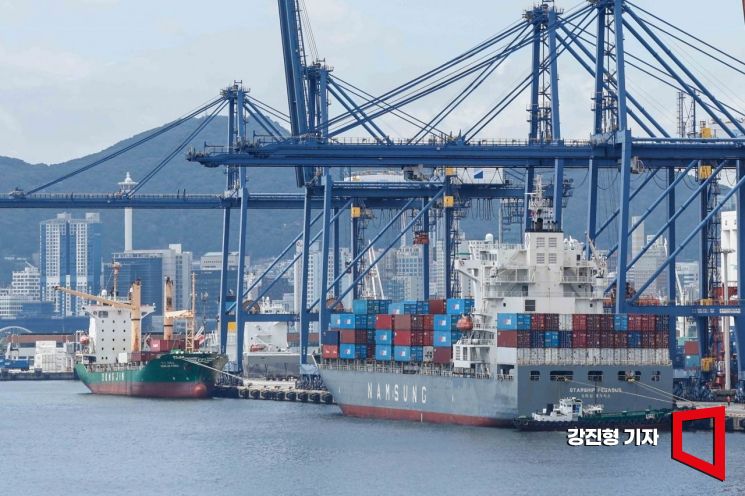
Exports are expected to slow significantly, rising only 2.1% this year and 0.6% next year, compared to a 6.8% increase last year, due to U.S. tariff hikes. The negative impact of higher tariffs is expected to become more pronounced in the second half of this year, with merchandise export growth rates projected at 1.2% this year and 0.2% next year. However, the clear recovery in the global semiconductor market led KDI to revise this year's merchandise export growth forecast upward by 1.6 percentage points from previous estimates.
The current account balance is expected to maintain a large surplus, supported by a strong semiconductor market and improved terms of trade. KDI forecasts a surplus of $106 billion this year and $91 billion next year, with this year's projection revised upward by $14 billion to reflect the improved semiconductor market.
The consumer price inflation rate is expected to ease gradually from 2.3% last year to 2.0% this year and 1.8% next year. Core inflation is projected to remain at 1.9% for both this year and next year. Reflecting higher international oil price forecasts and the upward revision of private consumption, KDI raised this year's consumer price and core inflation forecasts by 0.3 percentage points and 0.1 percentage points, respectively.
The increase in the number of employed persons is expected to shrink from 160,000 last year to 150,000 this year and 110,000 next year. Reflecting the upward revision of government job creation and private consumption forecasts, KDI raised this year's employment forecast by 60,000 compared to previous estimates.
KDI identified intensifying trade conflicts between the United States and major countries, as well as the possibility of higher semiconductor tariffs, as external risk factors. In particular, it warned that tariff hikes on major semiconductor trading partners such as Taiwan and ASEAN (Association of Southeast Asian Nations) would inevitably have a negative impact on South Korea's exports. Domestically, KDI also expressed concern about potential construction disruptions due to delays in the normalization of real estate PF and the deteriorating financial health of construction firms.
© The Asia Business Daily(www.asiae.co.kr). All rights reserved.
![Clutching a Stolen Dior Bag, Saying "I Hate Being Poor but Real"... The Grotesque Con of a "Human Knockoff" [Slate]](https://cwcontent.asiae.co.kr/asiaresize/183/2026021902243444107_1771435474.jpg)















