Nvidia and AMD Resume Exports to China
Sign Contract to Pay 15% of Revenue to U.S. Government
Samsung and SK, as HBM Suppliers, Expected to See Increased Orders
Concerns Remain Over Price Reduction Pressure from Customers
Long-Term Worries Ove
It has been reported that Nvidia and AMD have signed an agreement to pay 15% of their revenue from sales in China to the U.S. government in order to export artificial intelligence (AI) semiconductors to China. In the short term, this may lead to an increase in high-bandwidth memory (HBM) supply from Samsung Electronics and SK Hynix. However, industry sentiment suggests that the situation has become more complicated. This is because Nvidia and others may pressure suppliers to lower prices in order to cover the '15% payment,' and the U.S. government could use this precedent to demand similar conditions from Korean semiconductor companies in future negotiations.
Nvidia Resumes Exports to China... "Increased HBM Supply"
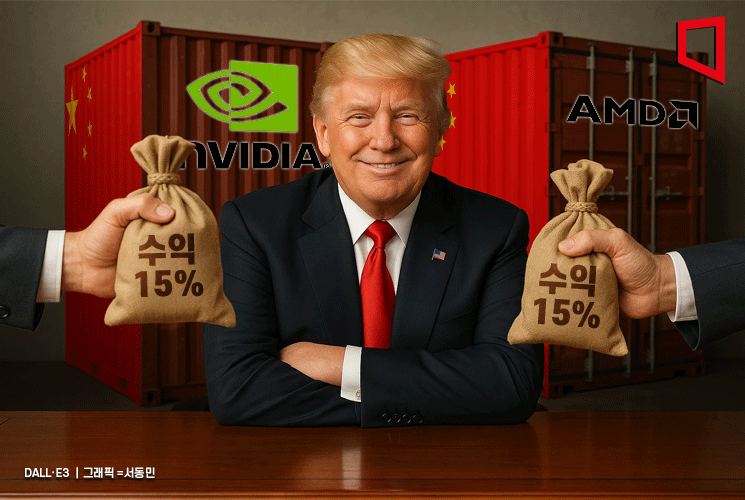
According to the Financial Times (FT) and other sources on August 10 (local time), Nvidia and AMD have signed contracts to pay 15% of their revenue from AI chip sales to China to the U.S. government as a condition for receiving export permits. Nvidia must pay 15% of the sales revenue from its H20 chip for export to China, while AMD must do the same for its MI308 chip. Both products were initially designed as lower-performance models to circumvent U.S. regulations, but sales were halted in April this year when President Donald Trump imposed a complete export ban. Nvidia suffered losses of $5.5 billion (about 8 trillion won) because it was unable to sell the H20 chip.
This agreement is in line with President Trump’s emphasis on 'pressure for domestic production' in the U.S. However, it is considered unusual for tariff exemptions or export permits to be tied to a specific 'financial contribution' requirement.
Given the explosive growth in computational demand driven by the AI industry, China accounts for a significant portion of both companies’ revenue. This is due to the massive purchasing power of big tech companies and research institutions in China, backed by substantial government financial support. While the '15% payment from China sales' condition will somewhat limit profitability, Nvidia and others appear to have accepted the proposal in order to maintain access to the Chinese market.
In the short term, this is expected to benefit Korean companies. The resumption of AI chip exports to China means 'increased orders' for Samsung Electronics and SK Hynix, who supply HBM3 and other products to both companies. In particular, Samsung Electronics is in urgent need of supplying mid- to low-priced HBM3 chips, as its fifth-generation HBM3E has not passed Nvidia’s quality tests. Even in a situation where it has lost leadership in the memory market, the fact that it can increase factory utilization is seen as a positive aspect.
Pressure for 'Price Reductions'... U.S. Pushing Conditional Deals?
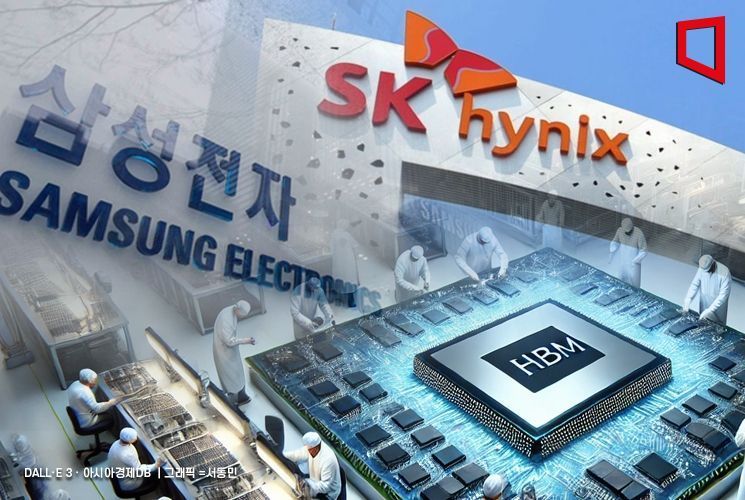
However, there are concerns that Nvidia and other clients may pass the burden of paying 15% of their China revenue to the U.S. government onto their suppliers. A semiconductor industry official said, "In the case of HBM, customers and suppliers usually negotiate and agree on prices and quantities in advance," adding, "Given the 15% payment condition, there is a possibility that they will pressure for even lower HBM3 prices." This means that even if supply increases, profitability could worsen.
The Trump administration has tried a new approach that accommodates corporate needs while also securing fiscal benefits. From the perspective of companies, this deal does not fully resolve supply chain uncertainties and signals that technology and markets could become subjects of political bargaining. Some point out that if the Chinese government interprets this as 'trade discrimination' and responds accordingly, companies could find themselves caught in the crossfire.
Furthermore, there are predictions that this agreement could set a 'bad precedent' for Korean semiconductor companies or component suppliers. This suggests that the Trump administration could demand 'revenue recovery' conditions in future negotiations with individual companies. For example, there are concerns that Samsung Electronics and SK Hynix could be pressured to make financial contributions or transfer technology to the U.S. as a condition for controlling exports to China.
Within the semiconductor industry, there is a sense that the outcome of the Trump administration’s negotiations with Nvidia and others cannot be dismissed as merely a foreign case. An industry official said, "The U.S. government has sent a message that it will use strategic materials such as semiconductors as tools for 'political deals,'" adding, "As conditional transactions become a new negotiation tactic, it has become increasingly important to secure bargaining power and pursue market diversification strategies in parallel."
© The Asia Business Daily(www.asiae.co.kr). All rights reserved.


















