Will Tariffs Add $2,400 in Annual Costs per Household?
Americans Cite Grocery Expenses as a Major Source of Stress
Donald Trump, the President of the United States, pledged to lower grocery prices during his presidential campaign. However, since taking office, food prices have continued to rise, leading Americans to tighten their belts by changing their shopping habits and lifestyles, according to a report by Yonhap News on August 11, citing CNN.
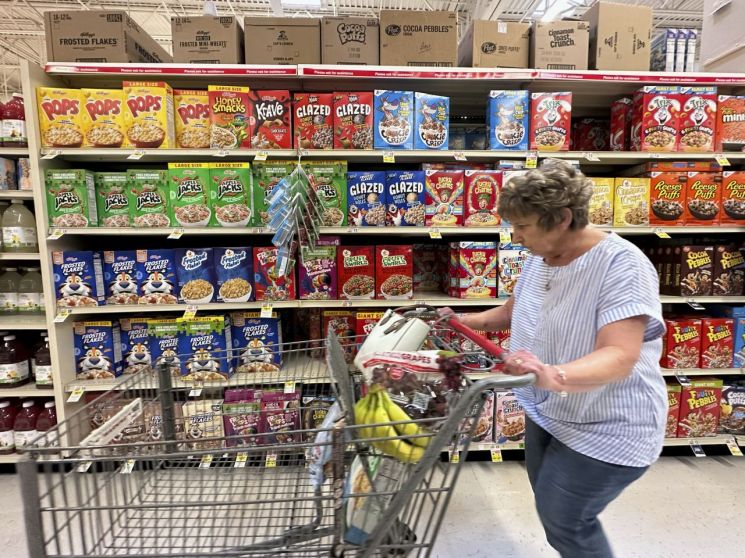 Donald Trump, the President of the United States, pledged to lower grocery prices during his presidential campaign, but after taking office, food prices have continued to rise, leading Americans to tighten their belts by changing their shopping habits and lifestyles. Photo by AP Yonhap News
Previously, according to a survey conducted by AP and the University of Chicago's NORC Center for Public Affairs Research from July 10 to 14, more than half (53%) of the 1,437 American adults surveyed identified grocery costs as a major source of stress. Another 33% said grocery costs were a minor source of stress. Only 14% responded that grocery costs were not a source of stress at all.
Although this is the first time AP has specifically surveyed stress related to grocery prices, CNN reported that other recent surveys have also shown Americans' dissatisfaction with food prices. The latest survey results indicate that, even though the pace of food price increases has slowed, Americans still feel anxious about high food prices and the overall economic situation.
Will Trump’s Trade War Lead to Higher Prices?
Earlier this year, concerns were raised in the United States about price increases resulting from Trump's trade war. However, until July, significant price hikes were not observed for most items, except for a few categories. This was because companies had secured inventories in advance at the beginning of the year, and some companies chose to absorb the increased costs themselves. However, starting in August, economists predicted that as inventories are depleted and tariffs begin to impact companies, price increases could accelerate.
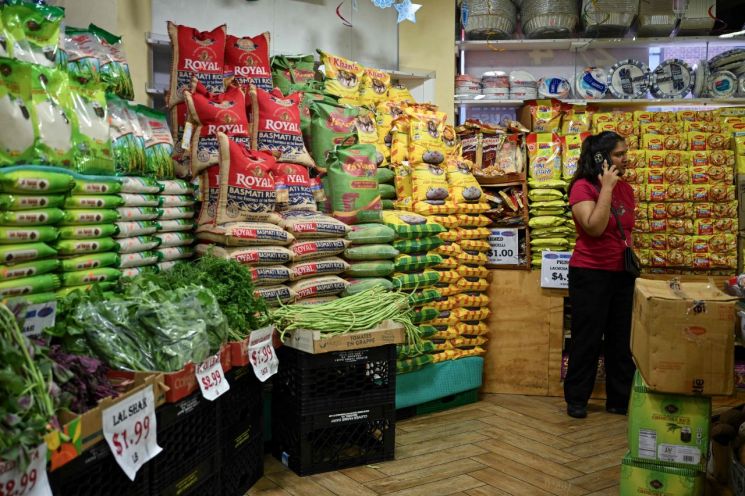 Donald Trump, the President of the United States, pledged to lower grocery prices during his presidential campaign, but after taking office, food prices have continued to rise, leading Americans to tighten their belts by changing their shopping habits and lifestyles. Photo by AFP Yonhap News
In response, companies expect that consumers will eventually change their shopping patterns. Consumers are buying smaller packages, using coupons, purchasing only essentials, and eating out less. Some analysts interpret these changes as signs of an economic slowdown that could affect the job market and corporate growth plans. Ron Sargent, CEO of the supermarket chain Kroger, said, "Consumers continue to spend cautiously in an uncertain economic environment," noting that people are living with considerable uncertainty regardless of income level. In response, Kroger is strengthening discount promotions and expanding its private label products, which are cheaper than national brands. Mondelez, which owns snack brands such as Oreo and Chips Ahoy, added that consumers are especially buying fewer biscuits.
Trump Administration Moves to Eliminate 'Junk Food'
Meanwhile, the Trump administration has begun to implement policies to eliminate 'junk food' from the Supplemental Nutrition Assistance Program (SNAP) for low-income households. On August 7 (local time), U.S. media outlets including ABC reported that Brooke Rollins, Secretary of Agriculture, officially signed a 'SNAP Food Choice Waiver' for six states. In a statement, Secretary Rollins said that this move would further advance President Trump's 'Make America Healthy Again (MAHA)' initiative. As a result of this measure, six additional states?Texas, Florida, Louisiana, West Virginia, Colorado, and Oklahoma?will join the purchase restrictions.
 Ultra-processed foods include hamburgers, sandwiches, sweet snacks, salty snacks, pizza, and sugary beverages. In particular, children and adolescents were found to obtain about 62% of their total calorie intake from these foods. AP Yonhap News
Including these six states and the existing six?Nebraska, Iowa, Indiana, Arkansas, Idaho, and Utah?a total of 12 states in the U.S. will prohibit the purchase of soda, candy, energy drinks, and similar items with food assistance benefits for low-income residents starting next year. This policy is a response to the fact that more than half of Americans get a significant portion of their daily calories from ultra-processed foods high in sugar, salt, and unhealthy fats. This was first officially confirmed based on meal data collected by the U.S. Centers for Disease Control and Prevention (CDC) from August 2021 to August 2023.
Ultra-processed foods include hamburgers, sandwiches, sweet snacks, salty snacks, pizza, and sugary beverages. In particular, children and adolescents obtain about 62% of their total calorie intake from these foods. For adults, the figure is about 53%. It was also found that low-income adults tend to consume more ultra-processed foods than those with higher incomes. While many studies have linked ultra-processed foods to chronic diseases such as obesity, diabetes, and cardiovascular disease, it is difficult to clearly prove causality. However, recent research suggests that, when comparing diets with similar calories and nutrients, groups consuming more ultra-processed foods tend to consume more calories overall and experience greater weight gain.
Meanwhile, according to an analysis report released the same day by the Yale Budget Institute, U.S. consumers are experiencing an average effective tariff rate of 18.6%?the highest since 1933?due to the Trump administration's tariff policies. As a result of these tariffs, the institute projected that U.S. households will face an additional annual cost burden of $2,400 (approximately 3.34 million won) on average.
Clothing and textile products were identified as the categories most affected. In the short term, shoe prices are expected to rise by 39%, and clothing prices by 37%. Food prices are projected to increase by 3.2%, and fresh food prices by 7.0%. Automobile prices are expected to rise by 12.4% in the short term and 9.4% in the long term, leading to an increase in new car purchase costs of $4,500 to $6,000 (about 6.26 to 8.35 million won) compared to last year. As Americans begin to feel the impact of rising prices, more consumers are seeking out cheaper products.
© The Asia Business Daily(www.asiae.co.kr). All rights reserved.



















