"Tariffs May Be Withdrawn If Production Bases Return to the U.S."
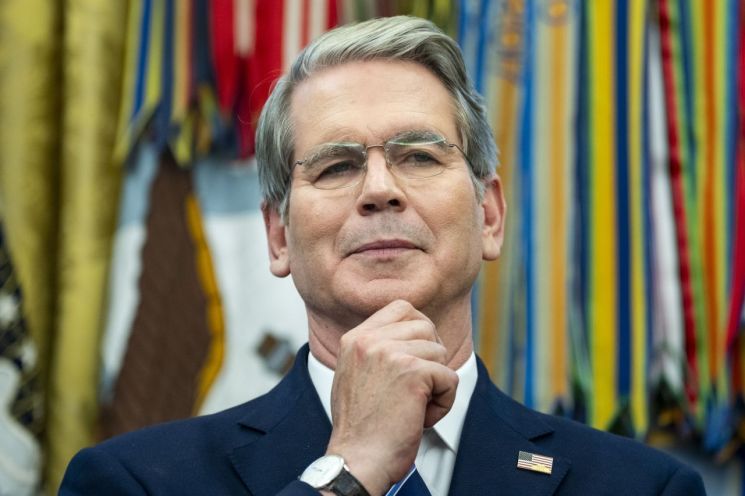
Scott Besent, the U.S. Secretary of the Treasury and the chief architect of tariffs in the Donald Trump administration, predicted that it would take about 50 days for Japan to see a reduction in automobile tariffs. He cited revenue generation and industry protection as the main purposes of the Trump administration's tariff measures, and also mentioned the possibility of changes to tariff policies in the future.
On August 11, the Nihon Keizai Shimbun reported this by releasing an interview conducted with Secretary Besent on August 7 (local time).
Japan signed a trade agreement with the United States on July 22, agreeing to lower automobile tariffs from 27.5% to 15%. However, the lower tariffs have not yet been implemented, so Japan is still paying high tariffs. Secretary Besent said, "In the case of the United Kingdom, it took about 50 days from the agreement to lower (automobile) tariffs to its implementation. Although the U.S.-Japan agreement has been reached, it could take less or more than 50 days. The agreement with the UK serves as one benchmark." This means that the reduced automobile tariffs could be implemented only around mid-September, which is 50 days from now. The same formula could also apply to South Korea, which signed a similar agreement around the same time.
Regarding ongoing negotiations with major trading partners such as Canada, Switzerland, and Mexico, Secretary Besent said, "They will mostly be concluded by the end of October."
However, he expressed strong caution regarding China, which remains the main focus of the remaining negotiations. Secretary Besent stated, "China, as a non-market economy, has different objectives from us. The selling prices of many Chinese products are below production costs. The direction of China's policy is not aimed at profit, but at job creation." He also added, "If I were an official in South Korea or Japan, I would be concerned about China expanding its production capacity during the COVID-19 pandemic."
Regarding reciprocal tariffs, he compared them to "melting ice cubes," suggesting that there is a possibility of lowering or withdrawing tariffs in the future. He specified that the concrete conditions for this would be "the return of production bases to the United States, a reduction in import volumes, and the correction of international imbalances."
As the purposes of tariff policy, he cited tariff revenue and industry protection, adding, "President Trump is also using it as a tool for diplomatic negotiations." He continued, "That is why he claims to impose high tariffs on India to stop purchases of Russian crude oil."
Meanwhile, regarding the next chair of the U.S. Federal Reserve (Fed), he said, "It must be someone who can earn the trust of the market and analyze complex economic data," and added, "It should be someone who is sensitive to predicting the future, not relying solely on past data."
© The Asia Business Daily(www.asiae.co.kr). All rights reserved.

















