Akazawa Ryosei, Minister for Economic Revitalization,
Holds 30-Minute Meeting with Secretary Besant
Urges Presidential Executive Order to Lower Auto Tariffs
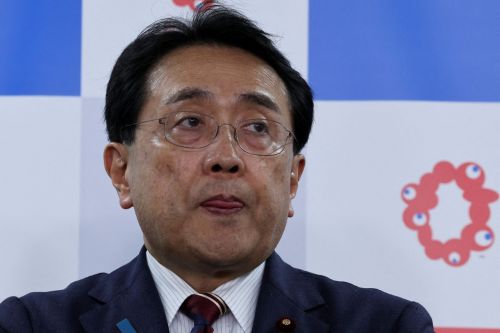
While the United States and Japan are showing differences over the mutually agreed 15% reciprocal tariff, Ryosei Akazawa, Japan's Minister of Economic Revitalization, who is currently visiting the US, reportedly urged the US once again on August 7 (local time) to revise the presidential executive order.
According to Nihon Keizai Shimbun (Nikkei) and Reuters, Akazawa, who led the Japan-US trade negotiations, held separate meetings on the same day with Secretary of Commerce Howard Lutnick for 180 minutes and with Secretary of the Treasury Scott Besant for 30 minutes.
According to documents released by the Japanese government on the same day, Minister Akazawa called for a prompt revision of the presidential executive order regarding the US reciprocal tariff, and also urged the issuance of an executive order to lower tariffs on automobiles.
The Japanese government reiterated that, in last month's tariff negotiations with the United States, it was agreed that a 15% reciprocal tariff would be applied to items with a previous tariff rate of less than 15%, and that for items with a previous tariff rate of 15% or higher, only the existing tariff rate would be applied, without adding the reciprocal tariff.
This is different from the US position. The presidential executive order signed by US President Donald Trump at the end of last month and the US Federal Register published on August 6 mention only the European Union (EU) as subject to this approach. Japan and South Korea were not included. However, South Korea is in a relatively safe situation, as most products are subject to zero tariffs under the Korea-US Free Trade Agreement (FTA).
Kyodo News, citing a senior White House official who requested anonymity, reported the previous day that the Trump administration would exclude Japan from the special tariff rate exception in country-specific reciprocal tariff measures. This official reaffirmed the content of the Federal Register, stating that the 15% tariff rate for Japan would be imposed on top of the existing rate.
In this case, some Japanese exports to the US could face tariffs in the 40% range, according to the Yomiuri Shimbun. For example, Japanese textiles, which previously had a 7.5% tariff rate, would be subject to an additional 15% reciprocal tariff, resulting in a total tariff of 22.5%. For Japanese beef, which previously had a 26.4% tariff rate, the tariff is expected to rise to 41.4%.
The timing for reducing tariffs on automobiles and auto parts, which are core industries for Japan, also remains unclear. The reduction of auto tariffs was cited as an achievement by the Japanese trade delegation in these negotiations. Nikkei reported, "In the bilateral agreement in July, the two countries agreed to lower tariffs on automobiles and auto parts to 15%, but the necessary US presidential executive order has not yet been issued, making the actual timing of the reduction uncertain."
© The Asia Business Daily(www.asiae.co.kr). All rights reserved.
![Clutching a Stolen Dior Bag, Saying "I Hate Being Poor but Real"... The Grotesque Con of a "Human Knockoff" [Slate]](https://cwcontent.asiae.co.kr/asiaresize/183/2026021902243444107_1771435474.jpg)















