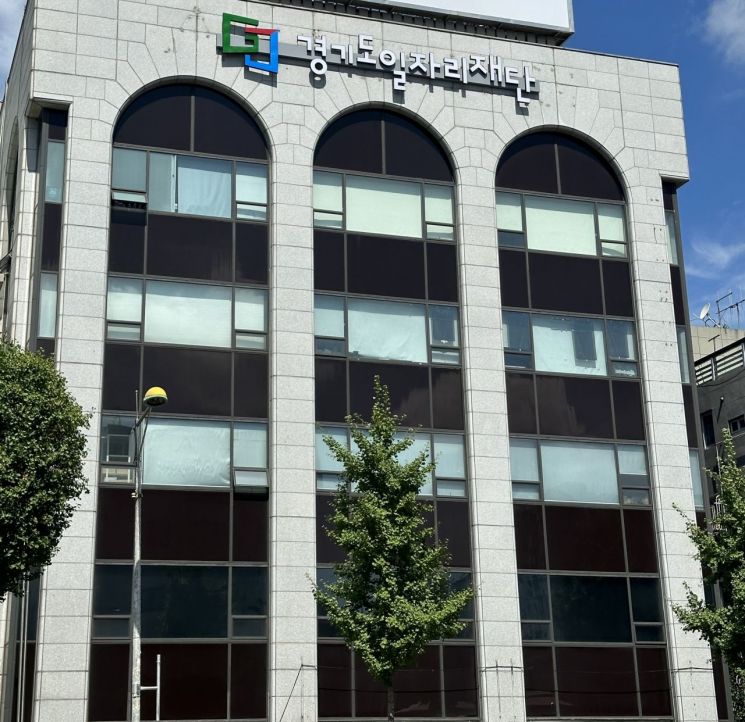
On August 8, the Gyeonggi-do Job Foundation published a report titled "Gyeonggi-do 0.5&0.75 Job, Outcomes and Implications of Introducing Flexible Work Systems."
The "0.5&0.75 Job Support Program" is a system that allows employees of Gyeonggi-do public institutions to reduce their working hours to between 20 and 38 hours per week, according to their individual needs. The program aims to provide an environment where employees can balance child-rearing and self-development, and to establish a model for the expansion of flexible work systems in the public sector.
According to the report, users of the system who participated in the survey cited self-development (48%) and housework, childcare, and caregiving (28%) as their main reasons for using the program, as well as a variety of other reasons such as health and leisure.
In particular, employees in their 20s and 30s mainly used the system for self-development purposes, such as attending graduate school or preparing for certifications. Those in their 50s and older utilized the program for "planning a second life" and "health management." Additionally, in the case of child-rearing, not only parents of young children but also those with middle and high school-aged children actively participated. This indicates that the 0.5&0.75 Job program can be used for a variety of purposes depending on one's stage of life.
One of the core operating methods of the 0.5&0.75 Job program, the "hybrid" work system, allows employees to flexibly work only the necessary hours within 32 to 38 hours per week without adjusting their workload. This approach received high satisfaction ratings from users. Employees reported that, even with reduced working hours, they maintained a sense of autonomous responsibility and were able to work efficiently without negatively impacting their colleagues or departments.
However, the reduction in wages was cited as a barrier to entry for the program. When asked about their intention to continue using the system after wage support ends, 44% responded negatively, and among them, 75% cited the burden of reduced wages as the reason.
In addition, organizational culture played an important role in the utilization and establishment of the system. Participants noted that understanding and cooperation from colleagues led to more active use of the program and increased stability in its operation. They emphasized that a shift in internal perceptions and a culture of mutual consideration are essential for the successful adoption of flexible work systems like the 0.5&0.75 Job program.
Kim Minyoung, a research fellow at the Gyeonggi-do Job Foundation, stated, "The Gyeonggi-do 0.5&0.75 Job Support Program demonstrates that it is not merely a policy for reducing working hours, but can serve as an effective alternative for achieving work-life balance." Kim added, "Since this is a newly introduced work system, it is necessary to encourage its use through a certain level of financial support until the system becomes established."
© The Asia Business Daily(www.asiae.co.kr). All rights reserved.
![Clutching a Stolen Dior Bag, Saying "I Hate Being Poor but Real"... The Grotesque Con of a "Human Knockoff" [Slate]](https://cwcontent.asiae.co.kr/asiaresize/183/2026021902243444107_1771435474.jpg)















