Confirmed: South Korea-U.S. Summit Set for the 25th
President Lee Jaemyung to Meet Trump for the First Time
Security Issues Including Defense Spending and Cost-Sharing on the Agenda
Sensitive Topics Such as Checks on China Also Expected to Be Discussed
The South Korea-U.S. summit scheduled for the 25th will mark the first face-to-face meeting between President Lee Jaemyung and U.S. President Donald Trump. Sensitive security issues such as increased defense spending, the Special Measures Agreement (SMA) on the cost-sharing for U.S. Forces Korea, and checks on China are highly likely to be on the agenda. Following trade negotiations, President Lee now faces the challenge of navigating a second major hurdle related to security. Unlike the summits held during the Yoon Suk-yeol and Moon Jae-in administrations, this meeting is expected to feature more assertive and concrete demands from the U.S. under the banner of "modernizing the alliance," making South Korea's strategic response a critical test.
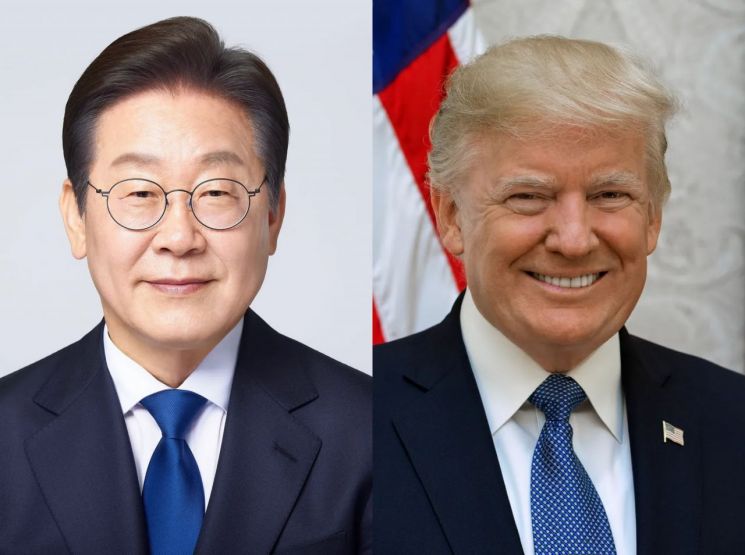
It is worth noting that this summit is taking place in a distinctly different atmosphere compared to those held during the Moon Jae-in and Yoon Suk-yeol administrations. Former President Yoon met with then-U.S. President Joe Biden just 11 days after taking office on May 21, 2022, while former President Moon traveled to the U.S. to meet President Trump on June 30, 2017, the 51st day of his term. Previous presidents-Park Geun-hye (71 days), Lee Myung-bak (54 days), and Roh Moo-hyun (79 days)-also visited the U.S. president relatively early in their terms. During the Moon administration, inter-Korean dialogue centered on the Korean Peninsula Peace Process was emphasized, while under Yoon, the focus shifted to a values-based alliance and trilateral cooperation among South Korea, the U.S., and Japan. However, since the launch of the second Trump administration, tensions in the alliance have heightened, with increasing friction over cost-sharing and responses to China.
Given President Trump's tendency to leverage negotiation results for political gain, increased defense spending and the SMA are expected to be core issues at this summit. Since taking office, President Trump has consistently argued that allies, including South Korea, should shoulder a greater share of the costs. He has specifically emphasized that South Korea should spend up to 5% of its gross domestic product (GDP) on defense. If this demand is realized, South Korea would face a massive fiscal burden of approximately 130 trillion won. As a result, the South Korean government will need to find a wise balance that minimizes its financial burden while also strengthening the alliance during this summit.
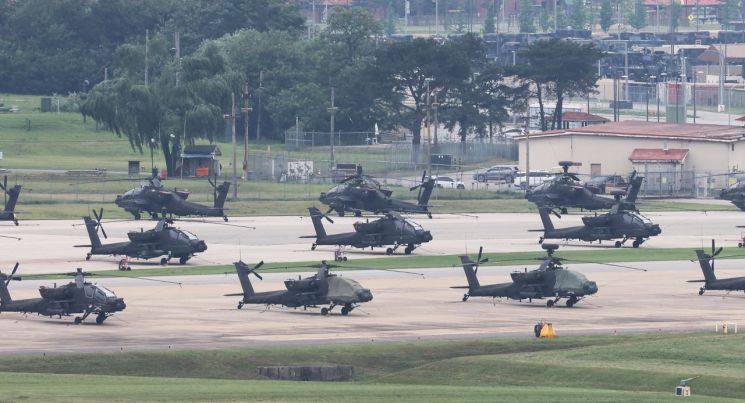
The U.S. is also ramping up pressure regarding the SMA. While the South Korean government maintains that last year's agreement should serve as the basis, the second Trump administration is likely to demand a much larger increase in cost-sharing than before. Despite the current agreement being valid until 2030, President Trump already stated at a White House cabinet meeting on the 8th of last month-referencing his first term-that "we are essentially providing military support to South Korea for free, and what they pay is very little. South Korea should pay $10 billion (about 13.7 trillion won) annually." Although it is unlikely that specific amounts or negotiation timelines will be discussed at the summit, the meeting could nonetheless open the door to working-level negotiations that South Korea may not desire, prompted by President Trump's insistence.
Strengthening extended deterrence against North Korean threats and deploying U.S. strategic assets to counter China are also key issues. The Trump administration has conveyed its intention to make the deployment of U.S. strategic assets, such as strategic bombers and aircraft carriers, a regular occurrence in South Korea. The aim is to simultaneously enhance deterrence against North Korea's nuclear and missile threats and achieve the broader goal of checking China. However, while the South Korean government is somewhat receptive to strengthening extended deterrence, it is cautious about the permanent deployment of strategic assets due to concerns that it could worsen relations with China, necessitating a careful approach.
Nevertheless, the Trump administration's pressure under the concept of "modernizing the alliance" continues to intensify. President Trump has publicly stated that the role of the South Korea-U.S. alliance should no longer be limited to deterring North Korea, but should also expand to countering China's military threats. Diplomats analyze that this reflects the U.S. view that the alliance should serve as a pillar for maintaining strategic stability in the Indo-Pacific region.
A high-ranking official from the ruling party stated, "The key question is whether the two countries can reach a substantive and strategic agreement that protects their respective national interests while ensuring the long-term stability of the alliance." The official added, "The outcome of this summit will serve as an important milestone in determining the future of the South Korea-U.S. alliance." He further emphasized, "The main focus of this meeting is to communicate the new Lee Jaemyung administration's position in response to the U.S.'s tough demands, while also ensuring that relations with neighboring countries such as China and Russia are not harmed."
© The Asia Business Daily(www.asiae.co.kr). All rights reserved.
![Clutching a Stolen Dior Bag, Saying "I Hate Being Poor but Real"... The Grotesque Con of a "Human Knockoff" [Slate]](https://cwcontent.asiae.co.kr/asiaresize/183/2026021902243444107_1771435474.jpg)












