Six Recommended Summer Health-Boosting Dishes:
Gatjang-eo, Black Goat, Freshwater Spicy Fish Stew, and More
Jeonnam Province has recommended six representative summer health-boosting dishes to help restore stamina and promote well-being during the sweltering heat: Gatjang-eo dishes, black goat dishes, freshwater spicy fish stew, Haeshintang, Hoichuntang, and native chicken dishes.
Since these dishes utilize Jeonnam's seasonal, fresh local agricultural and seafood ingredients, they are expected to help revitalize tourists visiting Jeonnam who are weary from the heat.
Gatjang-eo (Hamo) is mainly caught in Goheung, Yeosu, and Wando. Since farming is impossible, all Gatjang-eo are wild-caught, and their peak season is from May to September. When live Gatjang-eo is prepared immediately and briefly blanched in a broth infused with various medicinal herbs, it is enjoyed as a shabu-shabu, allowing diners to fully appreciate the chewy texture and savory flavor that becomes richer with each bite.
Black goat dishes have recently gained popularity not only among older generations but also as a new health food among people in their 30s and 40s. According to the Donguibogam, black goat helps strengthen the stomach, restores depleted energy, and calms the mind. Jeonnam's black goats are famous because the region's mountainous and plain areas are abundant with wild herbs such as mugwort and dandelion, providing an ideal environment for goats to roam and graze.
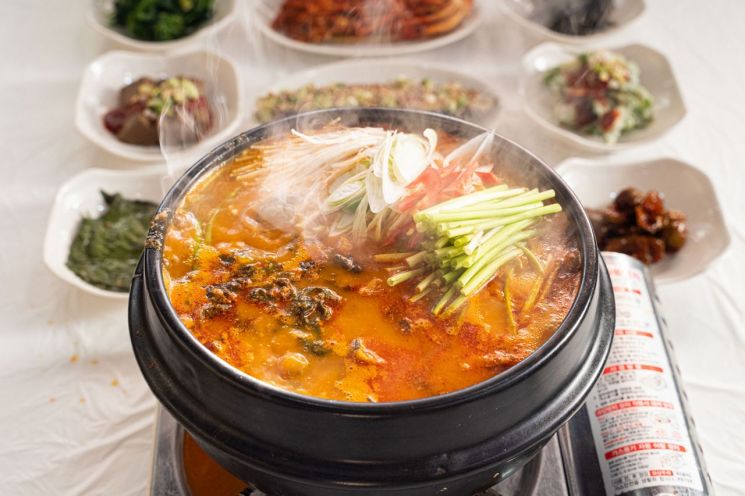
Freshwater spicy fish stew is made with freshwater fish such as catfish, mitten crab, and Korean perch, combined with water parsley, enoki mushrooms, crown daisy, and a special sauce unique to each household, resulting in a rich, deep flavor. It can be enjoyed in riverside areas such as Jangseong, Gokseong, Gurye, and Naju along the Hwangryonggang, Seomjingang, and Yeongsangang rivers. In these regions, there is a traditional custom called 'Cheollyeop,' where people catch fish directly from the stream and cook stew by the riverside during summer.
Haeshintang, meaning 'food offered to the god of the sea,' is a health-boosting dish originating from the southern coastal areas rich in seafood, such as Yeosu, Goheung, Wando, and Shinan. Its distinguishing feature is the addition of abalone and octopus, which are raised on natural kelp and seaweed, to the widely beloved Samgyetang (ginseng chicken soup).
Hoichuntang, known as a dish that 'restores youth as if spring has come,' is a health food believed to help rejuvenate the body. It is said to have originated during the Joseon Dynasty in Gangjin, a region abundant in both seafood and meat.
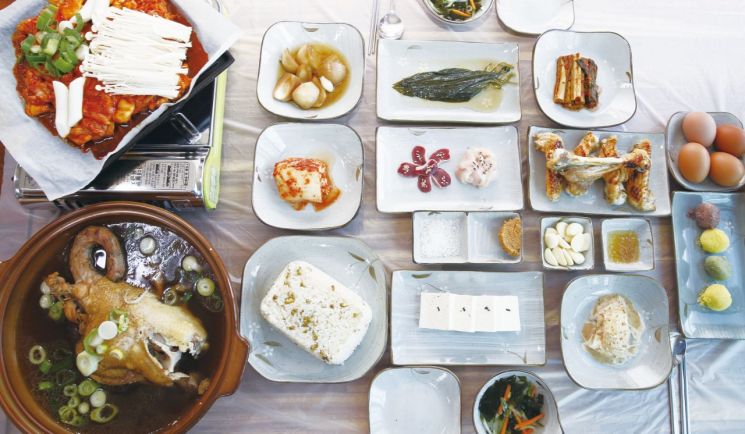
Native chicken dishes are made by cooking a whole chicken raised in rural areas such as Gwangyang, Damyang, Haenam, Yeongam, and Muan. They can be enjoyed in various forms, including Samgyetang, Baeksuk (boiled chicken), Bulgogi, and grilled chicken. The addition of locally grown wild herbs and medicinal ingredients, simmered for a long time, produces a rich broth and enhances the flavor of the meat. These chicken dishes, which are both healthy and delicious, help stimulate the appetite and restore energy lost to the heat, making them a popular health food enjoyed by people of all ages.
Oh Mikyung, director of tourism at Jeonnam Province, said, "Jeonnam is a gourmet travel destination where outstanding natural environments, fresh local ingredients, exceptional culinary skills, and tradition come together. I hope everyone will enjoy a vibrant summer by tasting Jeonnam's unique health-boosting dishes, especially during the hot season."
© The Asia Business Daily(www.asiae.co.kr). All rights reserved.
![Clutching a Stolen Dior Bag, Saying "I Hate Being Poor but Real"... The Grotesque Con of a "Human Knockoff" [Slate]](https://cwcontent.asiae.co.kr/asiaresize/183/2026021902243444107_1771435474.jpg)
















