Request to Follow Guidelines for Preventing Mosquito-Borne Infectious Diseases
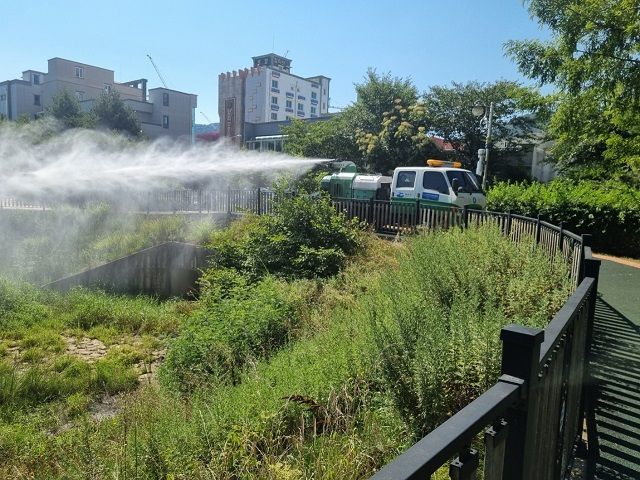 Yeosu City has launched proactive quarantine measures targeting vulnerable areas following the issuance of a Japanese encephalitis alert in the country. Provided by Yeosu City
On August 6, Yeosu City announced that, following the nationwide issuance of a Japanese encephalitis alert on August 1, it is strengthening quarantine activities in vulnerable areas and across towns and districts within its jurisdiction to proactively prevent infectious diseases.
The Korea Disease Control and Prevention Agency issued this year's alert one week later than last year (July 25), analyzing that the overall decrease in mosquito populations was due to continued heavy rainfall and heat waves, which are meteorological factors.
The Culex tritaeniorhynchus mosquito, which transmits Japanese encephalitis, is a small, dark brown mosquito that mainly inhabits rice paddies, livestock sheds, and puddles. It is active at night and is found throughout South Korea. In particular, its population surges in August and September, and activity continues until the end of October.
Accordingly, Yeosu City is currently conducting quarantine activities five times a week through the public health center's disinfection team and the voluntary quarantine teams in towns and districts. In addition, ad-hoc disinfection efforts are being further strengthened.
A Yeosu City official stated, "We will continue proactive quarantine and ongoing on-site management, focusing on vulnerable areas where sanitary pests are likely to occur," adding, "We will do our best to prevent infectious diseases and create a pleasant urban environment free from pests."
© The Asia Business Daily(www.asiae.co.kr). All rights reserved.

















