The government announced that, starting from September 29, it will implement a visa-free entry policy for Chinese group tourists as part of efforts to revitalize the tourism industry.
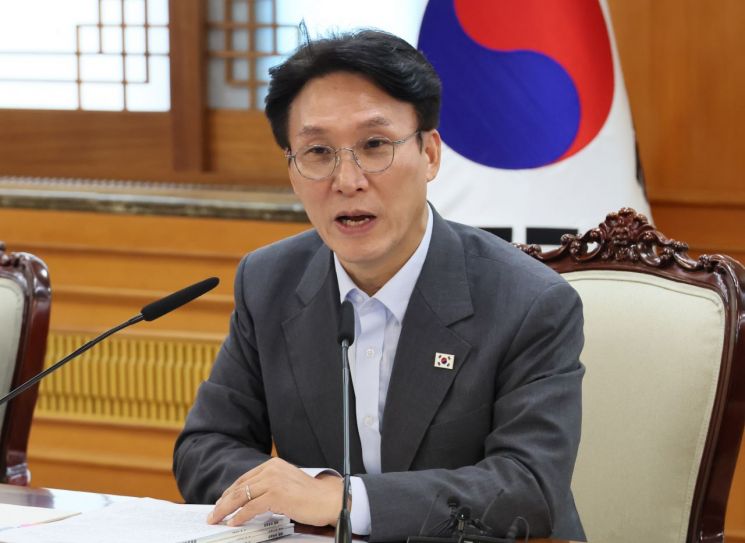
On this day, a meeting of the "Tourism Revitalization Mini-Policy Task Force (TF)" was held at the Government Complex Seoul, presided over by Prime Minister Minseok Kim. The meeting was attended by officials from relevant ministries and tourism industry experts. Discussions included measures to rationalize tourism regulations and strategies to boost inbound tourism in connection with the 2025 Asia-Pacific Economic Cooperation (APEC) Summit.
The government discussed ways to rationalize key tourism regulations to attract more foreign tourists and finalized three major rationalization measures for implementation. These three measures are: visa-free entry for Chinese group tourists, expansion of fast-track immigration benefits for foreign participants in international conferences, and the inclusion of "performance in attracting foreign patients" as a criterion for designating outstanding medical tourism institutions.
From September 29 of this year to June 30 of next year, visa-free entry will be allowed for Chinese group tourists. Since November of last year, China has permitted visa-free entry for Korean nationals. In response, Korea has decided to implement a temporary visa-free policy for Chinese tourists ahead of China's National Day holiday (October 1-7).
The government expects that, as the inbound tourism market is rapidly recovering, the implementation of this visa-free policy will generate additional demand for visiting Korea, thereby providing a tangible boost to the domestic economy, including revitalizing local economies.
Regarding the expansion of fast-track immigration benefits to facilitate entry for foreign participants in international conferences, the government decided to lower the eligibility threshold for foreign participants from the current 500 or more to 300 or more. In addition, the government announced that, following the end of the pilot program, the system will be formally institutionalized starting in 2026. The government expects this to strengthen Korea's competitiveness in the MICE sector and further establish Korea as a premier destination for international conferences.
Finally, the government will adjust the application criteria for designating outstanding medical tourism institutions to better reflect the realities of the sector. Currently, the government designates as outstanding medical tourism institutions (hospitals and facilitators) those that have either invited 30 or more medical tourists (visa cases) or have treated 500 or more foreign patients in the past year, providing them with various benefits. However, there has been criticism from facilitators that, unlike hospitals, they do not have treatment records, making it difficult to meet the requirements based solely on visa performance. In response, the government will revise the system to allow institutions with a record of attracting 500 or more foreign patients (including those from visa-free countries) to apply for designation as outstanding medical tourism institutions. This revision is scheduled to take effect in August of this year, and the government expects it will help expand the high-value-added medical tourism market.
The government also stated that, during the meeting, specific action plans were proposed to leverage the APEC Summit as an international tourism asset, including support for promotional activities, the development of customized tourism programs, and improvements to the tourism environment. The government emphasized that it will continue to work closely with relevant ministries, industry, and academia to prepare additional institutional improvements and policy support measures in the tourism sector, and that these will be discussed at the "National Tourism Strategy Meeting," an inter-ministerial consultative body.
Prime Minister Minseok Kim stressed, "The 2025 APEC Summit will serve as a very important opportunity to revitalize tourism," and instructed the Ministry of Culture, Sports and Tourism and other relevant ministries to "swiftly prepare a systematic strategy and concrete plans to effectively promote the APEC event."
© The Asia Business Daily(www.asiae.co.kr). All rights reserved.
![Clutching a Stolen Dior Bag, Saying "I Hate Being Poor but Real"... The Grotesque Con of a "Human Knockoff" [Slate]](https://cwcontent.asiae.co.kr/asiaresize/183/2026021902243444107_1771435474.jpg)















