Gwangyang CGL, New Investment Under Review
Major Export-Related Industries Hit
Chinese Low-Price Offensive Hampers Facility Expansion
Strategy Adjusted Amid Sluggish Demand and Other Challenges
POSCO is currently deliberating whether to proceed with the expansion of its automotive steel sheet production line at the Gwangyang Steelworks. The company is finding it difficult to expand domestic production of automotive steel sheets, as the influx of low-priced Chinese products continues and the United States, the largest automobile market, is raising barriers to imported vehicles. Some analysts interpret this as the beginning of a blow to the domestic industries connected to automobiles, which are one of Korea's main export items.
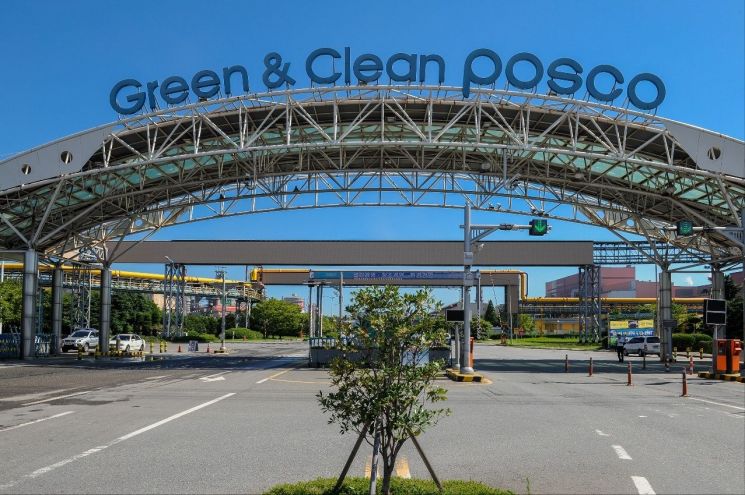
According to the steel industry on August 6, POSCO has yet to reach a decision regarding a new investment in a Continuous Galvanizing Line (CGL) at the Gwangyang Steelworks. A CGL is a facility that coats the surface of steel sheets with zinc to prevent rusting, and is mainly used for automotive exteriors. A POSCO representative stated, "We are conducting an internal review with the goal of reaching a final conclusion within this year."
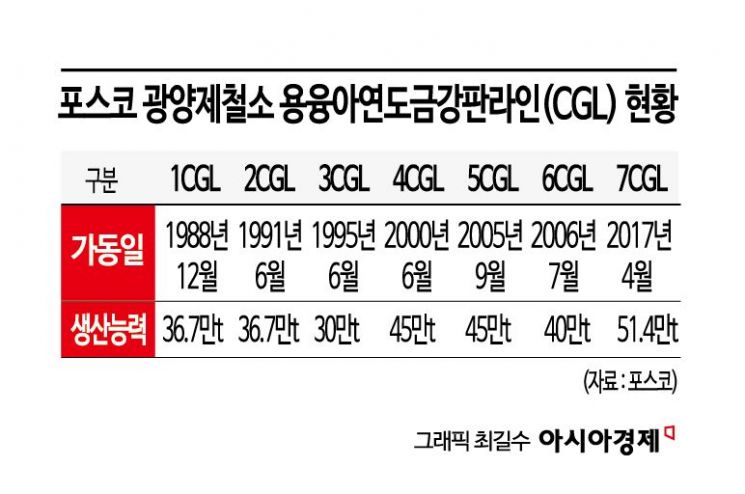
POSCO is currently operating seven CGL facilities at the Gwangyang Steelworks, with a total annual production capacity of 2.84 million tons. In addition, the company produces products in Mexico, Thailand, India, and China, supplying the global market. Last year, POSCO internally reviewed the addition of an eighth CGL facility with an annual capacity of 450,000 tons to respond to demand for high-grade automotive steel sheets. However, it is now reported that the company is considering postponing or even canceling the plan due to recent changes in the business environment.
POSCO has begun to reconsider its expansion plans because of a recent sharp deterioration in external conditions. Analysts point out that the decisive factor was the United States raising import tariffs on all steel products to 50% in June and confirming its intention to maintain this policy during last month's Korea-U.S. trade negotiations. Automotive steel sheets are high value-added products, but a 50% tariff would cause them to lose price competitiveness. As of last year, the United States accounted for about 10% of POSCO's exports, making it one of the company's key markets.
In particular, the U.S. decision to impose tariffs of over 10% on imported automobiles?including those from Korea and the United States?has also influenced POSCO's plans to expand its galvanized steel sheet facilities. As the world's largest automobile market, the U.S. raising tariff barriers is likely to reduce car exports, which in turn eliminates the need to increase production capacity. The influx of low-priced Chinese products has also become a major variable in the plan to build the eighth CGL. With Korea GM deciding to source steel sheets from Hyundai Steel instead of Chinese suppliers, POSCO will inevitably face even fiercer competition with Chinese products. An industry insider said, "It appears that the combination of tariff risks and weakening demand has made it inevitable for POSCO to adjust its strategy."
Some experts view POSCO's reconsideration of new investments in automotive steel sheets as a signal that the slowdown in the domestic automobile industry is beginning to affect related sectors. Chung Eunmi, a senior research fellow at the Korea Institute for Industrial Economics and Trade, said, "The steel market is currently facing oversupply, and the U.S. decision to maintain high tariffs will inevitably contract steel-consuming industries. Not only will it be difficult to invest in new facilities, but even maintenance and replacement of aging facilities could become challenging." She added, "Major demand industries such as automobiles are increasing their production share within the United States, so not only steel exports but also the domestic demand base may weaken. Large-scale new facility investments or refurbishing existing equipment will inevitably become a heavy burden."
In the past, POSCO has made preemptive large-scale investments in integrated steelworks and other major facilities ahead of global demand expansion. However, the company is now clearly shifting to a strategy of 'selection and concentration,' taking into account factors such as facility aging, trade risks, and profitability. Regarding new investments, POSCO stated, "We will make decisions after comprehensively considering changes in demand, price trends, and the degree of facility aging."
© The Asia Business Daily(www.asiae.co.kr). All rights reserved.
![Clutching a Stolen Dior Bag, Saying "I Hate Being Poor but Real"... The Grotesque Con of a "Human Knockoff" [Slate]](https://cwcontent.asiae.co.kr/asiaresize/183/2026021902243444107_1771435474.jpg)
















